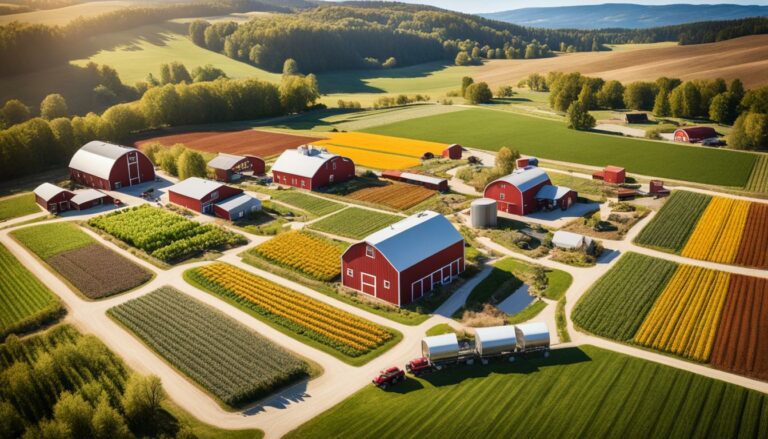

Did you know, more than 2.4 million people visit agritourism sites in California each year? This big trend isn’t just for fun. It’s all about farm activities that are friendly to the earth. By doing this, farms can make more money and keep their land healthy. The University of California says these sustainable ways are great for teaching visitors about eco-friendly farming.
Indeed, sustainable agritourism is going strong. Surprisingly, 68% of these sites are run by small farms with not huge yearly sales. They use this eco-friendly method to stay afloat financially and educate people. This way, they help protect the land and keep our food supply safe. The US NRCS agrees, saying these methods are key to keeping farms healthy.
Agritourism is like a lesson in local food and green living. It brings city folks out to the farm, showing them how food grows. This not only educates but also turns people into champions of nearby farms. It’s a win-win for everyone, teaching how local support benefits both buyers and the local area.
Agritourism is vital for the countryside. It boosts the economy and teaches about responsible land use. This mix of farming and tourism lets visitors pick their own produce or stay on farms.
Agritourism means making money from farm activities. It lets people see and learn rural life. This includes farm visits and outdoor fun. In California, over 2.4 million people join in every year, supporting most of the small farms there.
Linking tourism with green farming is key for farms to continue producing. Eco-friendly farm stays are becoming a must. Using eco methods in agritourism preserves the land. It also helps in making the entire food system sustainable. Nearly 75% of farmers in this area wish to improve profits without hurting the ecosystem. This smart approach looks to keep farms healthy for the future.

Sustainable agritourism brings big benefits that go far beyond the farm. It helps the environment, the economy, and local people. This type of farming uses methods that protect nature while also helping the economy and sharing different cultures.
Sustainable agritourism is great for the environment. It promotes using the land responsibly and practices that help save our plant and animal life. It’s a way of farming that’s focused on working with, rather than against, nature.
This farming also teaches visitors why it’s important to save our wildlife and use the land carefully. These lessons are key to looking after our countryside and the creatures that live there.
Farmers can earn money in many ways through agritourism. They can host visitors for stays, give tours, run workshops, and organize events. This means they make more money than they would only through farming.
But it’s not just the farmers who benefit. Local restaurants, places to stay, craftsmen, and transport services all see more business. Agritourism helps lots of small businesses grow, which is good for the local economy and the countryside.
Agritourism also helps in social ways, making a big mark on rural life and keeping communities together. It shares local customs and food with visitors, which makes them value the countryside and its people more.
This kind of tourism also creates new jobs in the countryside. It helps keep young people there by offering work, and teaches city dwellers about where their food comes from. All of this helps bridge the gap between city and country life.
Looking to get back to nature? Eco-friendly farming holidays let you do just that. It’s a chance to learn about sustainable farming in a fun way. Plus, these trips help our planet stay healthy by following organic practices.
Interest in organic practices is growing fast among holidaymakers. They can see how farms use techniques like composting and crop rotation. These help the soil stay healthy and keep wildlife thriving. Italy is a great example, with its farms showing big improvements for the environment. They also mix in fun activities like horseback riding and hiking to teach visitors more about organic ways.
But it’s not just about farming methods. Using renewable energy is key in these holidays too. Take Apple Pond Farm, for example, in the Catskills. It powers its farm with wind and solar energy almost completely.
Sustainable winemaking also plays a big role. Sky Acres Winery in New Jersey is a leader here. It uses less water and cuts its environmental impact with advanced winemaking tech. By doing this, these places are showing us how we can travel in a greener way.
| Country | Example | Practices |
|---|---|---|
| USA | Apple Pond Farm | Wind and Solar Energy |
| Italy | Agritourism Farms | Organic Farming and Leisure Activities |
| USA | Sky Acres Winery | Sustainable Winemaking |
In Italy, agritourism makes up over 2% of all farms. Many of these places let you stay overnight and eat with them. This mix of tourism and farming helps to cut carbon and shows the power of renewable energy.
Green rural tourism is key in reducing agritourism’s carbon footprint and boosting local wildlife. It highlights sustainable practices that protect the environment and help various ecosystems thrive. This approach includes safeguarding habitats and using renewable energies, making it a leading force in sustainable travel.

Its main aim is to cut down on carbon emissions from both travel and farm operations. It does this by encouraging the use of energy-saving lights and gadgets. Also, it pushes for the adoption of renewable energy like solar and wind power, which reduces harmful emissions.
Green rural tourism also champions biodiversity. It focuses on preserving natural habitats by planting local flora and establishing wildlife passages. These strategies have helped the market grow steadily, with significant projections for future growth. This growth is powered by a rising interest in nature-friendly travel that helps protect and promote biodiversity.
Travellers who pick environmentally conscious farm stays get to live sustainably. They also stay in eco-friendly places. Since the 1990s, this idea has become big in Europe. Families can visit farms and learn about how food is made. They also see how farms follow eco-friendly rules.
In Mexico, Playa Viva shows off how good eco-friendly stays can be. It’s on the west coast and has a big farm and a hotel. Many people from the area work there. It’s a model of running a place that cares for the environment. People love coming back, showing what they’re doing is a hit.
Sagra’s Hill Farm brings a 200-year-old dairy back to life in Vermont. They work with farmers who care about the land. When guests arrive, they don’t just see the farm. They can touch, smell, and taste it too. This helps people really get what organic farming is all about.
Farm stays are becoming more popular. They offer neat things for travellers. This includes getting close to nature, helping out local people, and learning more about farming. This is a different and cool way to go on holiday.
Staying at a farm isn’t more expensive than a hotel. There are many different farms to choose from. You could stay on a working farm, in a vineyard, or somewhere in the countryside. So, lots of different people can find a farm stay that they like.
In Italy, places where you can stay on a farm are getting more and more. Agriturismo La Fonte in Tuscany is a good choice. It offers lots of peaceful times, chances to learn, and supports the local area. It’s a great place to share time with family and friends.
Choosing a farm stay is good for the planet. It makes sure the place you pick is good for the environment. It also means more people get to enjoy the Earth in the future.
Picking a farm stay is a way to travel that feels right. It fits with caring about the planet and living in a way that looks after nature.
Effective sustainable resource management is key to the success and long life of agritourism. It focuses on looking after natural resources. This ensures the land can stay productive for many more years. It’s also important to give visitors fun and interesting experiences. This makes eco-friendly agritourism more attractive.

Conserving water is crucial in agritourism. Using rainwater harvesting and efficient irrigation helps. So does planting crops that don’t need a lot of water. These methods keep the local environment in balance. They show visitors the farm cares about the planet. It makes them want to come back.
Keeping the soil healthy is very important. Farmers use things like changing the crops they grow and planting cover crops. They also add natural compost to the soil. These actions help the soil stay good for growing crops. They also attract more visitors. This is because healthy soil means a beautiful farm to explore.
Dealing with waste in a smart way is a must. This includes composting, recycling, and trying not to make too much garbage. Farms do this by letting visitors see how it’s done. This helps visitors learn more. It also makes the farm a more eco-friendly place to visit.
| Aspect | Examples | Benefits |
|---|---|---|
| Water Conservation Techniques | Rainwater harvesting, efficient irrigation | Ensures sustainable water supply, supports ecosystems |
| Soil Health and Fertility | Crop rotation, organic composting | Maintains soil viability, supports diverse activities |
| Sustainable Waste Management | Composting, recycling | Reduces waste, enhances visitor education |
To sum up, using sustainable resource management in agritourism is great for nature. It also makes eco-friendly agritourism more popular. By doing this, we give visitors a better and more aware holiday.
With tourism’s growing environmental impact, regenerative travel offers a positive way forward. These experiences in farming not only reverse damage but also enhance places for the future.
Regenerative travel isn’t just about causing less harm; it aims to repair the Earth. Today, 76% of people wish to travel in eco-friendly ways, and 71% are ready to pay more for it. This means travellers are keen on making a difference through their vacations.
The travel industry is a big polluter, releasing vast amounts of carbon and harming the sea. If things don’t change, air travel’s environmental impact could triple by 2050. Regenerative tourism offers a way to lessen these effects.
Regenerative agritourism showcases how travel can be a force for good. Farms are leading the charge in environmental repair. They use eco-friendly practices, like biofuels, much as big airlines United and British Airways do.
Take the example of the Tilma Group, which is working hard to reduce its emissions by 2030. They also help local communities and cut their paper use. They are part of a big shift towards sustainable business.
Famous sites like Thailand’s Maya Beach have suffered greatly due to too many visitors. This destruction underlines the need for travel that heals our natural beauty. We must move beyond ‘sustaining’ nature towards making it thrive.
Regenerative agritourism doesn’t just help the planet; it also meets tourist’s wishes for greener trips. Research shows that people value sustainability more now than before the pandemic. Such practices save nature and bring people together.
Using these regenerative options could truly change how we see tourism. It could be a force that protects our Earth and its wonders for the future.
Agricultural production and tourism mix in agritourism. This creates chances for farm visits and money for farmers. Organic agritourism is a part of this, focusing on ‘green’ farming and sustainable tourism. It draws visitors who value eco-friendliness and health.
“Agritourism activities can range from farm-to-table cooking classes to agricultural work exchanges such as Wwoof.”
Visiting organic farms offers a chance to see beautiful countryside. You can also learn about keeping nature in balance and green farming. Activities include tasting local food, learning in workshops, and staying on farms. Places like the Blue Ridge area champion organic farming. They care for the land, offering visitors special times.

Noted farms such as La Ferme Tarenti in Tunisia and Tenuta di Spannocchia in Tuscany show us how organic agritourism helps local areas. As we enjoy such places, we support the surrounding communities. This kind of farming marks a visit with learning and caring for the earth. It also saves traditional ways and wildlife while being kind to the planet.
Green tourism does a lot for the economy too. Solimar’s plan brings up how it helps with jobs and towns’ prosperity. Many small farms in California use this kind of tourism to stand financially.
Organic agritourism doesn’t only educate and entertain. It helps keep the country beautiful. With more than 2.4 million people visiting such places in California each year, this contribution is big. By joining green methods, agritourism makes both the land and our trips better.
Starting sustainable agritourism faces many hurdles, from tricky rules to money woes. Operators must find ways to overcome these. They are key to setting up a great model for sustainable agritourism.
Implementing eco-friendly practices hits a roadblock with tough rules. Getting permits is slow and costly. Add health codes and liability insurance needs to the mix, and it gets harder. The U.S. Western states struggle the most, making it tough for sustainable agritourism to bloom.
Money is a big issue in the agritourism world. Going green needs a lot of cash at the start. This is hard for small farms, a big part of California’s scene. Even with the wish to make money through agritourism, finding enough funds can be tough.
California’s UC groups show that teaching and support can help with money problems. Despite this, many are still keen to go green in agritourism. They see it as good for business and the community.
| Region | Primary Challenge |
|---|---|
| Western States | Regulations, Zoning, Permitting |
| Southern States | E-Connectivity |
| Northeast, Midwest | Liability Issues |
Overcoming agritourism hurdles is an ongoing struggle. With over 2,400,000 visitors yearly spending big, the potential is huge. Better dealing with rules and money issues can lead to a brighter, greener, and more profitable future in agritourism.
Let’s dive into a fascinating case study on sustainable agritourism in California. The state draws a huge number of visitors to its agritourism spots each year. A 2009 survey found over 2.4 million visitors join in the fun yearly.

California’s agritourism scene is vibrant and varied, offering a range of activities. It includes wine tours that draw 21 million people and the more quiet farm stays and U-Pick farms. Around 68% of these places are small farms, reaping benefits from agritourism. 75% of farmers note that it helps make their farms more profitable.
| Activity | Annual Visitors | Annual Revenue |
|---|---|---|
| Wine Tours | 21 million | $2.1 billion |
| U-Pick Farms | 2.4 million | Varies |
Many small farms in California have found success through agritourism. They’ve expanded their business models and found more income streams. The UC SAREP Agritourism program has been a big help, offering workshops and advice to farmers and ranchers. It’s supported by the UC’s Small Farm Advisors.
However, the sector faces some hurdles, like permits and insurance. The UC’s Sustainable Agriculture Research program is stepping in to help, offering useful guidance. It publishes guides and organises workshops to tackle these hurdles.
During the pandemic, agritourism boomed, with more people buying directly from farms or visiting them. This trend has shown how essential it is for farm business success. It helps farms make more money and find new markets.
California’s agritourism is a prime example of how sustainable practices can bring economic success and educational benefits. The state is paving the way for a more profitable and sustainable future in agriculture.
For success in agritourism, follow the best practices. This means giving guests a true farm or ranch feel, offering great service, and having good links with the community. These steps make visits better and help the farm stay strong over time.
Showing the real side of farming is key in agritourism. Visitors love taking part in farm tasks, like milking cows or picking crops. These hands-on experiences enrich their visit and teach them about farming. Such activities were found to be important by an August 2019 study, making visits more educational.
Good staff with deep knowledge and a friendly approach boost agritourism. The 2019 report underlined that great service keeps guests coming back. So, training staff well can up the game of your agritourism business.
Connecting well with the local community stands out in agritourism best practices. It builds strong bonds and attracts support from locals and groups. This also means welcoming organized visits to the farm or ranch, making the business a part of local life.
| Key Aspects | Details |
|---|---|
| Authentic Agricultural Experience | Interactive activities that educate and engage visitors in farm/ranch operations. |
| Customer Service | Highly trained and courteous staff to enhance visitor satisfaction. |
| Community Relations | Opportunities for local groups and community engagement. |
By focusing on an authentic agricultural feel, excellent service, and community ties, agritourism can grow and succeed. Overall, these practices are the solid base for a flourishing agritourism business.
Agritourism gets visitors close to farm life. It helps them understand farming and its challenges. In spots like California, many people, around 2.4 million, join such events each year. Thus, they learn to value sustainable farming more.

Key to agritourism are the workshops and training offered. Places like the University of California’s Small Farm Program teach a lot. Over 2,000 farmers have learned about sustainable farming here.
UC researchers noted that approximately 75% of survey respondents were motivated to implement agritourism practices to increase profitability, indicating the effectiveness of these programmes.
People can directly get involved in farming at these events. From helping at a cattle farm to trying different wines, it’s hands-on. This way, they don’t just learn, but they also start to think more about living sustainably. States like Texas, California, and Colorado see big boosts in their economies thanks to agritourism.
| State | Total Agritourism Income |
|---|---|
| California | $84 million |
| Texas | $162.6 million |
| Colorado | $63.9 million |
Through workshops, training, and fun activities, visitors get a great experience. They also leave with a good insight into how farming can go hand in hand with nature.
Good sustainable agritourism financial planning is key for every agritourism business to succeed. Different types of businesses have various benefits and duties that affect their bottom line. We’ll look into these different business types now.
| Type of Business Entity | Liability | Taxation | Capital Raising | Asset Transfer |
|---|---|---|---|---|
| Sole Proprietorship | No limit | Taxed as individual | Less appropriate | Individual assets |
| General Partnership | No limit (can become LLP) | Partnership taxation | Appropriate for limited partnership structure | Capital interest |
| Limited Liability Company (LLC) | Limits liability | Choose partnership or corporation | Supports raising capital | Transfer units |
| Corporation | Limits liability | Choose S Corp or C Corp | Supports raising capital | Transfer shares |
| Nonprofit | Limited liability for members | Tax-exempt | Restricted to nonprofit entities | Restricted transfer |
| Cooperatives | Limited liability for members | Taxed as a cooperative | Restricted to eligible cooperative members | Restricted transfer |
Developing an in-depth business plan is vital for increasing agritourism profitability. This should include:
To make agritourism profitability happen, start with achievable income aims. This might mean covering costs in year one or adding to farm revenues. Your spending plan should cover things like building upkeep, utilities, and marketing. Mixing different income streams, from entry tickets to selling fresh goods, can help your income stay steady.
Creating a smart pricing plan means doing a break-even check and knowing what buyers value. Keep an eye on changing prices in line with expenses and what the market wants. Good financial records help you make smart choices and stay in business for the long haul.
Starting an agritourism business means knowing local rules and effective ways to tell people about your farm. The goal is to make money and be kind to the environment. This means using practices that keep the planet healthy.
Starting an agritourism business needs a careful plan. First, make sure you know the laws and rules for your area. Joining groups for farming and tourism help a lot. Also, going to workshops can teach you a lot about running your farm well.
Having a clear business plan is very important. It should say what you want to do, who you want to come, and how you will do it. It’s good to start small. In California, most farms doing agritourism are small. They make less than $250,000 a year. Starting small helps you manage better and grow your business slowly.

Marketing eco-friendly agritourism well is important. It helps bring people in and makes them want to come back. Showcasing your farm’s green ways and real farm life can make you stand out. The Agricultural Marketing Resource Center at Iowa State University says people love real farm experiences. It makes them want to visit again.
Use the internet to tell people about your farm. Post on social media and send emails. Also, make sure your farm pops up on people’s online searches. Talk about what makes your farm visits or stays good for the planet. Ask visitors to talk about their time at your farm online. Good word-of-mouth is very powerful.
It’s also good to get involved in local events and work with other local businesses. Inviting school or business groups can make you a part of your community. It helps with support and possible team-ups.
Keep looking at and updating your business plan. Finding new and better ways to price what you offer can keep you going strong. This is a good way to keep up in the competitive farming and tourism world.
Keeping safety in agritourism at the top is very important. Over 2.4 million people visit these places in California every year. Many of these may not know much about the dangers of farm life. So, it’s key for those running agritourism to know and reduce these risks. They can then give everyone a safe and fun time.
Allowing everyone to join in is crucial too. By following laws like the Americans with Disabilities Act, accessible agritourism facilities can be set up. This way, everyone, no matter their abilities, can enjoy and learn from farm visits.
Every farm has its own set of safety worries. These can be anything from where to park to how to stay safe around animals and farm tools. A good safety plan for a farm means:
These plans protect visitors. They also can keep the farm out of legal trouble. Many farms see the value of being safe. For example, over 2,000 farmers and ranchers have learned about safety in agritourism since 2011 through UC SAREP’s workshops. This shows they care about making things safer in the industry.
Even though there are dangers, agritourism can be safe if managed well. Those in charge need to know the laws to keep everyone safe and keep the farm running well. Doing this makes visits more enjoyable and helps the farms stay open and do well financially. Most of the farms, about 68%, that do agritourism are small. So, being careful is very important for them.
In the end, caring about safety and including everyone is key for agritourism to grow and do well. By focusing on these areas, we make sure it’s a place where everyone can have a good time and learn, and where farms can thrive.
The future looks bright for sustainable agritourism. It is set to grow with new tech and green methods. These will improve how farms work and make visits more exciting.
New tech is changing agritourism for the better. Things like precision farming and blockchain for tracking products are making farms smarter and visitor-friendly. Drones now check crops, while automatic systems handle watering and feeding, saving resources and the planet.
Digital marketing is beating old ads in bringing in people. By 2022, the sector was worth $58.8 billion. It’s expected to hit over $100 billion by 2028. Thank digital promotion for this, as it showcases farms’ new, green ways.
Farms are quickly adopting green practices, which are great news for the environment. Restoring nature and boosting health through visits are the top picks. These methods not only help farmers earn more but also get folks closer to the farm life.
Notably, more people are booking farm-to-table visits. Their interest in real and learning experiences means more workshops and programs at farms. This beats the offers of normal holiday spots.
Here’s a look at the latest in green agritourism:
| Trend | Data |
|---|---|
| Sustainable and Regenerative Tourism | Growing trend |
| Wellness and Health Tourism | Increasingly popular |
| Experiential Travel | Popular trend |
| Community-Based Tourism | Gaining popularity |
| Farm-to-Table Experiences | Significant increase in bookings |
| Farm Stays and Rural Accommodations | Percentage growth in bookings last year |
| Educational Programs and Workshops | More than traditional tourism sites |
| Agro-tourism Activities Booked by Families | Higher occurrence rate |
In ending, blending technological leaps in agritourism with creative green methods is key. This mix makes agritourism both a good business and better for the planet. It also makes visiting farms more fun and meaningful.
Sustainable agritourism is key for saving our planet and making travel more earth-friendly. Places like Italy, Austria, and Switzerland show us how important agritourism is. They boost their economies, take care of the environment, and keep old traditions alive. This shows that agritourism is vital for better life in the countryside and for bringing about sustainable growth.
In less developed tourism areas, like the Apuseni Mountains, agritourism offers a chance to protect untouched nature. Following Italy’s lead on sustainable farming, locals can keep their young people from leaving, protect their lands, and honour old ways. Agritourism is about more than just making money. It’s also a way to keep culture alive and care for the planet.
Partnerships in promoting culture, food, and farming are so crucial. The EU is pushing for greener practices, especially with COVID-19 changing how we do things. People are now looking for outdoor fun and nature getaways. This makes sustainable agritourism more important than ever.
By working together and using eco-friendly thinking (like circular economy), agritourism can flourish. It can bring good change to how we travel. So, let’s support these efforts to enjoy travel in a way that helps people and our planet.
Sustainable agritourism combines farming with caring for nature. It helps make money without hurting the environment. Visitors learn about eco-friendly farming, which is vital for a sustainable food future.
Agritourism teaches about local foods and supports green living choices. It links city dwellers with farmers, promoting eco farming and saving rural areas.
Sustainable agritourism takes care of the land and its resources. It uses green methods to safeguard water, soil, and wildlife. This helps farming areas stay healthier and diverse.
It boosts farm incomes and keeps rural businesses going. By offering different activities, farms attract more visitors. This makes them stronger financially.
Agritourism educates and connects people to farming. It shares knowledge about eco farming and brings communities closer. Workshops and visits encourage sustainable life choices.
These holidays focus on organic farming and eco energy use. They promote green agriculture by valuing clean soil, water, and lower carbon use.
By using green energy and caring for local nature, agritourism lowers its effect on the planet. It aims to be an eco-friendly way to enjoy rural areas.
These stays focus on being green, from saving energy to using local products. They immerse guests in nature and show the beauty of sustainable living.
Looking after water, soil, and waste is essential for green agritourism. It keeps the land healthy for farming and lessens its impact on the environment.
Regenerative travel positively impacts nature. It shows that through smart farming, we can heal the environment. This is both good for the planet and the visitor.
Organic experiences teach how farming without chemicals helps the earth and health. They offer a fun way to learn about farming while being kind to nature.
Operators deal with complex rules and the need for funds. Legal processes and ensuring safety and health for all can be hard but are vital for green farming tours.
California shows the benefits of mixing farming with tourism. It has helped small farms do better financially while educating visitors. This boosts local places and green farming.
A good farm visit includes real farm life, great service, and ties to the community. These key points make a farm tour not just fun but an important and enjoyable experience.
Planning your finances well is key for mixing farming with tours. It helps in not just making money but keeping the farm and its practices green for the future.
Key steps are knowing the laws, making a strong business plan, and keeping everything green. Doing this right can lead to a successful and eco-friendly farm tour business.
Places must be safe and welcoming for all, following legal rules like ADA. This ensures everyone can enjoy and learn from farm visits safely.
The future is about using new tech and smart practices to be even greener. This includes making farm visits better for the planet and more fun for guests.