For over 50 years in the United States, meat has been produced unnaturally. This has led to lesser-flavoured and tender meat. It’s why cooking with pasture-raised meats is key. They show a dedication to quality and good ethics in the food world.
Pasture-raised meats need special cooking. It’s about using old, trusted methods that match these meats’ nature. This way, you get to enjoy their full, natural tastes and tenderness. Cooking them this way is a nod to their sustainable, healthier beginnings. Buying from local farmers and butchers means you support good animal care, adding to the quality of what you eat.
When cooking with pasture-raised meats, you may need to tweak your usual recipes. This helps in making the meat as tasty and tender as it can be. Cooking grass-fed beef, for example, asks for adjustments. But doing this makes the meat really shine.
Turning to sustainable farming, we must know the benefits of pasture-raised meat. It’s about more than just the direct pluses. It means understanding why pasture-raised is ethically better than conventional meat.
Pasture-raised meat comes from animals free to graze naturally. They live similar to how they would in the wild. This is because of humane farming practices. Animals get to live in bigger, more natural spaces. The outcome is incredible.
The contrast between pasture-raised vs. conventional meat is big.
| Category | Pasture-Raised Meat | Conventional Meat |
|---|---|---|
| Animal Diet | Primarily grass-fed; supplemented with natural forage | Given grain-fed diets. Often get growth hormones. |
| Living Conditions | Plenty of space in open pastures. Allowed to forage. | Kept in small areas. Can’t move around much. |
| Fat Content | Has more Omega-3s and CLA (conjugated linoleic acid) | Higher in unhealthy fats. Lower in good fats. |
| Vitamin Content | More vitamins E, K2, and A | Has fewer vitamins |
| Environmental Impact | Positive, using rotating pastures and natural fertilisers | Negative because of high methane and runoff |
Looking at these differences, it’s clear that pasture-raised meat is better for animals and us. Knowing this, I’ve chosen to eat more wisely.
Finding high-quality pasture-raised meats means knowing where to look. It’s best to check with local farmers to find ethical meat. They raise their animals in natural settings. This improves the life of the animals and the taste of the meat.
Butcher shops are also great places to find pasture-raised meats. They offer a trustworthy option for these ethically produced goods.
Local farmers care about raising their animals right. They let the animals live in the open and act naturally. This effort shows in the quality of the meat. These farmers often have certifications for the meats, proving their quality.
Butcher shops that get their meats from such farmers are reliable too. They may even take custom orders or have special sections for these meats.

Farms focusing on pasturing animals avoid using harmful chemicals and drugs. Buying meat from ethical sources supports the local community and helps the planet. For example, Take Wild Pastures offers meat that’s both affordable and high-quality. They follow strict guidelines and encourage sustainable farming.
Understanding meat labels can be tricky, but it’s crucial. Many terms, like “free-range,” can be misleading. True pasture-raised certifications, however, show that animals had a good life outdoors. This leads to better meat and is better for our health.
Certifications for 100% grass-fed meat mean the animals had a healthy, natural diet. This improves the meat’s nutrition and the environment. Such methods are key for places like Primal Pastures. They’ve been leading the way in healthy farming since 2012. Their approach includes sustainable practices and a focus on nutrient-rich food.
Cooking pasture-raised beef is a chance to really bring out its natural taste. You might need to tweak your usual cooking ways a bit. This makes sure you taste the quality of morally-raised beef. A great way to cook it is slowly and at a low temperature. This keeps the beef moist and tender.
The low and slow way is key with pasture-raised beef. It has less fat and more protein. So, it cooks about 30% faster. Cook it gently at a low heat. For oven cooking, reduce the temperature by 50°F. Stay close to the meat to prevent it from getting too done.
Marinating grass-fed meat adds flavour and softens tough cuts. Use a marinade with lemon juice or vinegar to make it really tender. It’s best to marinate beef overnight for the most taste. Also, adding salt or brining before cooking makes a big difference. It shows off the top quality of grass-fed cattle.
Learning and using these cooking methods for pasture-raised beef is a nod to the meat’s great qualities. These techniques match well with standards for ethical meat production.
| Technique | Recommended Practice | Benefits |
|---|---|---|
| Low and Slow Method | Reduce cooking temperature by 50°F and check frequently | Retains moisture and tenderness, avoids overcooking |
| Marinating | Use acidic marinades and marinate overnight | Enhances flavour, tenderises meat |
| Preemptive Salting or Brining | Salt or brine well ahead of cooking | Improves meat tenderness and flavour |
Cooking with ethical meat, particularly grass-fed types, not only is good for the planet but also makes your meals taste amazing. These meats are raised in better conditions than others, which really shows in the cooking. This part focuses on tasty dishes made with pasture-raised meat.

Over the last 50 years, the USA has moved towards meat that’s not as tasty or high quality. Thankfully, going back to the old ways lets us enjoy the great flavour of meat from grass-fed animals. Cooking with these meats needs special methods to get the most out of them.
If you want to try great meals with pasture-raised meat, think about these ways of cooking:
Steakhouses might not serve pasture-raised meat much. So, the best place to find it is often a local butcher or a shop with a specialist in meat. They can guide you to the best cuts for your cooking style.
| Method | Best For | Recipe Example |
|---|---|---|
| Braising | Tougher cuts | Braised Pasture-Raised Pork Chops |
| Smoking | Larger cuts | Smoked Grass-Fed Beef Brisket |
| Roasting | Beef roasts | Wine-Brined Pot Roast |
| Grilling | Lamb loin chops | Pan-Seared Lamb Loin Chops |
Cooking these meats just right is key. An electronic meat thermometer helps get the internal temperature perfect. This stops issues like cooking the meat too much, which can ruin its taste. Remember, grass-fed beef cooks a bit faster than other kinds but needs less heat. This detailed way of cooking ensures your dishes will be great, mixing old and new cooking styles.
Take your time and enjoy making and eating dishes with pasture-raised meat. You won’t forget the amazing tastes they bring.
Properly preparing pasture-raised pork is key to a tasty meal. Methods like brining and seasoning are crucial. They make the pork tender and packed with flavour.
Brining is essential for keeping pasture-raised pork moist and tender. A simple mix of water, salt, and spices does the trick. It’s a sure way to keep the juices in. For flavour, you can add bay leaves, garlic, and peppercorns. This process works well because pasture-raised pork has more natural fat. It helps keep the meat juicy.
After brining, the right seasoning sets the meat up for success. Using herbs and spices can bring out amazing tastes. For example, mix rosemary, thyme, cumin, and smoked paprika for great flavour. Seasoning is important, whether you cook the pork in the oven, on the grill, or in a pan. It highlights the pork’s rich nutrients and its Omega-3 fats. This makes each bite truly enjoyable.
Pasture-raised pork needs special attention in dressing. For example, Red Wattle pigs have a deep flavour. American Guinea Hogs offer sweet, buttery meat. This shows how important brining and seasoning are.
| Cooking Method | Recommended Cuts |
|---|---|
| Moist Heat | Pork Shoulder, Country Style Short Ribs, Spare Ribs, Ham, Pork Hocks |
| Dry Heat | Pork Chops, Pork Tenderloin, Bacon, Ham |
Using these methods not only does justice to the meat’s ethical origin. It also ensures a meal that’s full of flavour and texture.
Cooking with pasture-raised meats needs special care. I’ve learned a lot in my 20 years of work. It’s very important to watch the temperature closely when you cook these meats. For example, steaks should be 135°F inside to get just the right tenderness and taste.

Knowing about muscle and fat is key in cooking well. Pasture-raised meats taste better because the animals eat naturally. Yet, because grass-fed beef is leaner, it can get dry. This means you must cook it carefully. Using healthy recipes is best. They show off the meat’s great taste without too much seasoning or marinating.
| Cooking Method | Recommended Practices |
|---|---|
| Steaks | Internal temperature of 135°F, minimal seasoning, and quick sear for juiciness. |
| Ground Meat | Can be cooked from frozen, useful for immediate recipes like browning sausage or beef. |
| Thawing | Refrigerator thawing for two days; under cold water in about an hour for smaller cuts; prevention of room temperature thawing above 40°F. |
| Marinating | 2-4 hours with herbs such as rosemary, thyme, and oregano for enhanced earthy flavours. |
Heating up your cooking tools before you start is a must. This makes a great sear which keeps the meat tasty and juicy. It’s also smart to know how to cook different cuts of meat. For instance, cooking a pork roast slowly or searing chicken thighs. Adding a basting liquid like a marinade makes the flavour even better.
Cooking pasture-raised meats is really about valuing the great meat. By using the tips from the experts, you can make dishes that taste amazing. This also values the good things about these meats, like being ethical and healthy.
Slow cooking pasture-raised meat changes tough cuts into tender dishes. It does this by using time and patience. Spices blend deeply, creating a rich taste.
Over 50 years, the US has changed how meat tastes because of its production methods. Meats from older animals taste good but can be tougher than those raised on pastures. Cooking sustainably with techniques like slow cooking gives great results.
Adjusting traditional family recipes for slow cooking improves the taste. Techniques like smoking or braising keep meat juicy and flavourful. They prevent it from getting too dry.
It’s vital to watch the temperature when slow cooking. Using a meat thermometer helps cook meat just right. Grass-fed beef needs low heat and time to stay tender.
Good seasoning is crucial for tasty dishes. Using herbs, oil, and spices, or a rub, enhances the flavour. Salting grass-fed beef lightly before cooking boosts taste.
Adding moisture with broth or aromatics in the pan makes meat juicy. It also helps the meat’s natural enzymes tenderise it. This is key for a great tasting dish.
Braising breaks down meat’s tough parts, making it tender. This is perfect for frozen roasts. Letting the roast rest keeps it moist.
For a pastured chicken, start roasting at a low temperature. Increase the heat slowly. This method ensures a flavourful, tender meal every time.
In conclusion, slow cooking is ideal for pasture-raised meats. It respects their quality and with careful preparation, you get tasty, tender meals.
Grilling pasture-raised steaks is all about the method. It keeps the steak’s natural taste. You need to be careful with the heat and timing. Grass-fed beef is lean, so grilling needs to be adjusted.
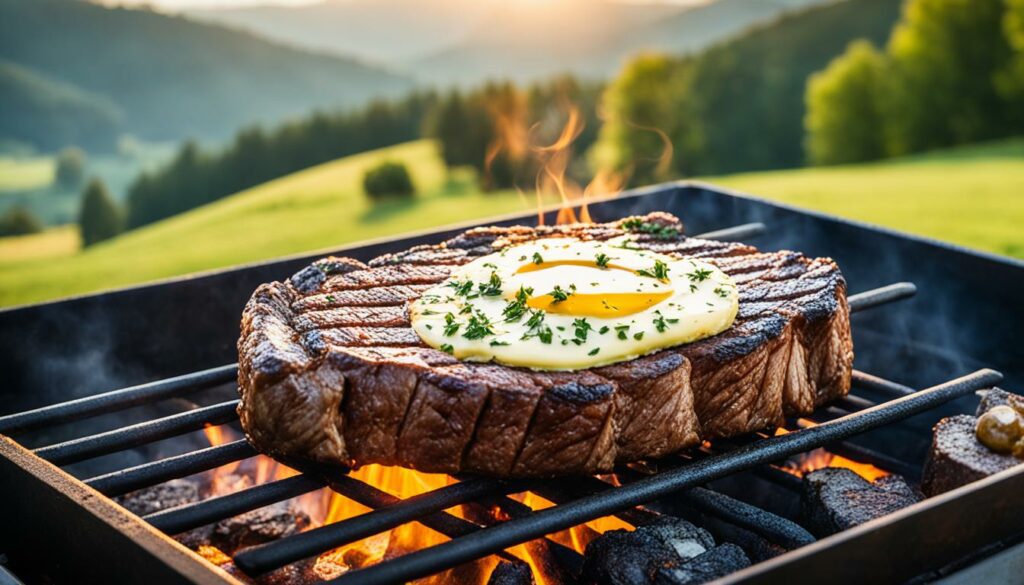
For juicy steaks, choose thick cuts with some fat. This fat keeps the steak moist while grilling. Let the steak sit for 10 minutes after cooking. This spreads the juices evenly, making every bite succulent.
The best temperature for grilling steaks is important. Use medium-high heat, 400-450°F (200-230°C). Aim for 130-135°F (54-57°C) inside for medium-rare. These temperatures help the steak sear nicely and stay juicy inside.
Grass-fed beef can dry out fast if it’s overcooked. So, perfect grilling is a must. Attention to detail and knowing how to manage the grill’s heat turns lean steaks into a tasty meal.
Understanding the special nature of pasture-raised chicken roasting is key. Start by letting the chicken sit outside the fridge to warm up. This helps it cook evenly, avoiding dry parts and raw spots.
Unleash the full flavour of pasture-raised poultry by letting it rest. This step makes a 30-minute difference. It allows the chicken to warm up just right. Then, it cooks evenly, becoming tender all over.
A meat thermometer is essential for the best chicken. Pasture-raised types cook quickly and can dry out easily. Aim for 165°F (75°C) inside the chicken. This way, it’s both safe and moist to enjoy.
Make your roast even better by trussing it. Add flavour with seasonings and herbs like salt, pepper, and rosemary. These steps, along with drying the chicken before cooking, make the skin crispy. And, let your roast rest after cooking. This spreads out the juices for a more delicious bite.
One great thing about preparing pasture-raised meats is making crafting meat gravies and homemade sauces for meat. These add to the taste and make the most of our organic ingredients. The juices left in the pan after cooking the meat are full of nutrients and great flavour.
The key to a great sauce or gravy is using top-notch ingredients. I often choose butter or animal fats such as tallow for their rich taste. They mix perfectly with juices from beef, pork, or chicken to build a strong sauce base.
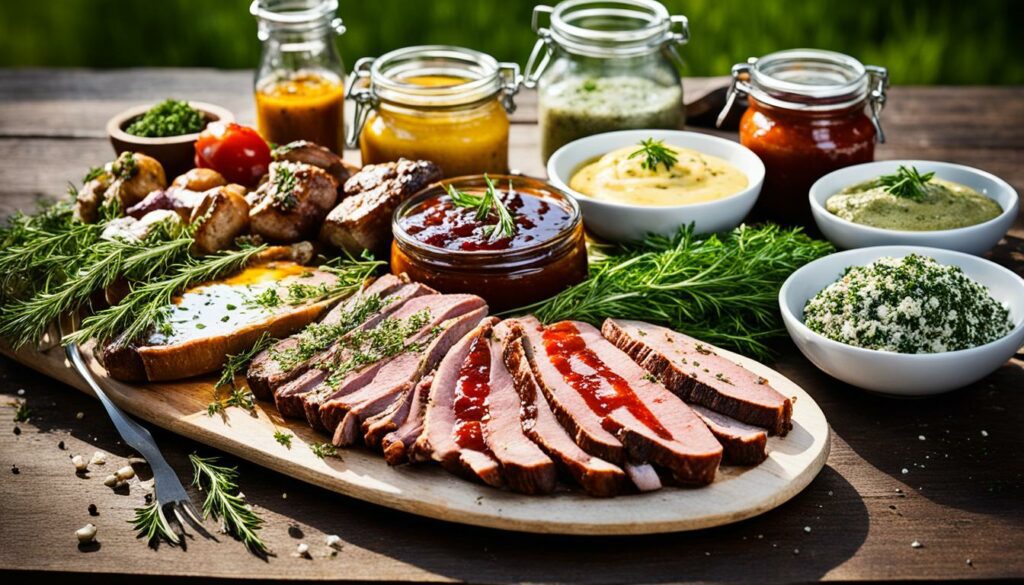
I like to thicken sauces in traditional ways, like reducing drippings for flavour or using egg yolks for texture. I use natural things like grass-fed butter or bone broth. This way, the sauce is not only delicious but also good for you.
Seasoning is also key. We avoid processed stuff, so we use herbs, sea salt, and pepper. They make the meat’s natural taste better, without hiding it. The sauce ends up adding to the meal in a genuine way.
Choosing these top ingredients and methods can turn a simple meal into something great. By doing so, we support eco-friendly and ethical cooking. Plus, we get to enjoy the amazing taste of pasture-raised meats even more.
Choosing to prepare meat in a healthy, organic way is good for us and the planet. It means using organic ingredients and saying no to processed additives.
When I cook healthy meat dishes, I prefer using organic herbs and marinades. This approach helps the meat’s true taste come out. Primal Pastures is a great example. It began with 50 birds in SoCal in 2012 and now offers goodies like chicken drumsticks. Their organic practices make sure their products are top-notch in quality and flavour.
Avoiding processed food additives is key in my kitchen. They hide the natural meat taste and lower its health value. Take grass-fed beef, for example. It’s richer in Omega-3 and has less unhealthy fats. Season it with organic spices to keep it nutritious.
But what about if I’m cooking chicken? Using organic seasonings is still the way to go. Doing so protects its 50% extra vitamin A, making it better for our health.
| Benefits | Conventional Meat | Pasture-Raised Meat |
|---|---|---|
| Omega-3 Fats | Low | High |
| Antioxidants | Fewer | More |
| Vitamin A | Lower | Higher |
| Processed Additives | Common | Rare |
This way of cooking also respects the animals, like Primal Pastures’ cattle. They’re part of the less-than-0.01%-qualified American beef. The farm’s organic methods are proven at their 30-acre place near Downtown Murrieta. They show how avoiding additives results in outstanding taste and supports the planet too.
For me, making pasture-raised meat dishes is more than just cooking. It’s a way to support sustainability and ethical eating. It’s key to think about where the meat comes from and how it’s cooked. Using farm-to-table methods, we ensure these meals not only taste great but also respect the animal’s life and the earth.
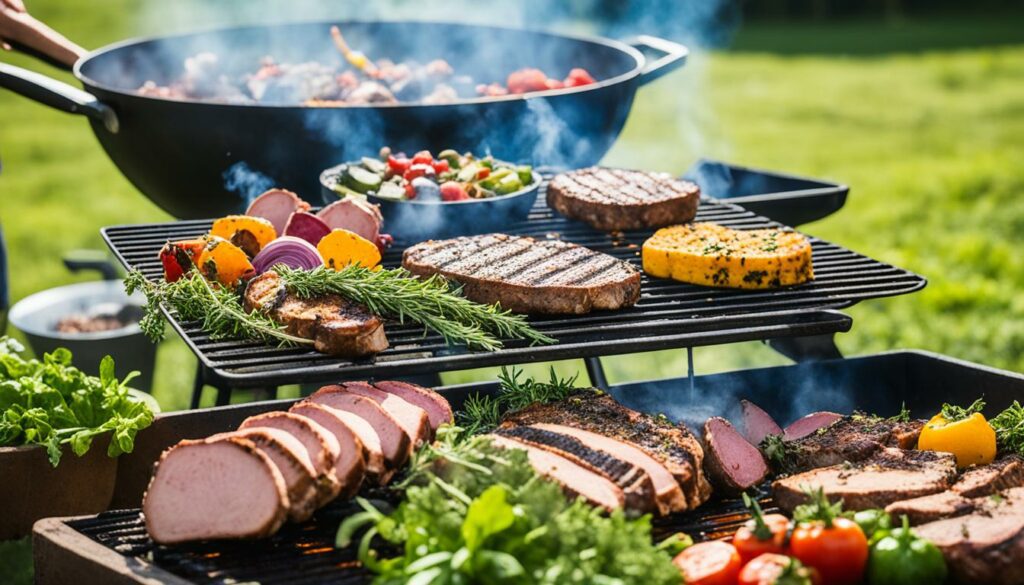
Roasting is a top choice, especially for pasture-raised chicken. Cook a 3 to 4-pound chicken for about 20 minutes per pound in a normal oven, then add 15 more minutes. Use a meat thermometer to check it’s 165 degrees Fahrenheit in the breast or thigh, but not near the bone.
Pasture-raised chicken is usually leaner because they’re more active and eat better. To keep them moist and tasty, try roasting with the breast down. Or use a deep dish with a lid to save the juices. Tying the legs and wings helps it cook evenly, known as trussing.
Thawing the meat right is very important. A quick way I do it is by putting the wrapped chicken in water in the fridge for 12 to 24 hours. Make sure it’s fully thawed for even cooking and to avoid cold spots. Don’t wash the chicken, as cooking will kill any bacteria.
Knowing the health benefits of pasture-raised meat makes them even better for our meals. Take grass-fed beef, for instance. It has fewer calories and more vitamin E, beta-carotene, and omega-3 than grain-fed beef. Choosing these meats is a win for our well-being and supports ethical values.
Time-tested cooking methods really bring out the best in these meats. I like making my own sausages to ensure quality and ethics. Dishes like meatballs and beef roasts become special, turning simple meals into statements of sustainable living.
Plus, using homemade or locally grown ingredients like fats, butter, cheese, herbs, and bread adds a lot to the taste. It fits perfectly with the farm-to-table idea and creates a fulfilling cooking journey.
To sum up, cooking with ethical meat is fulfilling for body and soul. Be it a slow-cooked pork roast or a perfectly roasted chicken, every dish celebrates the goodness of pasture-raised food. This shows our dedication to sustainable and ethical cooking.
Embracing sustainable meat cooking tips lets you enhance flavours and help the planet. Cooking pasture-raised meats needs care to touch nature lightly. Using leftovers for new meals cuts down waste. Make today’s lunch with last night’s dinner for smart, eco-friendly cooking.
Also, saving energy while cooking is key. Grass-fed beef, with less fat, cooks quicker. It needs about 30% less cooking time than corn-fed beef. By watching cooking times and oven use, you cut down on energy use.
When thawing meats, the fridge method is best for safety and taste. Here’s how long various meats need to thaw:
| Meat Type | Thawing Time (in Refrigerator) |
|---|---|
| 1-inch Steak | 12-14 hours |
| Small Roast | 3-5 hours per pound |
| Large Roast | 4-7 hours per pound |
| Whole Bird | 24 hours per 4-5 pounds |
| Poultry Parts | 24 hours per 1-2 pounds |
Cooking meats like sausages and poultry right makes them taste better and is eco-friendly. You can pan-fry sausages with a bit of water or bake at 180°C. Marinating pastured poultry overnight makes it juicy. Use a slightly acidic mix to bring out its flavours.
Knowing meat’s impact on our earth is important. Choosing local, pasture-raised meats helps the farm and lowers your carbon print. Pick ingredients wisely and cook smart for a sustainable kitchen.
Lastly, let your cooked meat rest before serving. Covering grass-fed beef for 7-10 minutes helps keep it juicy. These easy steps not only make your food better but also show you care about the planet.
Truly embracing farm-to-table meat means using every part wisely. This approach ensures we waste less and truly honour the animal that gives us food.
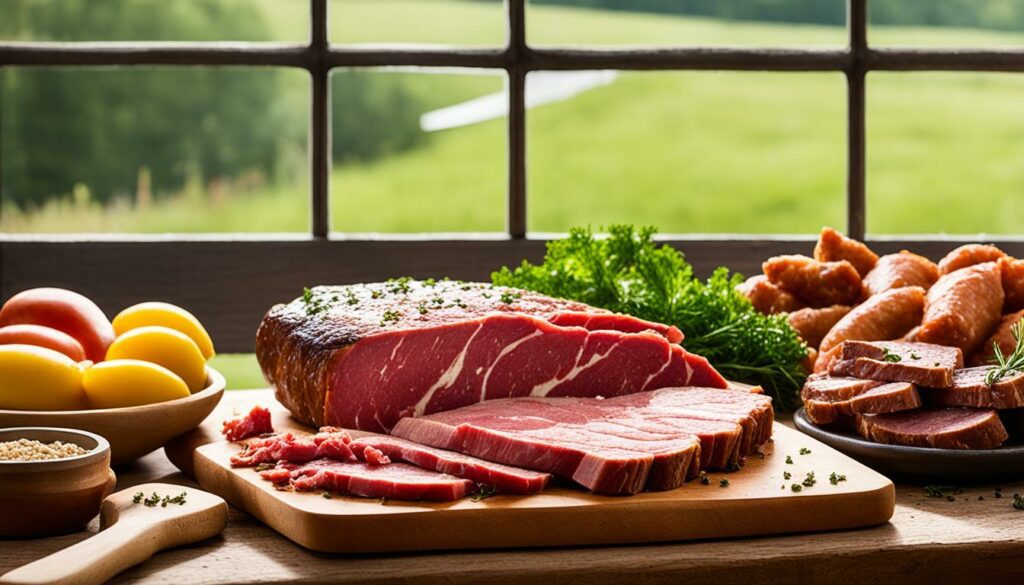
Making stock from bones and scraps is key in this cooking style. It gives a tasty base to many meals and shows respect for the animal. When we simmer bones with veggies and herbs, we get rich flavours and nutrients. It’s perfect for adding to soups, sauces, and stews. This method teaches us to value meat in its entirety.
Using all parts of the animal doesn’t stop at making stock. It includes cooking offal and special cuts too. Liver and kidneys, for example, can be turned into tasty dishes. Slow-cooking cuts like shank and oxtail make them tender and full of flavour. This way, we eat a wider variety of foods and show we appreciate the whole animal.
Supporting farm-to-table methods values ethics and sustainability. A big part is making your own stock and using all the meat. These steps help us cook in a way that respects animals and the environment. For more about ethical cooking, check out ethical meat cooking techniques.
Cooking pasture-raised meats is more than just a process. It combines great cooking ways with doing the right thing. Understanding what makes grass-fed beef different is key.
It’s more prone to overcooking but benefits a lot from being marinated. Cook it for about 30% less time than you normally would. Aim for a medium-rare inside, around 125°F to 130°F. Let it rest for 5-10 minutes. This helps the meat stay juicy and tender.
Pasture-raised meats are healthier for us. They have more Omega-3s and better kinds of fats than regular beef. Instead of a high 7:1 ratio, the balance in grass-fed beef is 2:1. This is good for your health in many ways, from helping to prevent cancer and obesity to supporting better heart health.
Eating sustainably also means choosing locally. By supporting farmers who take good care of their animals, we can help the environment. In places like Hawaii, most of the food comes from outside. But practices that raise meat on pastures can actually create a space for a cow that doesn’t contribute to global warming. Choosing these meats helps local businesses and jobs, and it’s good for the planet.
Starting this journey means making mindful choices. Every time we choose pasture-raised, we help make our cooking more ethical and our planet a better place. Enjoying these dishes means enjoying food that’s not only good for you but good for the world.
Pasture-raised meats come from animals that find their own food. They live more naturally. This makes the meat have a better taste, texture, and nutrition than other meats.
Animals in pasture-raised meats roam free, eating grass. This is different from animals in conventional meats, which are often kept in tight spaces and fed grains.
This farming method makes the meat healthier. It has good fats, more vitamins, and antioxidants that are good for you.
You can find pasture-raised meats by looking for local farmers who care about their animals. They might sell the meats directly. Checking butcher shops known for sourcing from ethical farms is also a good idea.
Don’t forget to read the labels. Look for certifications that show the animals had plenty of time outside.
For pasture-raised beef, ‘low and slow’ cooking is best. This method keeps the beef moist and tender. It also brings out the natural flavors of the meat.
Grass-fed meat recipes include dishes like wine-brined pot roast and pan-seared lamb. These methods highlight the unique taste and quality of the meats.
Brining is a top technique for pasture-raised pork. It keeps the meat juicy and adds flavour.
Using herbs and spices, beyond just salt and pepper, makes the pork even tastier. This way, you get a great meal out of it.
Experts suggest knowing the right cooking temperatures. They also recommend techniques like the Maillard reaction to enhance flavour.
Modern tools, such as meat thermometers, can help you cook these meats perfectly.
Slow cooking with pasture-raised meats is great. It really adds depth to flavours and makes tough cuts tender.
This method highlights the high-quality of the meat. It also makes the dishes taste amazing.
Grilling pasture-raised steaks needs care. Use thick steaks with some fat on the edge. This keeps them juicy.
Make sure to grill with the right temperature. Also, check the steak often to avoid it getting too cooked.
To roast pasture-raised chicken well, start with room-temperature chicken. Use a meat thermometer to cook it just right.
Other tips include patting the chicken dry, tying its legs, and letting it rest after cooking. This makes the chicken juicy and evenly cooked.
Making great sauces and gravies starts with good pan juices. Add seasonings and thicken them up.
Simmer until they’re just how you like them. This really brings out the taste of pasture-raised meat.
Healthy, organic meat cooking means using pure ingredients. Avoid additives and go for organic spices and herbs.
This brings out the true taste of the meat without using artificial enhancers.
To make unique dishes with pasture-raised meats, consider the animal’s welfare. Make dishes like sausages and meatballs from scratch.
Roast cuts in a way that respects the animals and the environment.
For sustainable cooking, use leftovers wisely. Cook in ways that save energy. Always choose meat that’s been raised ethically and locally.
These tips help reduce kitchen waste and protect the planet.
Important farm-to-table techniques include using every part of the animal. Make your own stocks and broths from the leftovers.
These practices are good for the environment. They also make the most of pasture-raised meat.