
By 2050, the global population will reach 10 billion. This will increase the need for more food. However, we face challenges like less land and not enough people to farm. Climate change and soil being less fertile also pose problems. Luckily, companies, like Intellias, use AI to make farming more efficient. They help farmers produce more food while caring for the planet.
Farming must change with new technology. Using AI is key to smarter farming. It helps make decisions that increase crop yields. The market for AI in farming is quickly growing. By 2028, it could be worth USD 4.7 billion. Such growth means more affordable food and less waste. It’s a crucial step towards farming that’s good for the future.
Artificial intelligence is changing the face of farming. It’s a big step from using basic tools to today’s high-tech methods. With AI, farmers can work smart, using real-time data to make better decisions.
Agriculture has always evolved with technology. The Industrial Revolution made farming much more efficient. Then came the Green Revolution, boosting crop growth with fertilisers and GMOs. Now, AI is the new frontier. It helps farmers track crop growth in a way never seen before.
AI in agriculture is growing fast, with its market share expected to triple by 2028. This shows farmers are rapidly adopting AI tools. These tools go beyond automation. They include drones that spot pests very accurately and tell farmers about soil health.
The global agricultural scene is going digital with AI. It can map yields and operate machinery without a human in the loop, improving farming’s accuracy and efficiency.
| Trend | Impact |
|---|---|
| Precision Agriculture | Detailed insights from satellite data and sensors cut waste and boost crops. |
| AI-Powered Drones | Spot pests and diseases very accurately, reducing pesticide use. |
| Predictive Analytics | Foresee bad weather and pest attacks, leading to better protection for crops. |
| Autonomous Machinery | Driverless vehicles and smart watering systems make farming more efficient. |
AI in agriculture isn’t just tech progress. It’s a turning point toward sustainable and effective farming. It’s key for a brighter future in farming worldwide.
The use of artificial intelligence in agriculture is changing how farms are run. AI makes farming more efficient, saving money and increasing crop yields. This technology helps farmers tackle the challenges of a growing world population and limited farm resources.
AI systems help manage farming resources better. For example, they can optimise water use by checking soil moisture and plant health. Sensors give live updates, allowing quick responses to water and pest problems. This saves time, resources, and improves farm operations.
AI is cutting down farming costs in big ways. It analyses data to reduce costs, reducing the need for human workers and using robots for usual jobs. It also helps in planning the best times to plant and control pests, saving a lot on chemicals. This smart approach slashes waste and increases profits, making the initial investment worth it despite its high cost.
AI significantly boosts crop output in agriculture. It provides in-depth views on crop and soil health, improving productivity. AI originally helped with basic irrigation, but now it tracks crop conditions, predicts yields, and suggests top farming methods. This leads to more food and better quality, essential as the world’s population grows.

| AI Benefits in Farming | Description |
|---|---|
| Efficient Resource Management | Optimises usage of water, energy, and other resources through precise monitoring and data analysis. |
| Cost Savings | AI reduces the need for manual labour and lowers herbicide and pesticide usage, leading to significant operational cost savings. |
| Increased Yields | Enhances crop productivity by providing accurate insights and recommendations, ensuring optimal growing conditions. |
The globe is getting more crowded, heading for 10 billion people by 2050. To feed everyone, the need for more food is clear. Predictive analytics in agriculture is key here. It uses AI data insights to study various data, helping farmers make smart choices. These choices boost how much food is grown.
The AI in farming market is on the rise. It’s expected to jump from $1.7 billion in 2023 to $4.7 billion in 2028. This shows that more and more farmers see the advantages of using AI. For example, AI can spot apple black rot with over 90% accuracy. This high precision is great for predicting and dealing with plant diseases.
Now, AI drones are changing how pesticides are spread, doing it more precisely. This cuts back on waste and harm to the environment. Also, machines that manage crops by themselves are saving water when they water plants. This is a big step towards farming that uses less and is friendlier to the planet.
The use of AI isn’t just making growing crops and monitoring the soil easier. It’s also bringing new ideas like vertical farming. This special way of growing food uses less space and fewer resources. That means it can save a lot of money for farmers and make them more profit.
Lastly, AI is even looking after the health of animals. It can find out when they’re not well, so they can be helped quickly. This caring for animals more effectively also makes farming more efficient.
| Advancement | Impact |
|---|---|
| Apple Black Rot Detection | Accurate identification with over 90% precision, improving disease management |
| AI-Powered Drones | Enhanced precision in pesticide application, reducing waste |
| Autonomous Crop Management | Water conservation through efficient irrigation, promoting sustainability |
| Vertical Agriculture | Increased food production with reduced resource usage |
| Livestock Health Monitoring | Early health issue detection, boosting animal well-being and productivity |
Smart irrigation systems are a big step forward in farming, using AI and IoT. They look after how water is used closely. These systems watch the environment and adjust water use, saving water and using technology to help.

AI is changing how we water crops by checking the soil, the weather, and what the crops need. This means plants get just the right amount of water, without wasting any. Studies show this can lower water use by a quarter and boost crops by a fifth to a third.
These clever systems can also find and fix leaks. They use AI to catch and stop leaks fast, stopping water waste and guarding crops. Being smart about leaks helps save water and keeps farming sustainable. For example, Mottech’s system is excellent at spotting leaks early, making watering more efficient and eco-friendly.
AI-driven irrigation systems not only save water but also cut down on costs and benefit the economy over time. This is because they don’t need as much human oversight and work more precisely.
The world’s population is growing, and so is the need for food. That’s where precision agriculture comes in. This technology helps make farming smarter and more sustainable.
One key part of precision agriculture is using drones. Drones can fly over fields and take pictures. These pictures show farmers where they need to put things like pesticides and fertilisers. This helps farmers use less of these chemicals, which is better for the environment.
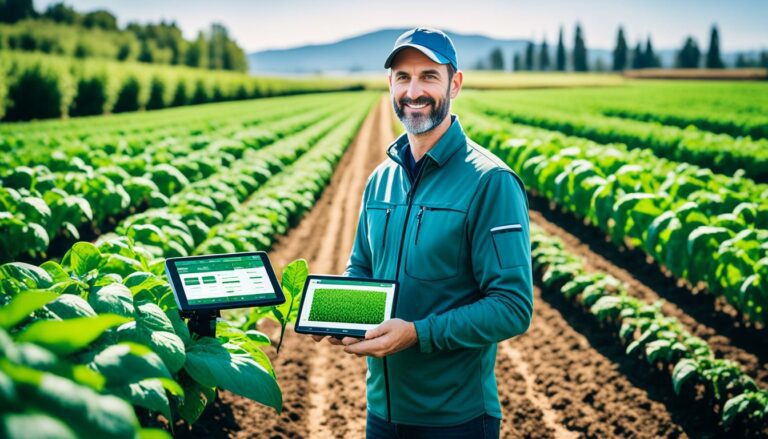
Sensors on the ground also play a big role. They collect lots of data on things like soil moisture and the crop’s health. This info is then sent to a computer that uses artificial intelligence to figure out the best time to plant or harvest.
The AI in farming market is set to grow a lot in the next few years. By 2028, it could be worth USD 4.7 billion. AI is very good at spotting diseases like apple black rot early. It can do so with over 90% accuracy.
Farm machinery is getting smarter too. Machines are now able to water crops only when they really need it. This saves water and helps crops grow better. Such smart farming practices make the most of our natural resources.
AI also helps with other farming jobs. Nearly all farms face struggles in work efficiency with the data they have. To fix this, many are planning to use more robots on the farm. These robots will help with work like planting and packaging.
| Statistic | Detail |
|---|---|
| AI in Agriculture Market Growth | From USD 1.7 billion (2023) to USD 4.7 billion (2028) |
| Accuracy of AI in Detecting Apple Black Rot | Over 90% |
| Future Investment in On-Farm Robotics | Over 50% of respondents plan in next 2 years |
| Challenge in On-Farm Activities | 92% of agribusinesses |
Climate change has made farming more challenging. Unpredictable weather can hurt crops. Precision agriculture offers a way to farm more efficiently, even in changing conditions. Using AI in farming is key to a sustainable future.
Robots are changing agriculture, making it easier and more efficient. They are needed to cater to the world’s growing population. Automation is key, especially with costs going up and not enough workers available.

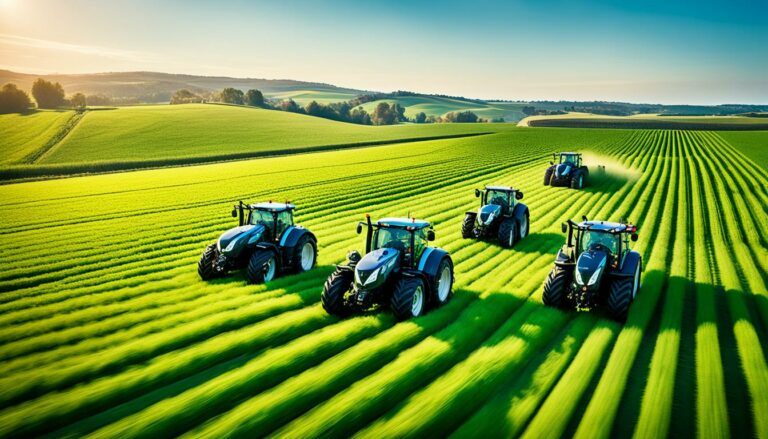
Autonomous tractors are leading the way in this change. They can do tasks like ploughing and harvesting very accurately. These machines let farmers work smarter by saving time.
A strawberry robot harvester can do what it takes 30 people to do in three days. Also, they reduce the need for pesticides a lot by using computer vision. This helps the planet too.
Greenhouse robots with AI take care of plants in a smart way. They use skillful AI and machine learning to watch over the plants’ needs. This boosts crop yield a lot compared to the old ways.
They save water too by checking the plants’ health and the soil’s moisture. This is good for the environment.
But, the big problem is how expensive these robots are. This is a major hurdle for farmers in poorer parts of the world. High costs for repairs also add to the challenge.
Still, the farming sector is eager to use these new technologies. They see it as a path to becoming more effective and eco-friendly.
It’s predicted that by 2050, the world will have 9.8 billion people. This will put more pressure on farming to produce more while keeping the environment healthy. Crop surveillance technology, powered by AI, helps by providing key information.
AI soil analysis changes how we farm by giving farmers detailed information. This includes using things like soil sensors, drones, and images from space to track plant health. It means farmers can plan better, thanks to this high-tech plant science data.
This high-tech help doesn’t stop there. It also predicts when plants might get sick or not grow well. It spots problems like bugs, diseases, or poor soil early. Crop surveillance technology and AI soil checks let farmers react fast. This keeps their crops healthy and their farm work smart.
These new AI tools are also good for the planet. They help farmers not to overuse water and fertiliser. This contributes to farming in a way that’s good for the long term. By using remote sensors and smart learning, we can farm better. This means using data to make crops grow more efficiently and save resources.
| AI Technology | Benefits |
|---|---|
| AI Soil Analysis | Provides precise data about soil health, forecast plant health and yield. |
| Crop Surveillance Technology | Monitors crop health, detects diseases, and facilitates real-time adjustments. |
| Plant Science Data | Informs data-driven decisions for better resource management and yield optimisation. |
By using AI to watch crops and soil, agriculture becomes more efficient. We all know how important water is, and farming uses most of it. With technology, we can farm smarter. This means we can do more with less, which is great for the planet and our food supply.
AI technology has changed how we look at pest control and disease spotting on farms. It offers new ways to tackle these problems. This is vital as old methods don’t match today’s issues. AI in pest control is key. It stops crops from falling in production by 30-33% yearly. It does this with amazing accuracy and speed.

Thanks to computer vision, farmers can quickly see if pests are attacking or crops are sick. This tech uses drones, satellites, and sensors on the ground. They work together to find pests very precisely. AI-powered systems catch the problems early. This means less damage and more fruits and veggies. Farmsense, a top startup in this field, recently got $2.2 million. They will use this money to help farmers with their FlightSensor tool. This shows that more and more farmers are trusting AI in pest control.
Machine learning goes beyond the old ways of spotting diseases. It uses images to see diseases clearly. This method is very accurate. It can find out what’s making the plants sick, be it a fungus, virus, or bacterium. To get better at this, it learns from lots of plant disease pictures from places like PlantVillage and Plant Doc. With tomatoes, chillies, potatoes, and cucumbers, these smart methods work well. They cut down on work costs and make farms more productive. AI is becoming very important in farming with these benefits.
| AI Capability | Benefit | Example |
|---|---|---|
| AI Pest Control | Reduces crop loss | Farmsense’s FlightSensor |
| Computer Vision Disease Detection | Accurate disease identification | PlantVillage dataset |
| Machine Learning in Agriculture | Enhanced crop productivity | Studies on tomato, chilli, potato, and cucumber diseases |
By 2050, we might have 10 billion people. This puts more pressure on farms to produce more. To meet this demand, we need smart ways to farm better. The AI in agriculture market is set to reach USD 4.7 billion by 2028. Technologies like these are crucial for sustainable farming.
AI drones bring precision to pesticide use. They figure out the exact amount needed for each spot. This means farmers can use just enough pesticide. It improves the crops’ quality and cuts costs, helping the environment too. These drones spot problems like apple black rot with over 90% accuracy.
AI also helps with spreading fertiliser. It uses data to decide the perfect time and amount. This ‘just-in-time’ approach reduces waste and protects the environment.
Farmers benefit from this through better profits. By studying data, AI understands the plants and soil. So, it can optimise fertiliser use, boosting crop growth.
“Agricultural production must increase by at least 70% from current levels to meet nutritional trends for the growing population.” This highlights the importance of innovative technologies like AI in meeting future food security challenges.
AI is not just about automating tasks. It’s about making farming smarter and sustainable. Real-time data on crops and resources is vital. With AI, farmers can use less pesticide and fertiliser. This improves productivity and is kinder to the planet.
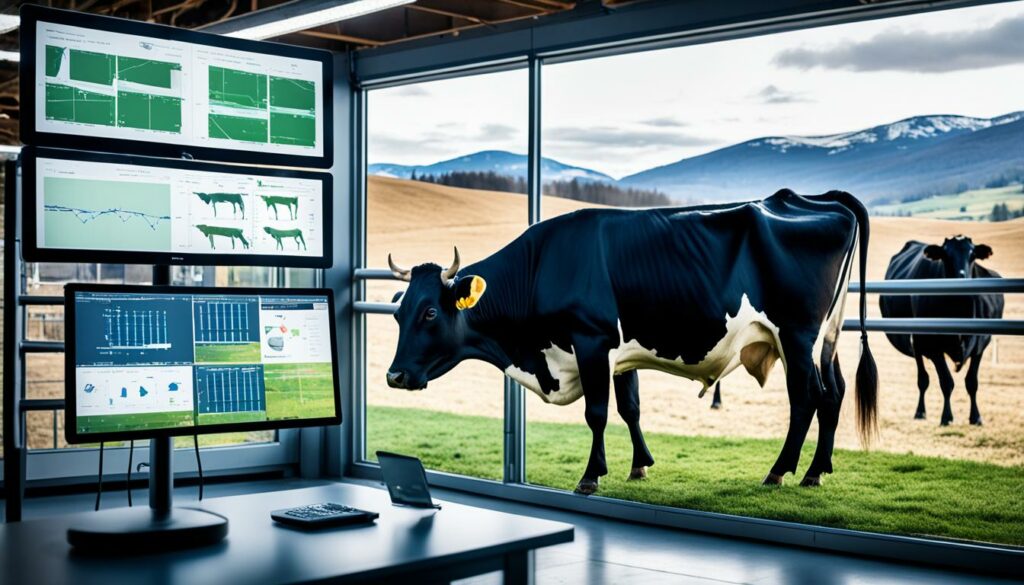
Precision livestock farming changes how we look after animals. It uses AI to track health and productivity. This boosts animal wellness and their output.
Aerial management employs drones with computer vision for herd oversight. This makes livestock safer. Vision AI is crucial for checking on activities like eating, drinking, and moving. It improves how farms are run. Finding diseases or injuries early with vision AI cuts spread risks and helps animals.
LabelGPT tools are now a game-changer in livestock farming. They offer automated workflows, better team work, and precise dataset updates. These tools make labelling images fast, aiding effective farm management. They ensure the datasets used are of top quality for AI solutions in farming.
Using AI in looking after animals is key for better productivity and well-being. It tackles challenges such as changing climate and unstable supply chains. AI boosts food plans and nutrition, making animals healthier and more productive.
AI also helps figure out and stop diseases in livestock. By studying health data, it can spot early signs and give health alerts. By using data on genetics and environment, it makes these alerts even better, ensuring fast action.
Besides, drones can now count livestock automatically. This gives specific numbers and helps in planning better diets. AI looks at genetics for breeding advice, leading to better livestock and farm results. It also helps farmers track animals in real time, promoting herd management and safety.
With the global population on track to hit 10 billion by 2050, the need for more food is growing. Farm management software steps in to help meet this demand. It uses real-time data and smart systems to improve crop production. This tech brings together info from sensors, satellites, and weather forecasts to make better farming decisions.
Real-time data analysis is the heart of modern farming software. It lets farmers watch their fields closely and react fast to any issues. Tools like these help save water, improve crops, and protect the environment. Advanced tech, like AI, makes this monitoring precise. It helps farmers use their data to get the best results from their land.
Decision support systems turn data into plans that farmers can use. They include maps of crop yields and predictions about what might happen. With these, farmers can water their fields, add fertiliser, and fight pests exactly when needed. This smart use of data makes farms work better and smarter. Every choice is based on solid information, making the farm more productive.
“The sector’s pivot to AI-driven innovations, as highlighted by MarketsandMarkets, foresees the AI in agriculture market growing from USD 1.7 billion in 2023 to USD 4.7 billion by 2028, underscoring the essential role of advanced technologies in modern farming.”
Using AI in farming comes with some big hurdles. To move forward well, we must think about the impact on jobs and keeping data safe. This helps keep farming sustainable and up-to-date.

AI and farming’s big challenge? Keeping data safe. AI uses lots of info to help out, like crop health details. But, this info needs protecting, especially under laws like GDPR. Without protection, data theft is a real worry.
AI in farming will be worth loads in the future. This means spending more on cyber security to keep data safe. It’s a big job to make sure farmers feel their info is secure.
AI may lead to less work for people in farming. It could mean many jobs might go away. This change will be tough on the society and economy.
AI can help with work shortages but might also cause job losses. To make this change smoother, workers should learn new AI skills. However, not everyone can afford AI tech, making it hard for small farmers.
In conclusion, solving AI’s challenges in farming is key for a good future. We need to tackle data safety and job impact. This way, we can enjoy AI’s benefits without the downsides.
Looking ahead, farming is set to change a lot with AI-enhanced methods. With the world’s population expected to hit 10 billion by 2050, farms will need to produce more from less land. This puts a big demand on farming to step up.
AI is key to meeting these challenges. It helps manage resources better, improving how we use water, fertilizers, and pesticides. This saving on costs and the planet benefits too.
Next-gen farming tech tackles the problem of not enough workers. Imagine driverless tractors, smart irrigation, and drones that work with no people needed. This not only saves time but is very accurate. Also, AI’s number crunching helps farmers make smart decisions by analysing huge amounts of data. They can pick the best times for planting and harvesting.
This tech makes farming more responsive to changes in the environment and markets. It uses a method called precision agriculture. This approach is all about managing crops and soil better. By doing this, it uses fewer resources, less weed killers, and produces better crops.
| Aspect | Current Challenge | AI Solution | Future Benefit |
|---|---|---|---|
| Labour Shortages | Limited workforce availability | Driverless tractors, smart irrigation | Higher efficiency and accuracy |
| Climate Change Adaptation | Unpredictable weather patterns | AI-powered predictive analytics | Optimized sowing and harvesting |
| Resource Management | Overuse of water, fertilizers, and pesticides | Precision agriculture | Reduced environmental impact, cost savings |
Also, the AI in farming market is on track to grow from USD 1.7 billion in 2023 to USD 4.7 billion by 2028. This growth shows farming is moving towards using more data and being greener. Clearly, AI in farming will play a huge role in tech’s future. This is all about smart and sustainable growth.
Looking into AI’s role in farming, we see big improvements in how we grow food sustainably. Trapview and CropX have shown us new ways to boost crops and manage resources better.

Trapview uses AI for better pest management. Their AI predicts pest outbreaks, cutting down on the need for pesticides. This approach helps keep crops healthy while using fewer chemicals.
| Company | AI Solution | Outcome |
|---|---|---|
| Trapview | Predictive Pest Management | Reduced Pesticide Usage |
| CropX | Soil and Crop Sensor Technology | Increased Water Efficiency |
However, using AI in farming faces some hurdles too. It’s vital that all farmers, big and small, can use these new technologies. This ensures everyone can enjoy the benefits.
Farming with AI may also change the jobs needed on farms. We need to make sure the good of AI in farming outweighs any downsides. This means encouraging farming ways that help all and our planet.
These success stories are guides on how AI can improve farming. We learn from them how to overcome challenges and build a farming future that’s strong and eco-friendly.
Artificial intelligence in farm automation is a big leap forward. It’s boosting agriculture towards more sustainable practices and higher productivity rates. With a growing population, hitting 10 billion by 2050, AI’s role in the future of farming is crucial. The AI in agriculture market is set to jump from USD 1.7 billion in 2023 to USD 4.7 billion by 2028, showing tremendous growth.
AI shines in spotting crop issues, like apple black rot, with over 90% accuracy. It’s excellent at pinpointing insects too, which helps protect crops and increase harvests. Through AI-powered drones and driverless tractors, farming becomes more efficient. This leads to both economic savings and better farming practices. Farmers gain from smarter decisions and improved use of resources.
Moving towards AI-led farming does come with some obstacles. There’s a need to improve infrastructure and digital knowledge. Yet, by working together, governments, tech companies, and schools can solve these issues. With AI, farmers get new tools for tackling farming challenges. This helps ensure there’s enough food and it strengthens local economies. The future of farming is bright, blending traditional wisdom with state-of-the-art tech, for the good of all.
AI helps on the farm by making things more efficient and saving money. It uses smart tech like machine learning and robots. These tools give farmers up-to-the-minute info, help make farming more exact, and protect the planet.
Throughout history, each new farm technology has boosted how much we can grow. From the first tractor to the Green Revolution, every step has made farming better. Now, AI is changing the game by showing farmers when to plant, what the soil needs, and keeping a close eye on the crops.
Right now, farming with AI means using smart watering systems, finding crop diseases fast, and learning how to grow more with data. Adding in the IoT, farmers can take better care of their fields. By 2028, the market for AI in farming could hit USD 4.7 billion.
AI makes resources go further by using data to control what the plants and soil get. It smartly uses water, spreads fertilisers just right, and cares for the soil better. This way, farms can save money and be kinder to the planet.
In farming, AI makes everything run smoother, which cuts down on costs. It does this by using machines that don’t need people to work them. Plus, it helps keep plants healthy and stops waste in watering and feeding them.
AI boosts how much food we can grow by watching over the crops with smart eyes. It knows the best times to plant and pick the crops and makes sure they get just what they need. AI also spots problems early, like bugs, to protect the harvest.
Predictive analytics look at lots of data to guess what might happen on the farm. They help farmers choose the perfect times to plant and pick the crops, test the soil, and see if diseases are coming. This means better decisions and smarter farming.
Smart watering systems use AI to check if the soil really needs water. This saves a lot of water, makes the plants grow better, and stops leaks. It’s a big step in farming that cares for the Earth.
Precision farming means using tech to grow crops just right. AI steps in by gathering info from the sky and the ground. It then helps farmers plant, feed, and water their crops exactly where they need it. This brings much better harvests.
Robots in farming, like tractors that drive themselves, do the hard work perfectly. They help reduce costs, make more food, and need fewer people to watch over them. This is making farming better and more efficient.
AI watches the crops and the soil using special cameras and smart learning. It tells farmers if the plants are sick, how much food to give them, and if problems are on the way. This quick info helps farmers keep their crops healthy.
AI looks at the plants closely with machines that learn fast. It can see bugs and sickness very early. This means farmers can stop the problem before it spreads. So, the plants stay strong and make lots of food.
Drones that understand what the crops need can put food and bug spray in just the right spots. This special care means there’s not too much chemical, the Earth is safe, and the crops get their food exactly when they need it. It’s a win-win for the farm and the environment.
Special AI tools with drones and smart sight keep an eye on the animals, watching how they act. If there’s a problem, farmers know right away. This keeps the animals happy, makes the farm work better, and it’s good for the animals.
Farm software brings together all the info to help make good choices. It looks at real-time data from different places. This smart way manages the farm better, saving time and money.
Using AI on farms could mean some jobs might not need people anymore. There’s also worry about keeping info safe. Handling these concerns well is important so that AI helps everyone without causing other problems.
The future AI on farms is all about getting smarter to face challenges. It will help farmers deal with changing weather and growing food for more people. This way, farming will stay strong and green.
Companies like Trapview and CropX show how AI is making farming better. They help grow more food, save money, and use resources wisely. These wins highlight AI’s big role in feeding the world sustainably.