
Global agriculture faces the huge task of feeding 10 billion people by 2050. With the population growing, AI and machine learning are set to change farming. They will help with issues like not enough land, less workers, climate change, and poor soil.
Today, cutting-edge agri-tech uses AI in farming to get the most from crops. It helps use resources better too. These new ways of farming will help growers keep up with the need for more food in a sustainable way.
The European Commission knows we must farm in ways that can keep going. AI and machine learning in farming help by making soil better without too many fertilisers. They also cut the need for lots of people to work on farms, like what the UK might see after Brexit, by letting machines do more of the work.
The agriculture field is changing fast, thanks to new technology. This change is crucial as the world’s population grows. With about 10 billion people expected by 2050, farming needs to be more efficient and eco-friendly than ever. Today, we see AI and machine learning joining hands with traditional farming. This marriage brings new heights of productivity and sustainability.
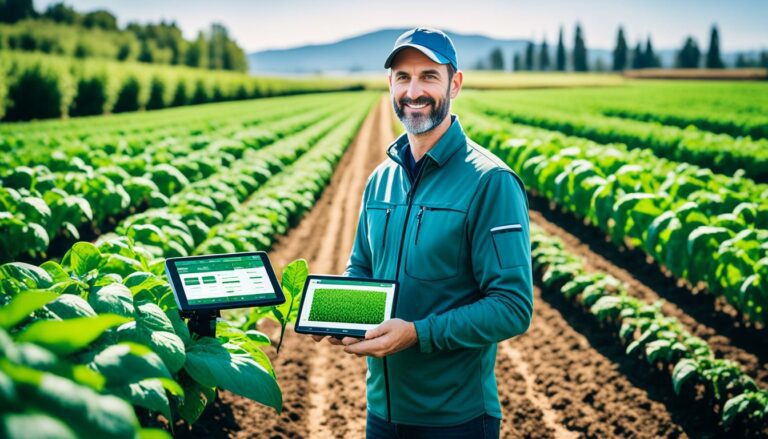
Now, farms are getting smarter. They’re using AI for making better choices and running things more smoothly. This approach, known as precision agriculture, involves AI and machine learning in almost every step. It allows for things like detailed soil checks, predicting the weather, and forecasting crop yields. Farmers can now stay ahead of what the market needs, keep a close eye on their crops, and water them when necessary, all very precisely.
But it doesn’t stop there. AI is changing the game by using information to solve old problems in new ways. For example, it can spot diseases on apples with almost perfect accuracy and help farmers use pesticides smartly. These smart tools give farmers up-to-the-minute insights about their crops. This helps them decide the best times to plant and harvest, while also addressing problems like climate change and the growing demand for food.
In the last few years, AI in farming has really taken off. It offers new ways to get more out of resources, grow better crops, and spend less money. The market for this technology is expected to jump, from about $1.7 billion in 2023 to $4.7 billion by 2028. This shows us how important and powerful AI in farming is becoming.
The hard work to improve farming started a long time ago. It began with simple tools and one of the first machines being the Horse-Drawn Plough. Over time, we’ve moved from this early stage to the very advanced farming we see today. Important moments along the way include the Green Revolution in the 1950s, which brought in new types of crops and more effective fertilisers. The development of the first commercial vertical farm in 2012 was another big step forward. Each of these events helped prepare the ground for the high-tech farming we have today.
| Era | Innovation | Impact |
|---|---|---|
| 16th-18th Century | Introduction of the Horse-Drawn Plough | Increased Tillage Efficiency |
| 1950s | Green Revolution | High-Yield Crop Varieties, Fertiliser Use |
| 2012 | First Commercial Vertical Farm | Optimised Urban Farming, Improved Yield |
The growth in agricultural technology isn’t just about the past. Today, we are at a point where AI and the Internet of Things (IoT) are changing how farms work. This is a new chapter in farming, marking a shift towards precision and more eco-friendly farming on a big scale.
Artificial intelligence (AI) in farming brings big changes. It makes things more efficient and productive. It helps manage resources better. With more people to feed, farming needs to grow smart. AI is the key to doing that. It boosts crop yields and uses resources wisely.

AI tools let farmers handle loads of data fast. This helps them make smart choices about crops. The use of AI in farming is growing fast. This shows how much we’re turning to AI to improve. Things like self-driving tractors and AI in greenhouses do jobs better than people. They make more crops and check on the soil and plants in ways we couldn’t before.
These are jobs beyond what people could do alone.
AI cuts farming costs and makes better use of resources. It does this by watering wisely, finding leaks early, and using pesticides smartly. This saves a lot of money. AI also helps manage the soil and use data, making farming chemicals more efficient. In places where farming is in buildings, AI makes everything work better. This leads to greener, cheaper farming. Apps like Plantix help spot plant problems fast, saving time and money.
AI in drones stops vineyard diseases early, saving a lot of money. It means farmers lose less and save more. As technology gets better, farming gets cheaper and more efficient. Machines that pick crops by themselves, for example, do a great job. They’re very good at what they do and save money too.
The use of AI in farming marks a turning point for agriculture. By 2050, the world’s population will hit 10 billion. This puts a lot of strain on agriculture to produce more efficiently. AI has rapidly advanced in agriculture already. It’s expected to grow from a USD 1.7 billion market in 2023 to USD 4.7 billion by 2028. This shows just how crucial agricultural innovation is for our food future.
AI is changing the farming game with machines like driverless tractors and smart robots in greenhouses. These machines do jobs with more precision and speed than humans. By using AI, farmers can make the most of their land. They use less water and resources but get better harvests. This means they save money and grow more food.
AI’s benefits don’t stop with machines. It also helps in deciding how much water, fertiliser, and pesticide to use. This makes crops better, uses fewer chemicals, and earns more money. By looking at data about crops and the land, AI helps in making smart farming choices.
AI also plays a role in keeping an eye on things like water leaks in farms. By spotting problems quickly, it saves water and stops crops from getting ruined. This helps in being more careful with the land and water we use. Thanks to AI, fields can be managed almost by themselves, saving a lot of resources.
AI’s eyes in the sky, like with drones, are vital too. They watch over the land and check if the plants need anything. They notice issues like diseases or pests early. This leads to faster and more accurate ways of looking after the crops.
And lastly, AI-powered drones are making big changes. They can spray fields with pesticides precisely and quickly. This mixes the best of manual work with quicker, automated work. It makes farming smarter and better than ever before.
The use of precision agriculture tech is a big step for farming today. With AI sensors and drones, farmers can use resources better and make decisions based on data. It helps improve how much we grow, cuts down on waste, and gets the best from our fields.

AI and tech mean farmers can keep an eye on their fields very closely. They can check soil, crops, and what nutrients are needed in real time. This helps with when to water and feed crops. It makes farm management smarter and greener.
Using tech well saves resources like water, fertilisers, and pesticides. It also cuts costs for farmers. By not overusing these resources, the environment stays healthier. This smart use of resources boosts crop growth and farm profits.
The FAO says using tech like VRT can increase crop production by 10-15% and save money by 10-20%. This is a big reason for more farmers to use these tools.
Agricultural AI is set to grow a lot in the near future. This will help farmers meet the food needs of our growing world. With technology, we can farm better to feed nearly 10 billion people by 2050.
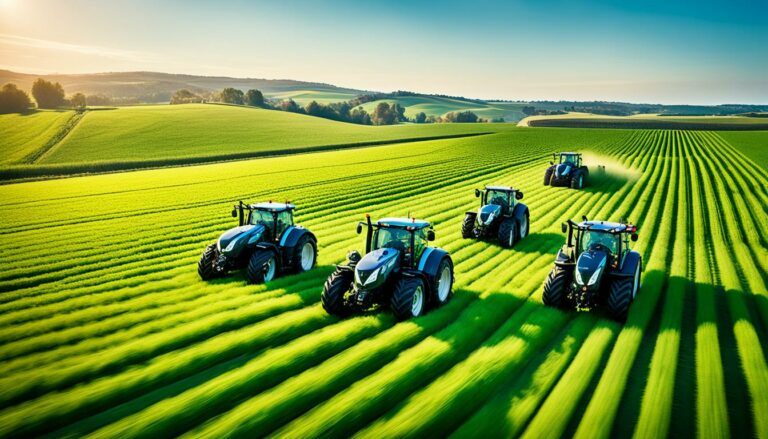
By 2050, the world will likely have 10 billion people, putting a big strain on farming. So, it’s crucial for farmers to boost their crop, using new technologies. Robotic farming tools are being embraced, bringing in a new era of smarter, more efficient farming. They include automated farming machinery and AI. These change how we farm, making it more accurate and less wasteful.
Automated farming machinery is a big deal for farms. Things like self-driving tractors and smart water systems work precisely and quickly. They help do tasks like planting and harvesting without needing many people. This not only makes farms more productive but also saves money and resources. It’s a win for everyone.
Harvesting robots that use AI are getting better at their jobs, leading to more efficient farming. They can look at and pick crops better than us humans can. AI in farming is growing fast. By 2028, its market is set to boom to USD 4.7 billion from USD 1.7 billion. These robots also help farms use resources wisely and make less waste.
Using AI in farming means we can see how crops are doing better and in advance. This helps farmers grow more food. AI checks for bugs and diseases early, making the crops healthier and more plentiful. These tech tools help the farmers a lot.
Here’s a look at why using robots for farming is better than the old ways:
| Aspect | Traditional Farming | Robotic Farming Solutions |
|---|---|---|
| Labour Efficiency | Highly Labour-Intensive | Reduces Labour Requirement by Up to 90% |
| Precision and Accuracy | Variable and Human Error Prone | High Precision with AI Guidance |
| Resource Management | Inefficient and Costly | Optimised Usage of Water, Pesticides, and Fertilisers |
| Productivity | Limited by Human Capacity | Consistently High and Scalable |
To sum up, robotic farming solutions are set to change how we farm for the better. They will increase food production, save resources, and tackle the lack of workers. As we head towards a tech-fuelled future, these solutions are key for feeding a growing world.
The world is seeing a unique blend of technology and farming, resulting in smart farming. With the population expected to hit 10 billion by 2050, agriculture faces the huge task of producing more. To meet these needs, the use of top-notch technologies like IoT in farming and drone surveillance is critical.

IoT in farming is a game-changer. It uses networks of sensors to track farm conditions in real-time. These sensors keep an eye on soil quality, weather, and crop growth. This helps farmers make quick, smart decisions. It ensures that resources are used well and reduces the chances of problems getting bigger.
AI-powered drones take monitoring crops to the next level. These drones can cover large areas and gather detailed images. They help by figuring out the right amount of pesticide needed and when to use it. This means there is less waste and the crops are healthier. They also help in analysing market trends. This information is useful in deciding the best times to plant and harvest.
By combining IoT and drone tech, farmers get a detailed look at their fields. This detailed insight leads to better decisions. It helps in increasing yields, cutting down costs, and supporting sustainable farming practices.
| Technology | Benefit |
|---|---|
| IoT Sensors | Real-time farm condition tracking |
| AI-powered Drones | Precision crop monitoring and intelligent pesticide application |
By 2050, the world’s population is set to hit 10 billion. This growth means agriculture must find ways to produce more food. One key solution is using advanced crop management algorithms. These smart tools help tackle the big problems the farming industry faces today.
Advanced analytics are changing the game for crop health. By examining huge amounts of data, AI models can predict crop diseases accurately. They are able to spot diseases like apple black rot with over 90% accuracy. This early warning allows farmers to act before it’s too late. They can protect their crops and keep their harvests safe.
Monitoring soil health is just as important. Checking soil health in the past was hard work and took a long time. But with AI, monitoring soil is much easier and faster. It can quickly pick up on nutrient problems and other soil health issues. This quick discovery means farmers can treat their soil just where it’s needed. This approach supports better crop growth and farming that looks after the earth.
At the front line of modern farming are autonomous agricultural systems. They are transforming how we farm, making it more self-sufficient and needing less human work. These systems use advanced AI and robotics to manage tasks like planting, watering, watching the crops, and harvesting. This change is key because the world’s population is expected to hit 10 billion by 2050, needing more food.

The market for AI in farming is huge, and it’s growing fast. It’s set to jump from being worth USD 1.7 billion in 2023 to USD 4.7 billion by 2028. AI and data analysis help farmers know everything from crop health to the best time to harvest. This means they can grow more food, use less chemicals, have better quality crops, and save money.
Autonomous farming means farms can run with very little human help, making them more efficient. Farms use a group of autonomous vehicles working together to do big tasks. This makes farming cheaper and more productive without needing as much human work.
Automating farming also makes crops better and the land healthier. By picking the best times to harvest and using machines instead of people, farming becomes more eco-friendly. It saves water, soil, uses less land, and even cares for the planet by using renewable energy and cutting down on waste.
This technology isn’t just good for the Earth; it keeps farmers safe and makes their jobs better. They have less chance of getting hurt, work in safer places, and can control how they use chemicals more carefully. This means farming is not only more productive but also safer and good for the environment.
Drones and UAVs are also changing how farming is done. They do everything from watching crops to managing pests and weeds, making farming more precise and efficient than ever before.
Precision agriculture, key to autonomous farming, combines advanced tech with farming knowledge. This makes agriculture more efficient and reduces how much human work is needed.
The move to autonomous farming isn’t just about what’s next; it’s a must for managing today’s complex farming needs.
Modern agriculture increasingly relies on data to make better decisions. By using agricultural big data insights, farmers can improve their methods a lot.
In the book “Data-Driven Farming: Harnessing the Power of AI and Machine Learning in Agriculture,” there are 72 illustrations. They show how data is changing farming. The book has 15 chapters, each written by an expert, explaining how AI and ML are used in farming.
Big data is changing farming by giving farmers detailed and useful information. For example, it helps in watching livestock health, spotting apple diseases, and guessing crop yields. These insights help farmers make better decisions to meet challenges.
One big plus of using big data is being able to predict and stop problems. For crop diseases, neural networks can help, while weather predictions get better with advanced tools for farming. These steps help control waste and boost profits by acting on time.
High-tech farm software is a key part of smart farming. It looks after all parts of farming, making work smoother from planting to harvesting.
When this software combines with IoT sensors for real-time data, it’s powerful. This mix helps in managing resources better, using smart watering, and improving how farms are run. The book mentioned shows how these tools make a real difference.
So, adopting data-based decisions, using big data, and advanced software takes farming to a new level. It makes farming more efficient and earth-friendly.
AI is changing how we look after the soil. This tech lets farmers make smart choices. It keeps the soil just right for growing crops well. The AI in farming market is set to grow to over $11.13 billion by 2032. This shows AI’s big future in farming.

AI is key in checking what nutrients the soil needs. It looks at soil samples really closely. This helps find and fix any nutrient problems that might stop crops from growing. It’s key to keeping the soil’s ecosystem in balance. This is important because by 2030, there could be a 24% drop in maize due to poor soil and other issues.
AI doesn’t just make fertilising more efficient. It uses soil data to suggest the best fertiliser for each crop. This means crops get the exact nutrients they need when they need them. It’s farming that’s focused and smart. Plus, this reduces the harm of using too much fertiliser. Companies like Climate FieldViewTM work on this too, to help farmers make better choices quickly, improving their harvests.
| AI Technology | Impact on Agriculture |
|---|---|
| Soil Health AI Monitoring | Ensures sustainable soil management and optimises crop production. |
| Nutrient Analysis AI | Provides precise soil nutrient profiles, aiding in balanced fertilisation. |
| AI-guided Fertiliser Strategies | Delivers custom fertiliser applications to prevent over-fertilisation and enhance crop health. |
By 2050, the earth will have 10 billion people, putting a huge demand on farming. AI in agriculture, especially in irrigation, is key. It uses high-tech solutions to save water and make farming smarter. With AI, farmers can control water for their crops better by checking the weather and adjusting watering times.
Adding real-time weather data to irrigation systems is a game-changer. AI helps farmers use lots of weather data to water crops at the right moment. This means crops get just the water they need, cutting down on waste. For instance, smart AI can predict upcoming weather, making watering plans more accurate and efficient.
AI doesn’t only get the timing right; it makes water use better. Tests show that farms using smart irrigation can save up to 25% of water. AI looks at how wet the ground is and how the plants are doing to set the perfect water amount and schedule. So, less water is used, plants are healthier, and the harvests are bigger.
Finding leaks and other issues in the water systems is another big win. AI can check a lot of data to catch problems early, preventing water waste. Plus, automated irrigation powered by AI is more energy-efficient and cuts down on costs. This makes farming both cheaper and greener.
In short, smart irrigation with AI is a big step towards better farming. It uses current weather data and tailors water use to what crops really need. This approach saves water, improves farming, and helps protect the environment. It’s a win all around.
In today’s farming world, remote sensing is a game-changer. It uses satellite images to help farmers look after their crops better. This method gives quick assessments of crop health. It’s much faster and needs less effort than the old ways of checking on crops.
Satellite images give a detailed look at farm fields. They show things like crop damage and how well the crops are growing. This information helps farmers make smart choices. As a result, crops are healthier and produce more.

The mix of satellite images, AI, and machine learning is changing how we look after crops. It means farmers get instant updates on their crops. They can act quickly to solve any problems, like bugs eating their crops. Also, this tech can even predict the best times to plant and harvest. This leads to better, more sustainable farming.
Key players in this field include technologies like SourceTrace and CIBO. CIBO’s Crop ID, for example, gives clear maps that are better than what’s used by the US Department of Agriculture (USDA). These tools use deep learning and special network designs to see farm details clearly. They help farmers do better, eco-friendly farming.
By using remote sensing, farming is getting smarter and more efficient. New tech keeps making farming better. This change promises a bright future for farming.
With the world population expected to hit 10 billion by 2050, farming faces more demand. AI is now key in fighting disease and pests in agriculture. It uses deep learning like CNN to spot diseases like apple black rot. And it can identify insects accurately, helping farmers protect their crops.
AI goes further than just spotting problems. It watches fields in real-time, offering tips on water use, fertiliser, and pesticides. It makes farming tasks automatic, boosting how much work gets done. This saves farmers time and makes farms run better overall.
CattleEye uses AI to check how diet and surroundings affect animals. This raises milk production. AI can also forecast pest attacks early, saving crops from huge losses. These attacks typically cut yields by 30-33% every year.
AI is changing how we handle disease and pests in farming. Researchers are working on better systems that spot diseases and pests faster. They aim to make farming healthier and more efficient. By using vast plant disease databases, like PlantVillage, AI keeps getting better. It helps farmers produce more and better crops in a sustainable way.
The way we farm is changing fast due to new technology. In Germany, the number of farms has dropped by 42% since 1999. This has hit the smaller farms, those that are less than 200 hectares, hard. Keeping farm machinery working well for a long time is critical. Predictive maintenance uses AI to stop machines breaking down. This cuts the time they are out of action and the money we spend to fix them.
AI is now used to keep an eye on how well farm equipment is doing. It gives instant advice to avoid problems. Companies like LAPP make strong parts that can handle tough conditions. They help smart farming tools work smoothly, no matter the weather.
Predictive maintenance helps farmers avoid big problems with their equipment. This means less time when the machines can’t be used and lower repair bills. Start-ups like Deepfield Connect and Lilienthal Digitaler-Weinbau mix satellite photos with sensors on the ground for very accurate farm work. Using AI to watch over machines, such as VetVise does, is crucial. It keeps the farm tools in good shape, making them last longer.
Switching to predictive maintenance doesn’t just make farms more reliable. It also helps use resources better. By using smart AI and keeping a close watch on data, farmers make their machines work smarter. This saves money and helps farms keep producing well.
AI and machine learning are changing the game in agriculture. They tackle issues like lack of space, not enough help, and climate change. These new tools help farmers make smart choices based on data, making their work more effective and kinder to the planet.
Farming has come a long way from simple ploughs to machines pulled by horses, and now to systems powered by AI. With each step, farming has become more productive and efficient. Now, AI is used to make farming processes even better and give deeper insights into the supply chain.
AI boosts how much farmers can grow and how quickly they can do it. It helps them learn more about growing crops. This means they can use resources like land and fertilisers in smarter ways. The result is more food and better ways to farm.
By using smart machines and systems, AI cuts down on how much work people need to do. It makes sure that things like watering and spraying happen exactly as they should. This not only saves money but also makes farms more productive.
The new wave of farming has machines that can do a lot on their own, along with devices that keep an eye on the farm in real-time. Things like autonomous machines, sensors, and drones are making farming more efficient. They also help farmers look after the land in ways that are good for the future.
Farms today use smart devices and drones that gather data as things happen. This data is all about the soil, the weather, and how the crops are doing. It helps farmers make decisions at the right times, like when to water the plants.
Robots are now doing a lot of the hard work on farms, like planting and picking crops. They’re guided by smart technology. This high-tech help means that farms can do more, even when there aren’t enough people to do all the work.
Devices and drones can tell how well the farm is doing at any given moment. They help farmers by watching the crops closely and checking the farm’s conditions. This means farmers can take better care of their fields and make more food of better quality.
Special algorithms look at the crops and the soil to predict issues. They warn farmers about things like diseases before they happen. This means the crops can stay healthy, and there’s enough food to go around.
These are machines and systems that don’t need much help from people to work. They can plant, grow, and harvest crops on their own. This kind of farming helps make sure that crops grow well and that there’s plenty of food.
Big data is a big help for farmers because it can look at lots of information and find what’s important. By understanding this data, farmers can make choices that use resources better and make the farm run smoothly. This kind of farming is good for producing more food and taking care of the land.
AI gives farmers the details they need to keep the soil healthy, like knowing what nutrients to add. Healthy soil means better crops. This kind of farming helps with growing more food in a way that’s good for the environment.
AI looks at the weather and the plants to water them just right. This saves water and keeps the plants healthy. It’s a smart way to grow food without wasting resources.
With the help of AI and pictures from space, farmers can quickly spot when something’s wrong with the crops. This early notice helps them fix problems fast. The result is that the crops stay in great shape.
AI is great at spotting pests and diseases early. This means farmers can stop these problems from getting big and hurting the crops. It’s a way to look after the plants that’s really effective.
With the power of AI, machines can tell before they break down. This means they get fixed before they cause trouble. Farmers can keep working, and their equipment lasts longer. It’s a win-win for everyone on the farm.