
Our world’s population is set to hit 10 billion by 2050. This huge jump will stress agriculture to produce more food. To meet this challenge, artificial intelligence (AI) and machine learning (ML) are changing the game. They are enhancing how we manage crops.
AI is leading a digital change in farming. It uses IoT sensors for precise environment checks. Smart drones fly over fields, analysing crops in detail. This digital duo boosts harvests, uses resources better, and helps spot diseases early. It even keeps an eye on farm animals’ health.
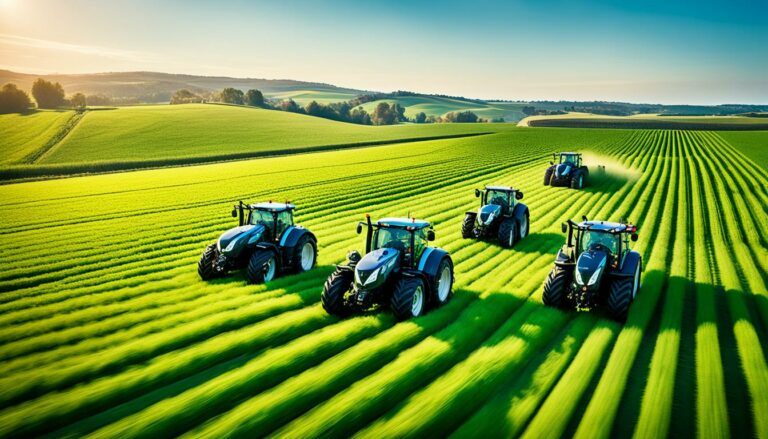
Big data gets faster and smarter with AI’s help. Farmers can make better choices quicker thanks to AI’s predictive analytics. Then, drones spray pesticides precisely, and self-driving tractors work the fields. This new tech shows agriculture is moving towards a brighter, more efficient future.
By 2050, the world’s population is expected to hit 10 billion. This means more food will need to be grown. So, the agricultural sector must find new ways to improve and grow crops. Artificial intelligence in agriculture is key here. It joins AI with farming to make managing resources better and farming more sustainable.
Farming needs tech to meet our food needs. AI, in this case, is crucial. The AI in agriculture market is set to grow from USD 1.7 billion in 2023 to USD 4.7 billion by 2028. This shows the urgent need for AI to make farming operations, like planting and pest control, better.
AI technology is changing farming as we know it. It’s bringing in tools like autonomous tractors and drones using the internet to do precise tasks without human error. For example, robots in greenhouses can decide the exact amount of pesticide to use by looking at plants, cutting down on harmful chemicals.
AI is also making water use on farms way better. It checks irrigation systems for leaks and warns farmers before water is wasted. These smart moves save money and help the environment. Plus, AI is great at studying where crops grow best and use less to produce more.
Precision farming with AI does more than just manage crops. It helps keep our food chain steady. It uses AI’s predictions to stop problems, makes shipping food better, and keeps waste low. So, it’s not just adding tech; it’s truly changing the face of farming.
Thanks to artificial intelligence in agriculture, farming is getting smarter and greener. It’s a key part of handling the big challenge of feeding an ever-growing world. These advancements are the future of farming, blending saving resources with growing more food.
By 2050, the world might have 9 to 10 billion people, making food security crucial. McKinsey says that digital farming could add up to $1.5 trillion to the world’s food production by 2030. This growth comes from using AI to cut costs and grow more food.

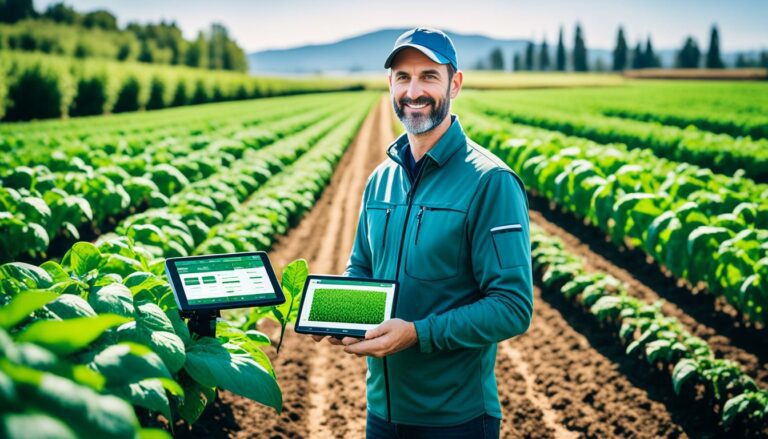
AI in farming has changed how crops are looked after. Smart drones and AI cameras spot diseases and other problems early. IoT sensors give real-time data, helping farmers tweak their care to get the best yields. This method improves crop health and helps farms produce more.
This approach helps farmers work better and save money. The FAO says it can cut costs by 10-20% and boost yields by 10-15%. AI tools help with smart irrigation, pest control, and finding diseases early. This makes farms more productive.
“Predictive analytics in precision farming forecast crop yields, pest infestations, and optimal planting times, ensuring a data-driven approach to modern agriculture.”
Precision farming uses tools like GPS, IoT, and sensors for real-time data. AI systems then give advice, using weather, soil, and crop data, to improve farming. Companies like Vassar Labs and IBM show this approach is catching on worldwide.
Technology has brought about big changes in farming. Now, farmers are using machine learning to track their crops better. This new way helps them get quick info on how the weather and other factors affect their crops. By looking ahead and using this data, farmers can manage their crops better. This can cut down on losses and grow more crops.
Gathering data right when it happens is key to keeping crops healthy. Farmers use smart sensors and high-tech tools to learn about their fields. They can find out about things like how much water the soil needs or what nutrients are missing. Knowing these details helps farmers use water smarter and manage their fields better. This trick leads to savings and is good for the planet too.
One of the best things about using predictive analysis in agriculture is that it can spot problems early. For example, when diseases or bugs are about to harm crops, AI can alert farmers. It looks at old data and what’s happening now to make predictions. These warnings allow farmers to act fast and save their crops. This use of AI can also help deal with weeds that cost a lot of money each year.
AI also helps farmers guess how much they’ll harvest from each bit of their land. This info is really useful. It tells farmers what parts of their field are best for growing. With this knowledge, farmers can use their resources better. This smart use of resources boosts their harvest and is good for the environment.
These tech tools are becoming more popular. The market for them is set to grow a lot in the coming years. It is expected to go from $519 million to $2.6 billion by 2025. As more farmers use these tools, farming will keep getting better. It will be kinder to the planet and earn farmers more money.
| Technology | Impact |
|---|---|
| Real-time Data Collection | Provides immediate insights into environmental conditions, optimising water use and resource allocation. |
| Predictive Analysis | Anticipates potential issues, enabling proactive crop management and reducing crop yield losses. |
| Yield Mapping | Offers accurate data on soil potentials, enhancing yield forecasts and optimising resource use. |
| AI/ML Systems | Forecasts crop prices, aiding in better price negotiation and increasing profitability. |
The world’s population is growing, expected to hit 10 billion by 2050. This major increase means we’ve got to find new ways to farm. One of these is AI-driven crop optimisation. It uses AI and machine learning to boost crop yields without using up too many resources.

AI crop management is set to shake up farming. It’s estimated the market will jump from USD 1.7 billion in 2023 to a huge USD 4.7 billion by 2028. With this tech, farmers can plant the best crops at the right time. They can also give crops exactly what they need to grow. This improves the quality and amount of food we produce.
Thanks to digital farming, AI can check on wheat or tell when tomatoes are ripe in no time. It’s also great at spotting problems, like apple black rot, really well. It can even pick out different insects accurately, such as flies or bees.
Machine learning in agriculture is great at looking through a lot of data fast. This helps with things like figuring out how best to grow some crops. Pair that with IoT sensors, and AI can even look after crops by itself. It makes sure they get just the right amount of water. This saves a lot of water and can find irrigation leaks to stop wasting it.
AI drones are super at spreading pesticides just where they’re needed, cutting down on the waste and harm to the environment. These high-tech uses of AI make farming more productive and kind to the planet.
“AI in agriculture enhances decision-making, optimises resource utilisation, leading to increased productivity and minimised waste.”
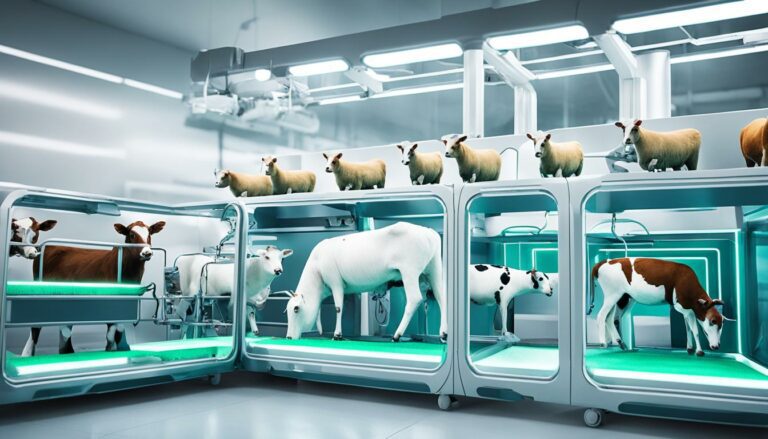
AI isn’t just helping with crops. It’s also checking on how well farm animals are doing. With drones and cameras, we can catch bad behaviour in animals, like unusual births. Plus, AI helps us work out how what cows eat and where they live affects the farm. This makes milk—and farming in general—better.
| Feature | Impact |
|---|---|
| Accurate Crop Tracking | Ensures optimal planting times and nutrient supply |
| AI-powered Drones | Precise pesticide spraying, reduced waste |
| Predictive Analytics | Real-time yield mapping and soil prediction |
| AI in Livestock Monitoring | Enhances animal health and milk production |
| Irrigation Management | Detects leaks, promotes water conservation |
To sum up, AI-driven crop optimization changes farming for the better. It means farmers can grow more food for more and more people without harming the environment. It keeps farming smart and sustainable.
The use of AI in agriculture is changing how we watch over crops and soil. Drones and advanced sensors help farmers gather a lot of data quickly. This data is crucial in spotting growth trends and understanding how the environment affects crops and soil health.
Drones in farming are a big leap forward. They come with powerful cameras and sensors for quick data collection. This means farmers can keep an eye on their crops and catch problems like pests or lacking nutrients early. With these tools, they can quickly respond to challenges, leading to better crop production.
Analysing soil quality is key for healthy crops. Sensors measure things like moisture, pH, and nutrients in the soil. This data guides farmers in smart irrigation and fertilisation, which helps their crops grow better. Plus, it helps AI in agriculture to forecast and stop issues before they become big, supporting farming that’s both profitable and eco-friendly.
The world’s population is predicted to reach 9.8 billion by 2050. This raises the need for agriculture to enhance its methods. Automated agricultural practices offer new opportunities. They include using robotics, smart technology, and AI to improve how we farm.

Robotics has become critical in farming due to the lack of workforce, a problem affecting more than 55% of farmers. Smart tractors and robots are being used. They not only perform tasks automatically but also work with great accuracy. For example, self-propelled robots spreading fertilisers make it easier for farmers to work on vast lands sustainably. A robot that harvests strawberries alone can cover 25 acres in just three days. It thus reduces labour costs, enables 24-hour farming, and boosts productivity.
While the move to automated farming poses challenges, it also offers many benefits. There are issues with space, finite resources like oil and water, and the environment’s welfare. Also, the high costs of maintaining and repairing technical machinery are a concern. Yet, using AI can significantly cut down pesticide use, helping the environment and supporting sustainability.
AI also helps in managing resources better. It makes water, fertilisers, and pesticides usage more efficient. This reduces waste and increases crop yields. Smart technology aids in making choices based on data and predictions. It is driving the move towards sustainable farming and organic products. This not only meets consumer demand but also makes agriculture more profitable and environmentally friendly.
| Labour Cost Reduction | Environmental Impact | Productivity |
|---|---|---|
| Replaces up to 30 farm workers per robot | Reduces pesticide usage by up to 90% | 24-hour operations increase yields |
| Mitigates labour shortages (impacting 55% of farmers) | Promotes sustainable farming practices | Efficient resource management |
| Labour accounts for over 50% of farm costs | Conserves energy and water | Boosts crop quality and market availability |
AI is changing the game in pest control for farmers. It can spot and deal with pests like never before. By using AI, Integrated Pest Management (IPM) has cut down on pesticide use by 80% or more.
Artificial intelligence helps farmers find pests better. Tools like Agrio describe pest problems using AI. This makes it easier to know what crops need, stopping problems before they start.
The GoMicro lens, which connects to a smartphone, also stands out. It’s a cheap way to use AI for finding pests. Even small farmers can afford it, making pest control simpler for everyone.
Today, we use sensors in the field and drones to keep pests in check. These let farmers know exactly when to act, cutting down on harmful chemicals. Drones fly over fields, checking for pests using AI. This combo of sensors and drones is great at predicting and preventing pest attacks, keeping harvests safe.
AI and other tech are making pest control faster and more eco-friendly. This way, using AI in pest control is always getting better, with smarter learning and bigger research.
By 2050, Earth’s population could be 10 billion. To feed everyone, farming must change. AI tools help to grow more food using fewer resources.
AI brings new tech to farming. It includes self-driving tractors and robots that pick crops. These advancements are revolutionising how we farm.
Focus is also on smart drones and sprayers. They help farmers treat crops precisely. This saves money and protects the environment.
AI already shows great promise in farming. It spots diseases in plants better than us. This helps farmers plan when to plant and harvest.
Tech like AI drones looks at fields to predict harvests. It even checks soil health. This and other tech help in making farming more efficient and sustainable.

| Benefits of AI Crop Management | Examples |
|---|---|
| Enhanced Crop Monitoring | Drones, IoT Sensors |
| Optimised Resource Usage | Advanced Irrigation Systems |
| Improved Yield Predictions | AI-Powered Analytics |
| Automated Farming Practices | Robotics, Smart Tractors |
| Pest and Disease Detection | Computer Vision in AI |
While AI shows a lot of potential, it also has challenges. These include the high cost and slow adoption. However, the AI farming market is growing fast. This shows it will be a big part of our future.
Using AI for crop price predictions is key in agriculture. It helps farmers and businesses make more money. They learn about the market and adjust their decisions. This stops them from losing money on crops sold at the wrong time.
AI in agriculture can spot trends in the market. It sees patterns that affect prices. For instance, AI noticed the wheat price hike in 2010 due to droughts. This caused major international events. Knowing these trends early can prevent big market shocks.
There are many ways to forecast crop yields, like using remote sensing or ML. ML lets models learn from more data. By looking at things like weather and plant health, AI can predict how much a crop will yield.
Predictive pricing uses AI to forecast crop prices. It looks at a lot of data, including past prices and weather. This helps in smart farming practices, like using the right amount of pesticide.
By predicting prices with AI, farms can do better. They can sell crops at a good price and manage stock well. This stabilises prices and improves how farms work. Farmers can plan ahead and make the most when prices are high.

| Application | Method | Region | Outcome |
|---|---|---|---|
| Corn Yield Prediction | LASSO, Linear Regression, Random Forest, Gradient Boosting | US Corn Belt | Increased Yield Accuracy |
| Wheat Price Forecasting | Support Vector Machine, Neural Network | Australia | Improved Market Stability |
| Strawberry Yield Prediction | Region-based Convolutional Neural Networks | Florida | Higher Precision in Yield Forecasting |
By 2050, the world will have 10 billion people. AI will be crucial then. It will help farms meet the demand and keep food secure. With AI, farming gets smarter and more efficient.
The world’s population is expected to hit 9.8 billion by 2050. This puts a lot of pressure on farms to produce more food. Farming has often tried to grow more by using more land or bigger farms. However, these old ways aren’t enough anymore. Now, there’s a new hope with AI technology in agriculture.
AI systems are being used to manage water better in farming. They can calculate the perfect amount of water each crop needs. This ensures no water is wasted, promoting healthy plants and boosting their productivity. A big step ahead has been the creation of precision irrigation controllers. These controllers, like the ones from GEAR Lab, cut down water use by 40%. So, they’re a great help in using water wisely.
AI in irrigation optimisation is also saving energy and money. By using low-pressure drip emitters, pumping energy costs have been cut in half. This is very important for farms that are big because saving even a little can make a huge difference. For instance, introducing AI to irrigation can lessen water use by 25%. This is a big deal because water is becoming more and more scarce everywhere.
AI is changing the game by giving farmers smart tools for decision-making. It uses data to predict when and how much water will be needed. This helps farmers get ready for weather changes. It also promotes the use of eco-friendly water sources, like recycling and rainwater, in farming.
Using AI for irrigation isn’t just about doing things better, it’s about making a profit too. These smart systems need less human work, which means cutting costs. Also, they improve crop yields by 20-30%. With more farmers using AI, the future of farming and water use looks brighter. This means more sustainable and effective farming around the globe.
By 2050, the world will likely have 10 billion people. Thus, ensuring livestock is healthy and productive is key. AI and ML in agriculture are vital for this.
AI and ML are changing how we watch over animals. They let farmers closely track animal health. This is done by fitting livestock with GPS tags and accelerometers. These tools give real-time updates on their health and actions.

Livestock buildings are now using sensors to check the environment thoroughly. For example, CattleEye uses top-notch machine learning to understand sensor readings. This helps increase milk production and detect diseases early by looking at how animals move and act.
The AI in farming market is set to soar from USD 1.7 billion in 2023 to USD 4.7 billion by 2028. This shows great trust in AI for farming. As AI gets better, it will play a bigger part in keeping animals healthy. This leads to more sustainable and profitable ways of farming.
The use of sustainable farming with AI is a big step forward in agriculture. AI technology helps farmers look closely at crop yield and soil health, doing in minutes work that used to take weeks. This quick data analysis is a game-changer for farming.
Introducing AI in agriculture sustainability is a breakthrough. Now, farmers can keep an eye on their crops from afar in real time. They find and fix issues like diseases early, which helps protect crops and supports green farming.
New farming tools with AI can plant, weed, and spray crops on their own. This not only makes farming easier but also helps save resources. Authorities like the Farm Bureau are pushing for AI rules that are clear, fair, and open.
With the global population expected to hit 10 billion by 2050, agriculture is under more pressure than ever to produce more. The AI in agriculture market is set to jump from USD 1.7 billion in 2023 to USD 4.7 billion by 2028. This shows the growing use of AI in farming.
AI can follow wheat growth and the ripeness of tomatoes better than we can. Such tech makes crop growing more reliable and efficient. For example, AI spots apple black rot accurately 90% of the time, proving its worth in protecting crops.
Drones with AI and ML help farm animals by watching their health and actions closely. They give just the right amount of pesticides, quickly and accurately. This tech combines human skill with machine speed for the best results.
Methods like vertical farming are also changing how much food we produce, using less land. This can mean more earnings and savings for farmers, while also being kinder to our planet.
| Aspect | AI Contribution |
|---|---|
| Crop Yield and Soil Health | Instant data gathering and analysis |
| Crop Health Monitoring | Real-time detection of diseases, pests, and deficiencies |
| Farm Operations | Autonomous navigation for planting, weeding, and spraying |
| Irrigation Systems | Optimisation to conserve water |
| Livestock Health | Drones monitor health and detect critical activities |
| Pesticide Application | Precise, automated treatment |
The change brought by AI in farming is truly astounding. It pushes agriculture towards a future that not only feeds us but does so sustainably. By using AI in agriculture sustainability, we work towards a future that is efficient and good for our planet.
The world’s population will soon top 9 billion by 2050. This puts a huge strain on agriculture to produce more food. Artificial intelligence (AI) in farming offers new ways to face this challenge.
For example, using AI for precision farming improves how we grow crops. It helps manage crops better, using less water and nutrients. This way, crops get what they need when they need it.
There’s also a big push for AI in farming thanks to more available data. This data helps in watching the environment around crops more closely. With AI, we can predict problems and act before they get worse.
All these advances are changing farming for the better. It means farms can be more efficient, produce food with less harm to the environment, and meet future needs.
Our latest study shows the big impact AI in farming will have. It highlights the importance of these new ways. AI is crucial in making sure we can feed everyone without harming the planet.
AI crop management uses cutting-edge technology to make farming better. It keeps an eye on the weather, analyses data, and uses this information to grow crops in the best way. This approach aims to increase crop amounts and make farming more sustainable.
The world’s population is growing, and so is the need for food. Farming must keep up. Advanced technology like AI and machine learning make planting, watering, and protecting crops easier. This helps farmers produce more food efficiently.
AI changes the way we farm by closely watching over crops and spotting potential issues early. It makes handling pests smarter and uses resources better. Drones, robots, and sensors work together to grow more food, save money, and protect the environment.
Precision farming with AI uses drones and sensors to track the condition of crops in real time. The collected data shows how plants are growing. This information is used to make targeted improvements, which boosts crop yield and saves resources.
In precision agriculture, smart drones, sensors, and AI come together. These tools gather information about crops and the land. Farmers use this data to make wise decisions about planting and taking care of crops.
Machine learning keeps an eye on crops by constantly checking the weather and crop health. It uses this to predict problems and help farmers solve them early. This leads to better care for the fields and a bigger crop.
AI-driven crop optimisation picks the perfect time to sow, fertilise, and gather crops. It ensures that crops get the right nutrients at the right time. This improves the quality and amount of food we get from each plant while looking after the planet.
Drones carry sensors to check on crop health and soil. They spot growing patterns and warn of problems early. This data helps farmers take better care of their fields and the environment.
Robots help do farm work like planting and gathering without much help. They fill in for missing workers and make farming more efficient. This shows how farming is becoming more and more automated.
AI helps fight pests by using sensors and drones to find and treat them early. It checks the health of plants and deals with pests where they are. This kind of care can stop a pest problem before it starts.
In the real world, AI does things like keep an eye on the fields, predicts how much food will be grown, and robots help with farming work. It also helps by guessing how much food will cost and using resources well.
AI looks at the market and guesses at what food will cost using smart maths. This helps farmers and buyers make smart deals. It means they can sell food for the best price and do well.
AI figures out the perfect amount of water for crops to use. This stops water being wasted and makes farming more profitable and friendly to nature.
AI looks after animals by tracking what they eat and their environment. It helps create better conditions for cows to make more milk and be healthier. This means farming animals can be better for everyone.
AI makes farming use less and be kinder to the earth. It helps farmers grow food in a way that’s good for the future of our planet and their profits.