
By 2050, the world’s population may hit 10 billion. This puts a big strain on farming to grow more food efficiently. Kalabe Mulugeta from Azmera Technologies talks about how AI in farming is changing the game. It boosts how much we grow and makes farming more green.
Thanks to AI, farmers are planting more accurately, watering just right, and protecting against bugs. Tools like AI drones can spot apple rot swiftly and well, about 9 times out of 10. Mulugeta adds that by watching the weather, soil, and plants close up, we can cut waste and grow more.
AI in farming helps use things better and teaches farmers new tricks. This mix of old farming wisdom and high-tech AI makes farms more profitable and planet-friendly. No wonder, the AI market in farming might jump from 1.7 billion dollars in 2023 to 4.7 billion by 2028. That’s a big leap.
Agriculture has changed a lot from using simple hand tools to advanced tech. Now, it’s at the edge of a new era, thanks to artificial intelligence (AI). This change is crucial as we must feed more people – around 10 billion by 2050. AI can help us boost productivity, use resources better, and farm in sustainable ways.
Farming has always aimed to be more efficient and productive. We moved from using hand ploughs to automated machines. Now, AI is the next big thing. It uses data and predictive tools to make farming smarter and more effective.
Artificial intelligence in farming means using AI to improve how we farm. Experts highlight how AI can transform agriculture, making it better without using more land. The market for AI in farming is growing fast, showing its increasing use. Technologies like computer vision drones, predictive analytics, and autonomous machines help get better farming results.
| AI Technology | Application | Efficiency Improvement |
|---|---|---|
| Computer Vision Drones | Optimised Pesticide Spraying | Reduces pesticide use, improves coverage accuracy |
| AI Models | Soil Condition Monitoring | Precise data for combating crop diseases |
| Smart Sprayers | Plant and Weed Detection | Reduces herbicide use by over 90% |
| Automated Harvesters | Labour Replacement | Decreases harvesting costs |
AI and farming coming together marks a big change in agriculture. AI helps understand big data to give useful advice. This advice helps grow crops better, manage resources well, and keeps farming sustainable.

AI and farming, also known as transformative AI, is changing farming a lot. It uses data on weather, soil, and crop health to make better choices. These choices make farming kinder to the planet by using water better, reducing chemicals, and being more precise. This leads to healthier crops and more profit.
There are many examples of AI and farming working together. Smart systems for watering crops use live data to save water. AI also helps with pest control and guessing how big the harvest will be. This cuts down on waste and makes food better. Plus, drones with AI can watch over crops and machines that work by themselves can plant and pick in the best ways.
Microsoft has teamed up with 175 farmers in Andhra Pradesh, India. Together, they’ve increased crop production by 30% per hectare using AI. This is because AI can spot problems early and guess when the harvest will be. This speeds up getting crops to market and makes sure they’re good quality.
| AI Application | Benefits | Example |
|---|---|---|
| Smart Irrigation | Water efficiency, optimised schedules | AI irrigation systems based on weather data |
| Pest Control | Reduced chemical usage, waste reduction | AI pest detection and management |
| Yield Predictions | Accurate harvest predictions, quality assurance | Microsoft’s AI collaboration in India |
| AI Drones | Enhanced surveillance, data collection | AI-equipped drones for crop monitoring |
| Autonomous Machinery | Precision planting, efficient harvesting | Autonomous tractors and harvesters |
Artificial Intelligence (AI) in precision farming has many benefits for today’s agriculture. It uses data to improve farming, from managing crops to using resources better.
AI brings big benefits to agriculture, especially by boosting productivity. It helps in planning and using resources well by checking on soil and weather. It uses smart algorithms to choose the best times for planting and keeps an eye out for pests early. This makes more crops and smart use of resources possible. By looking at market trends, farmers can plant and harvest better, which means more crops.
AI also helps to farm sustainably. It works with sensors to water crops carefully, saving water and preventing waste. This makes farming more eco-friendly. It lowers costs by 10-20% and increases crop yield by 10-15%. That’s good for both the economy and the environment.
There are real examples of how AI is making farming more productive. Drones, for example, can spot diseases and pests with 90% accuracy. They find problems like apple black rot.
Companies like CattleEye use AI to check on cows, making them healthier and more productive. With AI, machines can do farm work on their own, saving on labour without losing accuracy. These examples show how AI is changing farming for the better.
Using AI-driven precision agriculture changes farming. It moves from old ways to new, using data. With IoT and quick data checks, farming becomes more efficient. It manages water better and keeps the crops healthy. This boosts productivity and helps the environment.

At the heart of precision farming is smart irrigation. It uses IoT to watch over soil moisture and the weather. By using VRT, these systems water crops perfectly. This cuts down on water waste. It also helps crops grow as best as they can.
Drones are key in AI for seeing crops from above. They work with satellites to check on crop health and more. These tools can find water leaks fast. Then, farmers can fix things quickly and keep the land healthy. This mix of AI and remote sensing is vital in today’s farming.
AI changes how farmers look after crops. It uses data from sensors and drones. It spots when crops need help against pests and diseases. This AI software helps farmers act fast. It stops big problems and makes farming more sustainable.
| Technology | Application | Benefits |
|---|---|---|
| Smart Irrigation Systems | IoT, Soil Moisture Analysis | Efficient Water Usage, Reduced Waste |
| Drones and Remote Sensing | High-Resolution Imagery | Crop Health Monitoring, Leak Detection |
| AI-powered Crop Monitoring | Sensor Integration, Disease Detection | Timely Interventions, High Yield |
Adopting these new farming technologies is a big step. It’s a mix of data insights and AI tools. These changes make farming more efficient and eco-friendly. It helps farming be better for everyone.
In today’s farming world, data is the new soil. With sensor networks, farmers can get crucial info on the land. This includes soil moisture, nutrients, and the weather. This data helps them make smart, quick decisions. It turns old farming ways into top-notch operations.
Sensors are the eyes and ears of modern farms. They keep a close watch on the soil, plants, and weather. This insight is gold for farmers. It lets them fine-tune how they care for their crops. This way, they use their resources wisely and can plan better.
Big data is the powerhouse behind all this information. It turns data from sensors into advice. This advice helps predict how crops will grow. It can spot diseases early and helps farmers water and feed the right way. Each farming choice becomes a smart one, based on solid data.
These new tools aren’t just for one farm to use. They help the environment, too. By using less water and fewer chemicals, farming gets kinder to the planet. This makes sure farming is good for the economy and the environment at the same time.
“Precision agriculture leverages data-driven technologies and artificial intelligence, aiming to optimize resource use, enhance crop yields, and minimize environmental impact.”
AI in agriculture is a big step towards a greener future. With a growing global population, there’s more pressure on farming. AI helps increase crop production. It’s set to become a 4.7 billion-dollar market by 2028, up from 1.7 billion in 2023.
AI helps in eco-friendlier farming by using less water and chemicals. It means farmers can grow more with less, improving the quality of their harvests. AI spots irrigation leaks, saving water and stopping crop damage.
This leads to greener farming overall.
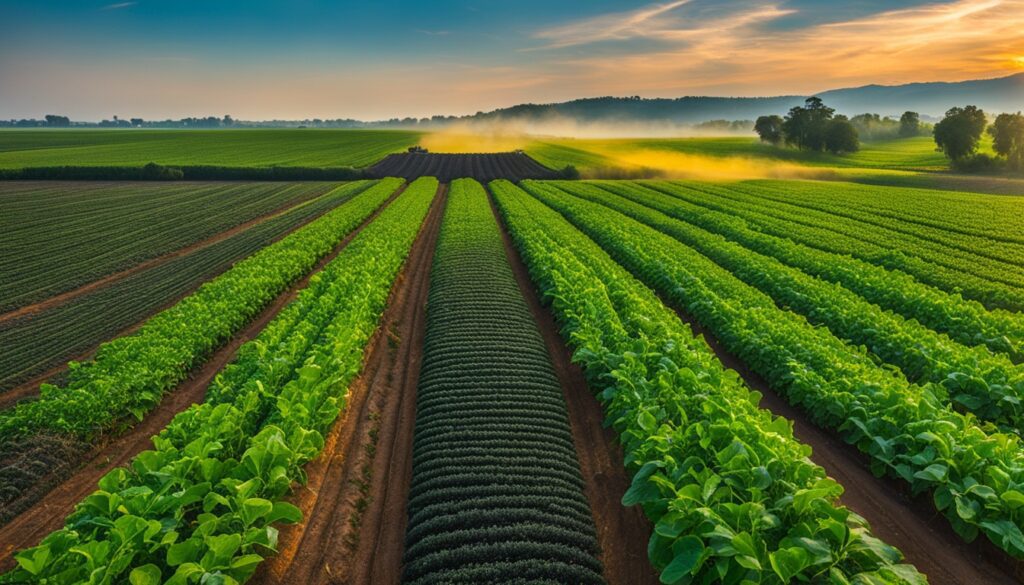
AI is a game-changer in smart agriculture, increasing efficiency. It forecasts market demand and prices, leading to better planting and harvest times. Driverless tractors and AI in greenhouses make work more accurate and efficient than before.
It’s crucial for farmers who need to process a lot of data fast.
Autonomous irrigation systems, powered by AI, are another breakthrough.
AI tracks soil health and crop needs, improving harvests. It can check on crop health daily, keeping them safe from diseases and pests. This means farmers can act quickly to protect their crops.
| Benefits of AI in Agriculture | Environmental Impact | Resource Optimisation |
|---|---|---|
| Predictive analytics for accurate forecasting | Reduced herbicide and fertiliser use | Optimal sowing and harvesting times |
| Enhanced crop and soil management | Efficient water usage through smart irrigation | Improved decision-making through data analysis |
| Detection of leaks in irrigation systems | Decreased chemical runoff | Reduced waste of resources |
AI is essential for reducing farming’s impact on the environment. It’s vital for managing resources better. These advances move us towards a sustainable future. They help meet the world’s food needs, all while protecting our planet’s health.
In the drive to feed over 9.8 billion people by 2050, automated farming and AI are key. They change old farming ways, boosting speed and work quality. This is done through smart forecasts and immediate actions thanks to AI.
Today, we see massive use of self-driving machines and AI in harvesting. This combo is transforming how we farm.
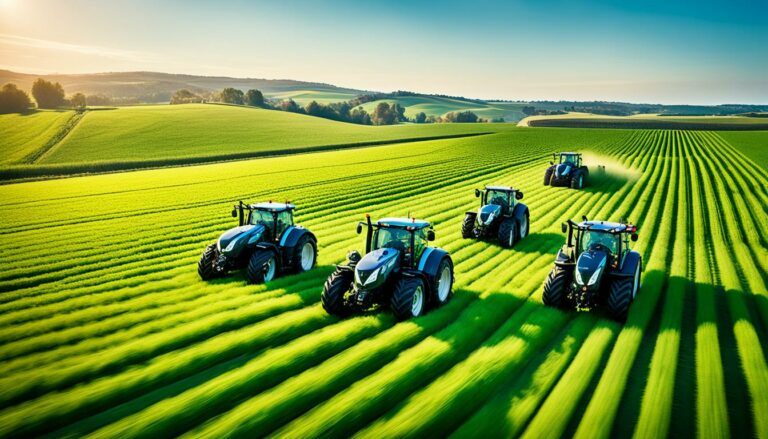
Self-driving farm tools are a major step forward in agriculture. These machines plant, till, and harvest with great accuracy. They cut down on human work, making farming more efficient. Plus, they use resources better, leading to more crops.
AI in harvesting changes how we collect crops. It times and carries out harvests perfectly, reducing waste. It makes farm products better and boosts the amount of good crops. Farming systems can tell the exact state of the crops, helping farmers make the best choices.
AI tools help farmers deal with changing climates, squeeze out more crops, and use resources better. They’re crucial in the move to farming that’s gentle on the earth and still meets high demands for food.
| Aspect | Benefit |
|---|---|
| Autonomous Farming Machinery | Enhanced precision and operational efficiency |
| AI in Harvesting | Optimised timing, reduced waste, increased quality |
| Resource Management | Efficient use of water, soil, and other inputs |
Lastly, mixing automatic farming with AI doesn’t only up crop output. It also leads the way in farming that’s sustainable. These advancements show how critical AI is in bettering and future-proofing farming.
With the global population set to hit 10 billion by 2050, agriculture must up its game. The pressure is on to boost crop production and yields. Machine learning steps in to solve these challenges efficiently. It uses big data and smart algorithms to improve farming’s productivity and sustainability.

Predictive analytics is changing the game for crop management. It processes tons of data on weather, soil, and plant health. This means farmers get advice on how to handle potential issues early. The use of these smart systems is growing fast, from being worth USD 1.7 billion in 2023 to USD 4.7 billion by 2028, reports MarketsandMarkets.
Machine learning doesn’t stop there. It’s amazing at making plants grow better by managing resources well. For instance, it can spot when plants are stressed and act quickly with the right care. This saves both water and fertilisers. AI tools are also great at finding and managing weeds and pests. This leads to fewer environmental problems and lower costs. Using these methods, farmers can get more from their crops, spend less, and run their farms better.
To wrap up, bringing machine learning into farming opens doors to huge improvements in efficiency and productivity. By boosting plant growth and offering advice through predictive analytics, AI is driving farming towards a greener, more successful future.
The world of farming is changing with AI and IoT. With the global population set to hit 10 billion by 2050, farmers face big challenges. They need to grow more and better crops. AI and IoT give them the tools to do just that.
Farming now includes a vast network of smart sensors and devices. These gadgets keep constant tabs on soil, crops, and the weather. This data helps farmers tweak their methods for greater success.
For example, they can spot irrigation leaks fast. This saves water, a key resource for the future.
Gathering data in real time is game-changing for today’s farmers. They use this info to react quickly to changes in the weather or market. AI sorts through the data to suggest the best times to plant and harvest.
This info also helps plan better and use resources smarter.
Through IoT and AI, farming is at the edge of a big shift. These technologies offer precision in spotting pests or managing crops. They’re essential for farming in our future, promising more profit and less harm to the planet.
AI is changing farming but faces AI adoption challenges. It’s not easy for small-scale farmers to start using AI. High costs and complex systems are big hurdles. Plus, farmers need a lot of education about these technologies. However, it’s vital to overcome these challenges to enjoy AI’s benefits in farming.
The first big challenge is the cost of new technology. It’s hard for many farmers to afford. But, help can come from government programmes and incentives. The USDA and NSF have already supported this area with $200 million between 2017 and 2021. Also, setting up standards for different AI tools to work together can help farmers use them more easily.

Another big problem is who owns and shares farm data. A strong system for managing and storing data is needed. Also, showing how AI can save money and increase harvests is key. Practices focused on data have already reduced costs and upped yields. So, busting through these data sharing and ownership issues is crucial to letting AI do its best work.
The future looks bright for AI in agriculture. By 2025, the global market for Smart Greenhouses could hit USD 2.1 Billion. And from 2020 to 2025, the agriculture analytics market might grow by 75%. AI in farming keeps getting better, from smarter forecasts to more automation. These improvements will meet the world’s growing hunger. By 2050, the need for food could nearly double. With ongoing innovation, AI will make farming greener, more efficient, and highly productive.
| Statistics | Current State | Future Projections |
|---|---|---|
| Global Smart Greenhouse Market | USD 1.4 Billion (2020) | USD 2.1 Billion (2025) |
| Agriculture Analytics Market Size | Base Size (2020) | 75% growth (2025) |
| Tech Startups Funding in Agribusiness | 6x increase over 6 years | – |
| World Food Demand | Increase by 59%-98% (2005-2050) | – |
| World Population | 9.8 Billion (2050) | – |
Empowering farmers with AI is vital for updating agriculture. This update is needed as we prepare to feed a global population of 10 billion by 2050. AI innovations are changing how farming works. They highlight the importance of learning and working together in this change.
Introducing AI to farmers starts with education. They learn to use new, powerful tools effectively. Programs teach them about AI technologies like yield mapping and real-time crop feedback.
For example, they can learn how AI spots apple black rot very accurately. This knowledge allows farmers to use facts to improve their work. It boosts how much they can produce and helps them take better care of the land.
The AI in farming market is expected to grow. By training now, farmers can fully use these new technologies. They get to use tools like ML algorithms for smarter planning. This helps increase their harvests and make their farms more efficient.
Working together is key in today’s farming. Through AI, farmers can share knowledge and learn from each other. They share the best methods and stories of success. This way, they can tackle common problems in using AI, like how to find it, afford it, and make it work locally.
Mobile apps powered by AI keep these communities connected. They offer things like up-to-the-minute weather and market trends. These apps give tailored advice to farmers. This is especially helpful for farmers in developing countries. They can learn to be more productive and spend less, all while boosting their harvests. The power is in the hands of the community.
Joining forces and learning about AI are key to helping farmers. They help farmers grow as individuals. And they help create a helpful environment. This environment is pushing agriculture towards a future that’s smarter and sustainable for all.
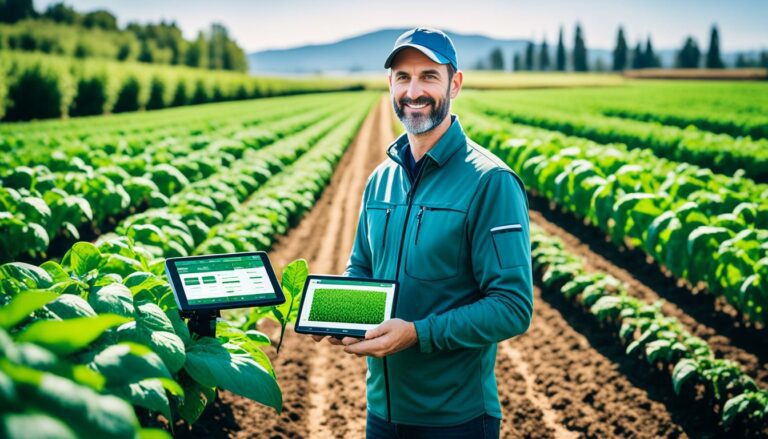
Precision agriculture software leads the way in modern farming. It merges AI, GPS, and data to make farming smoother. It caters to every kind of farm, offering big benefits.

Today’s farming platforms focus on being easy for farmers to use. They come with simple interfaces and strong features. These let farmers at any level use new tech with ease. This includes managing resources and watching crops grow.
One key thing about this software is how you can adjust it to your farm’s size and needs. It works well on small or big farms. Farmers can set it just right to grow more with less expenses and harm to the environment. They might use tech like Variable Rate Technology (VRT) or AI to get the best results.
Precision agriculture technologies can significantly reduce the environmental impact of agricultural activities.
Being able to change as the farm grows is a big plus. For example, the software can work with systems that check soil and weather. This leads to advice on watering that saves water and makes crops better.
To wrap up, precision agriculture software changes the game in farming for the better. It’s easy to use and fits any farm. It helps make farming more efficient and environmentally friendly. This paves the way for more farming innovations in the future.
Nowadays, farming costs are going up fast. To save money, many farmers are using AI tools. These help them manage resources better. Input costs have shot up by 80-250% recently because of things like the coronavirus and the Ukraine War.
AI in farming does a great job at lowering costs. Research shows it can cut costs by more than 22% worldwide. This technology also helps use seeds, fertilisers, and chemicals more efficiently, cutting costs by about 27%.
It can also drop fuel, lube, and repair costs by nearly 20%. Using autonomous machines can cut labour costs by around 85%. This is because these machines can do a lot of work on their own, reducing the need for many workers.
AI doesn’t just save money; it also helps farmers grow more crops. By using AI for real-time analysis, farmers can use water and fertilisers exactly where they’re needed.
They also get tips on how to farm better, improving both the amount and quality of food they grow. Arkinvest’s research shows that using AI can make crops 22% cheaper to grow while making the farm more profitable.
AI in farming is a big change, making things better with more accuracy and less waste. It mixes new tech with old ways. This means less mistakes and more efficient farming. It’s good for the environment too.
For example, Blue River Technology’s smart sprayer cuts down on herbicides a lot. Robotic harvesters from Harvest CROO Robotics help pick strawberries without needing as many workers. They make farming more competitive and eco-friendly.
AI is doing really well in things like spotting tree diseases early. This helps save crops. It’s making farming smarter and more efficient.
With the world population growing, farming needs to produce more food. AI in farming can help grow food by 20% more. The key is to mix old and new ways wisely. This will keep us fed and protect our planet for the future.
AI-driven precision agriculture uses AI to better farming. It helps plant crops exactly, use water wisely, and keep pests away. This makes farming more productive and green.
AI has changed farming by adding smart tech. This tech uses data to help farmers know what their crops need. It cuts waste and helps them grow more.
There’s AI in drones for watching over crops. Smart irrigation from weather data also helps save water. AI even fights pests and predicts how well you’ll harvest.
AI makes farming self-sufficient by using resources better. It uses less water and chemicals. This protects the planet and makes farming kinder to nature.
Smart irrigation with IoT and real-time data is big. Add AI drones and crop monitoring for a full farm plan. These techs join forces to manage farms better.
Sensors pick up soil, plant, and weather details. AI uses this for quick crop care decisions. This means smarter farming and better harvests.
Big data helps understand farming info better. It ends up in models that make farming more exact and efficient. Big data guides smarter ways to grow crops.
AI and IoT give quick updates on farm info. AI then turns this data into smart farm plans. This boosts crop quality and keeps farms quick to adapt.
AI faces hurdles like high costs and complex systems. Farmers also need to learn how to use this tech. Overcoming these issues is key for AI to help more in farming.
Education and training are how farmers can learn to use AI. Plus, sharing tips in farming groups helps everyone. It’s about making sure all farmers can use AI for good.
This software is made to fit all kinds of farms. It’s easy to use, change, and grow with you. With it, you get advice that’s just for your farm to save resources.
AI cuts down on waste by using things like water and fertilisers just right. At the same time, it finds ways to help farms grow better and produce more.