
Recipes from September 7, 2017, still inspire cooks today. A recipe talks about using up to 1/2 cup of fresh herbs in butter. You can then freeze this butter in moulds from the dollar store. This way, you’ll always have a tasty surprise for your dishes.
Homegrown herbs make cooking more interesting. They let you add fresh basil and marjoram to sauces. Or try rosemary and thyme on your roasted chicken. These herbs are easy to grow, even if you don’t have much space. Freshly picked herbs offer the best flavours for your dishes.
Want to try new herbs? Go for it to find unique tastes and expand your cooking skills. This way, you make your meals tastier. Plus, you support a sustainable way of cooking.
Cooking with garden herbs adds a lot to your meals and your health. Fresh herbs make food tastier. They also add good stuff that’s good for you.
Fresh herbs have many health benefits. For example, parsley is packed with Vitamin K. Thyme gives you lots of Vitamins A and C. These help your immune system work better.
Rosemary is good too. It has been linked to stopping cancer. And oregano fights bacteria. It also has a lot of antioxidants.
Herbs like basil and dill are rich in minerals and Vitamin C. They help keep you healthy in different ways.
Fresh herbs make your dishes look and taste better. Think about cilantro in salads or basil in pesto. They bring unique flavours. Plus, they cut the need for lots of salt or fat. This makes your meals better for you.
Tarragon can help you sleep. Mint eases stomach problems. Herbs do more than just season your food. They can also help your health.
A lot more people are using herbs these days. Over half said they cook with herbs more now. This shows that people are starting to understand the benefits of herbs. Adding a herb garden to your life can make your food tastier and healthier.
Growing herbs at home is both fun and useful. It gives you easy access to fresh herbs for cooking. The first step is to pick the right herbs that match your cooking style and the place you’ll grow them.
Choose herbs that you love to eat. Good ones for starters are basil, chives, and parsley. They’re easy to care for and are used in lots of recipes. You could also try planting chives, oregano, thyme, dill, mint, basil, cilantro, sage, and creeping savory. These are great for different types of food.
If you’re up for a challenge, consider growing more unusual herbs. They can make your food taste exciting. For instance, consider lemon verbena, lovage, or shiso.
Herbs usually need a lot of sunlight, about six hours a day. If natural light is not enough, you can use artificial lights. They should be on for 14 to 16 hours daily.
Make sure you water them when the soil is dry. It’s good to add plant food often to help them grow well. Watch out for pests, especially when growing inside. A dry environment can attract insects.
Keeping your herbs trimmed helps them grow better. Remove any flowering buds before they open. This will encourage more leaves and extend the harvest time. If the air is too dry, use a mister or humidifier to keep humidity levels up.
Most beginners find it easier to start with small plants. You can buy these from a garden centre. It’s quicker and requires less work than growing from seeds. Plant them in big pots with holes at the bottom for drainage. This helps their roots grow well.
“Tending to your herb garden properly means more vibrant and flavorful culinary herbs to elevate your cooking.” — Gardening Expert
For the best results, move your herb pots outside when it’s warm. This gives them more sunlight. Also, make sure to change to bigger pots when their roots get too big for the current ones.
| Culinary Herbs | Sunlight (Daily) | Temperature (°F) | Watering Frequency | Grow Light (Hours Daily) |
|---|---|---|---|---|
| Basil | 6+ | 65-70 | When soil is dry | 14-16 |
| Chives | 6+ | 65-70 | When soil is dry | 14-16 |
| Parsley | 6+ | 65-70 | When soil is dry | 14-16 |
Some of the top herbs for a home garden are Basil and Parsley. Basil offers many types, from sweet Genovese to opal basil, and is vital in Italian cooking. Parsley, vital for its taste and look, is key in many dishes.
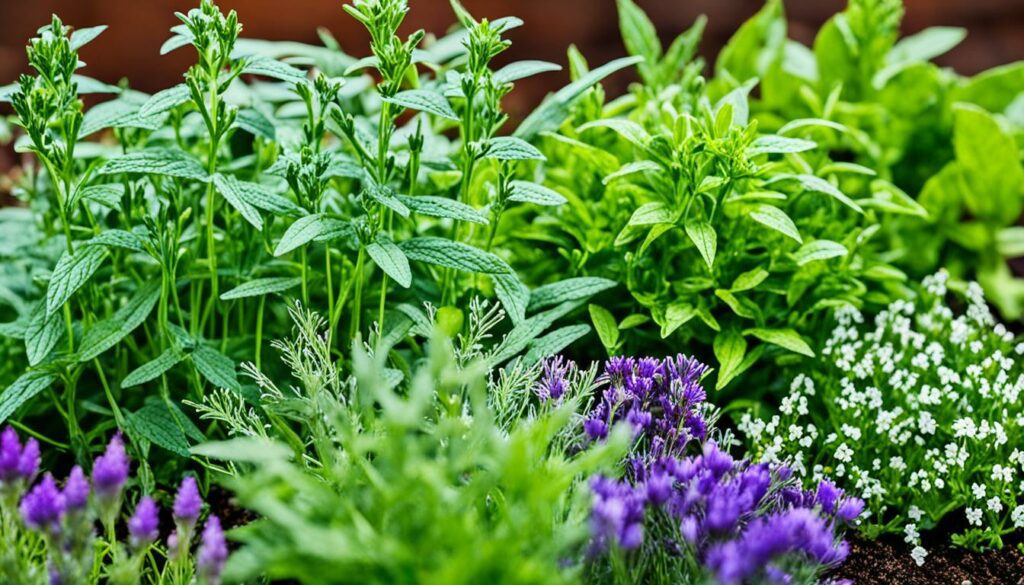
Rosemary and Thyme bring strong, woody flavours and are great because they come back each year. They are a must for soups, stews, and roasts, adding a piney smell or a woody taste. Mint, fresh and with a menthol kick, is great in many meals.
Oregano is known for its role in pizza and is good with meats and roast veg because of its earthy taste. Marjoram, similar but with a richer flavour, is great for those who want something special. Also, Chives give dishes a hint of garlic and keep pests away from the garden.
| Herb | Flavour Profile | Common Uses |
|---|---|---|
| Basil | Sweet, spicy | Pesto, salads, pasta |
| Rosemary | Piney, woody | Roasts, soups, stews |
| Thyme | Hardy, woody | Stews, roasts |
| Mint | Cool, refreshing | Teas, desserts, salads |
| Oregano | Earthy, bitter | Pizzas, sauces, roasts |
| Parsley | Fresh, grassy | Garnishes, sauces |
| Marjoram | Complex, mild | Meats, stews |
| Chives | Garlicky, mild | Salads, soups |
The right fresh herbs from your garden can really improve your recipes. Each herb has unique benefits and flavours, perfect for those who want to add something special to their food.
For the best flavour and to last long, harvest garden herbs the right way and store them well.
To get the most out of your herbs, pick them in the early morning. This should be after the dew has dried and before it gets too hot. Harvesting then will keep your herbs fresh and full of flavour. You can keep picking annual herbs until the first frost and perennials until late August. You’re safe to cut up to 75% of them in one go.
When moving your herbs, lay them down in thin layers and cover them. This helps avoid any damage. Don’t dry herbs in an oven, as this can make their leaves lose flavour and power.
It’s essential to store garden herbs the right way. The method differs based on the herb type:
Dry your herbs until they are brittle and easily crumble. When well-stored, dried herbs can keep their flavour for up to a year. This makes them a great addition to your cooking all year round.
Use these fresh herbs storage tips along with good harvesting practices. This will make sure your homegrown herbs stay fresh and tasty. By storing garden herbs well, you can use them to make your food better all year long.
Preserving herbs can let you enjoy their taste and nutrition all year. Drying and freezing are popular ways to keep herbs. To do this well, you must prepare carefully.
Drying herbs is a way that has been used for ages. It makes herbs last longer. When drying, know that some herbs dry quicker than others.
For instance, thyme and rosemary dry faster than basil. A dehydrator can dry herbs in 1 to 4 hours. The time depends on the herb. If you use an oven, it takes 3 to 4 hours at 110 to 130 degrees F.
Air drying herbs takes longer, about 1 to 2 weeks. You can also heat herbs to make sure they are bug-free. Do this at 160 F for 30 minutes or freeze them at 0 F for 48 hours.
Storing dried herbs in airtight containers in a cool, dark place keeps their flavour and colour. They last up to 3 months in cupboards. Or up to a year if refrigerated or frozen.
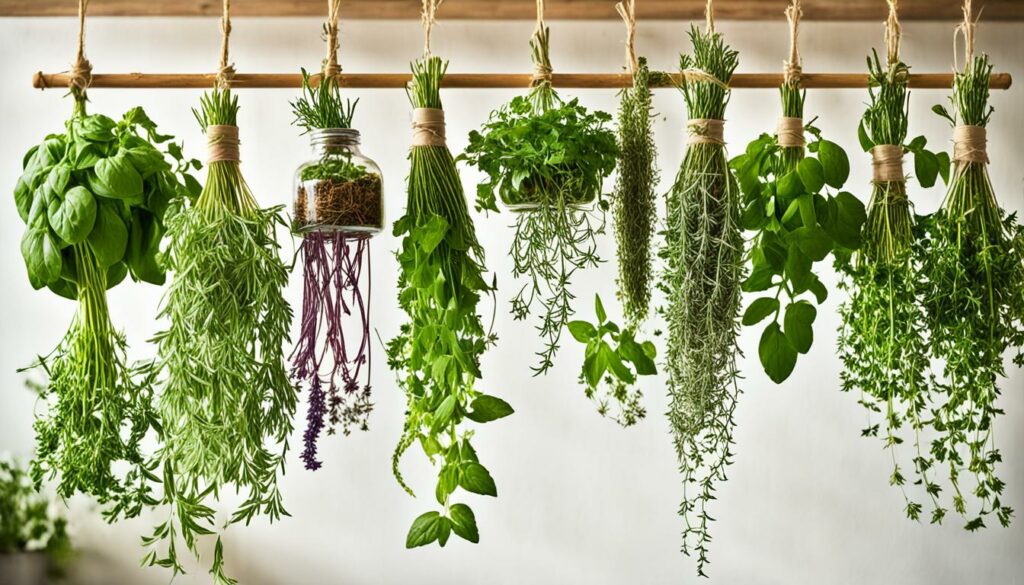
Freezing herbs can keep them tasting fresh. One way to freeze herbs is to first blanch them in hot water. Then cool them quickly in ice water.
After that, dry the herbs well. You can freeze them as they are or put them in ice cube trays with oil and water. This keeps their flavour too.
Some herbs, like basil, do better frozen than dry. When you freeze them in containers or bags, they stay fresh for months. This way, you’ve fresh flavours ready to use easily.
The best way to keep your herbs depends on what you prefer and the herb type. Knowing how to dry and freeze means you can keep enjoying your garden all year. It adds fresh and vibrant flavours to your dishes any time.
Garden basil is a key ingredient in many dishes. It’s a bright green herb that’s both pretty and tasty. This herb is in everything from fragrant pesto to delicious sauces. Basil helps make the most popular zucchini recipe on our blog. It brings not only great flavour but also a range of herb-filled meals for all tastes.
In summer, basil stands out in tomato salads, Italian meals, and pesto. It matches well with tomatoes, zucchini, cheese, and even sausage. Our blog offers over 70 recipes with basil, showing its cooking importance. Basil can make simple meals into something special, too.
“Basil’s versatility in herb-infused dishes can’t be overstated. It elevates everything from pizzas and pasta to refreshing summer salads,” I often remind my readers.
When using basil, handle it with care. Tear or chop it gently to prevent bruising. You can use the soft stems in soups for extra flavour. Storing fresh basil in water at room temperature keeps its flavour and looks. Freezing it after blanching helps it keep its taste and colour. This way, you can use basil all year.
| Varieties of Basil | Characteristics |
|---|---|
| Sweet Basil | Common variety, mild flavour |
| Genovese Basil | Popular in Italian cuisine, perfect for pesto |
| Lemon Basil | Citrusy aroma, great for seafood dishes |
| Cinnamon Basil | Slightly spicy with a hint of cinnamon |
| Thai Sweet Basil | Licorice-like flavour, ideal for Asian dishes |
| Greek Basil | Small leaves, intense flavour |
| Dark Opal Basil | Ornamental with a unique colour, sweet taste |
Cilantro has a strong taste that some people love and others don’t. It’s a key ingredient in many foods around the world. Cilantro works well with strong flavours like lime, common in dishes from Mexico, India, and more. It gives food a fresh taste, whether you’re making guacamole or tacos.
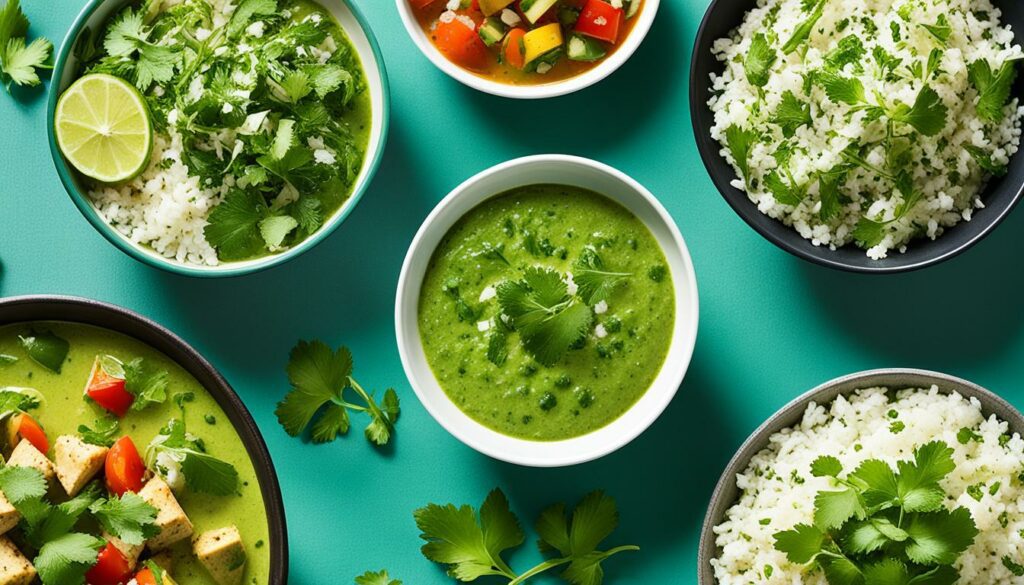
There’s more to cilantro than its taste. How you keep it fresh matters too. Think of it like a bunch of flowers. Keep the stems in water and loosely wrap them. To save it for longer, freeze cilantro in cubes with oil or water. This way, you can enjoy it even when it’s not in season.
| Recipe | Description |
|---|---|
| Salsa Verde | A zesty blend of tomatillos, jalapeños, and cilantro, perfect for tacos and chips. |
| Cilantro Lime Rice | Fluffy rice infused with lime juice and chopped cilantro, ideal as a side dish. |
| Guacamole | A creamy dip made from avocados, lime juice, cilantro, and spices. |
| Cilantro Yogurt Dip | A refreshing sauce of yogurt and cilantro, great for meat or veggies. |
| Chicken Curry | Cilantro adds a fresh taste to this rich, spiced curry. |
Cilantro is key in many tasty dishes. For the best flavour, use the leaves and stems. Always chop cilantro after cooking to keep it fresh. To have cilantro all year, plant seeds often. This herb can make any recipe special, no matter the time of year.
Dill is a great way to add flavour to dishes. It brings a unique taste to soups and pickling. Many cooks use dill in their daily meals.
From old Scandinavian recipes to modern ones, dill is key. Enjoy Norwegian shrimp sandwiches with dill or a warm dish of dill chicken and potatoes. Having dill in your kitchen means more herb-filled dishes to try.
When you use dill, how you prepare and save it matters. Tear the leaves softly to prevent damage. Add them at the end of cooking for a strong taste.
To keep dill fresh, wrap it in damp paper and store in the fridge. You can also freeze it. For freezing, cut the leaves, put them in ice cube trays with water, and freeze. This way, you always have dill ready for your dishes.
| Product | Price (Amazon) |
|---|---|
| Dill plant in a 9cm pot | £12.95 |
| Dill seeds plant kit (500 seeds) | £2.08 |
| 250g of 100% natural dill seeds | £5.99 |
| 3 plug dill plants pack (24% off) | £6.50 |
| Herb Seed Variety Pack including Dill | £4.99 |
| Grow Your Own Herb Garden Kit with 12 herb plants, including Dill | £8.95 |
Parsley is a biennial plant, meaning it grows for two years. In its first year, it might not give many leaves. Yet, it’s known for its mild, grassy taste with a little bit of bitterness. This makes it great for many fresh herbs recipes. Both flat-leaf and curly parsley are simple to grow and don’t need much different care.
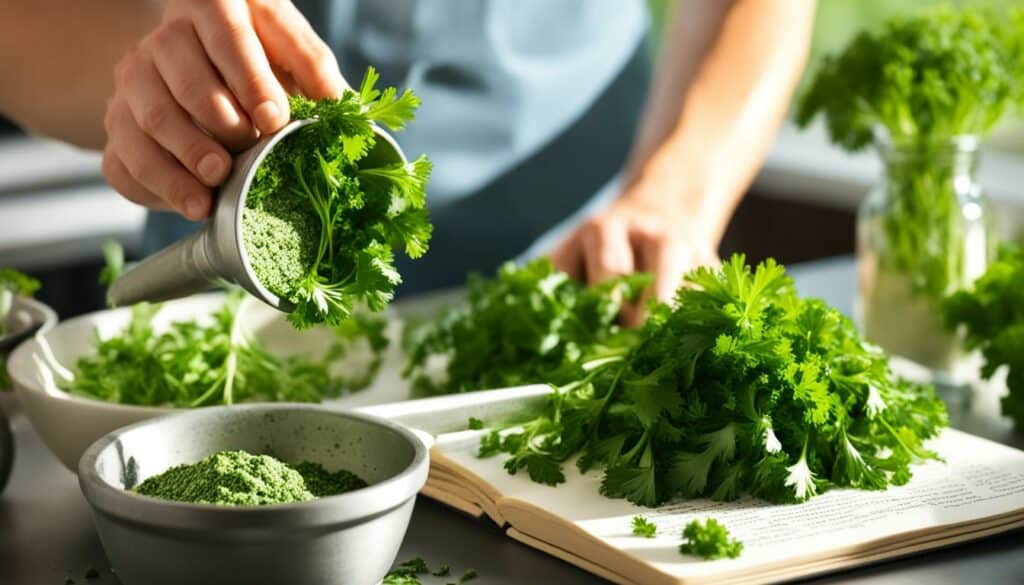
Parsley is perfect in many dishes. It’s key in favourites like Tuna White Bean Salad and Tabbouleh. These dishes are both tasty and healthy. Also, parsley goes well with other herbs in salads, adding flavour and goodness.
Parsley is vital in cooking. It’s in over 36 recipes for main dishes, sides, and sauces. Take the Grilled Flat Iron Steak with Chimichurri Sauce, for example. This shows how parsley can be used in so many ways. To keep parsley fresh, wrap it in a damp cloth. Or, freeze it in ice cube trays with water for later use.
Lemon often pairs with parsley in recipes. It’s a key ingredient in four of them to add extra taste. Parsley also goes well with cheeses like blue cheese in many dishes. In places like California, it’s popular. There, it’s used in five out of 37 recipes.
Looking to try something new with parsley? Try swapping usual ingredients for something fresh. For example, you could use quinoa instead of couscous. Or try fresh mango instead of cranberries. This opens up new flavours in your cooking. Pairing parsley with herbs like basil or dill can also make dishes more complex and tasty.
Parsley isn’t just a garnish; it’s a star ingredient that enhances dishes with its mild bitter flavour and versatility.
Fresh herbs from the garden can make dishes much tastier. They add flavour to soups and salads. By using herb-infused dishes, your food will surprise your taste buds.
Basil, marjoram, and mint add depth to soups and stews. A tomato soup with basil tastes fresh and looks bright. Adding marjoram or mint makes vegetable stew rich and comforting.
Use fresh herbs at the end of cooking. This keeps their flavour strong.
“The best pesto is hand-ground with a mortar and pestle, showing how the technique is crucial for maximizing the flavour.” – Serious Eats
Herbs in salads are refreshing. Parsley and cilantro are fresh and zesty. Tabbouleh, a Middle Eastern salad, is a winner with lots of parsley.
Mixed-green salads taste better with a mix of fresh herbs. This adds more flavour.
Herb dishes are varied and not just in salads. Vietnamese noodle salads use basil, cilantro, and mint. These herbs make a vibrant and tasty dish. Isan-style steak salads with herb dressing are flavourful and tender.
| Dish Type | Key Herbs | Preparation Tips |
|---|---|---|
| Soups and Stews | Basil, Marjoram, Mint | Add towards the end for optimal flavour |
| Salads | Parsley, Cilantro, Mint | Use as main ingredients, ensure a mix for complexity |
| Noodle Salads | Basil, Cilantro, Mint | Mingle with vegetables for a balanced dish |
Try new recipes with fresh herbs. It reduces waste and brings new flavours. Remembering herb dishes can make your meals special.
Using garden herbs can really level-up your cooking. Knowing how to switch herbs and add more flavour changes your dish a lot.
When swapping herbs, remember fresh ones are milder than dried. You might need to use more fresh herbs to get the same taste as the dried ones. For instance, if a recipe wants one teaspoon of dried herb, you should add one tablespoon of fresh.
Putting fresh herbs at the end of cooking lets their flavours stand out more.
Maximise your home-grown herbs with these tips:
Madalene Hill, a top food expert, says any herb can fit any dish if you use the right amount. This advice gives us the courage to be creative in how we use herbs. So, have fun trying these ways to cook with herbs. See how it can add a fun twist to your meals.

Herbs can make our everyday meals taste better. And they’re not just for cooking. You can use them with any meal, even breakfast. For example, adding fresh chives to an omelette doesn’t just taste good.
It also gives a hint of onion that goes well with buttery dishes. Mint, on the other hand, can make fruit salads taste fresh and unique. It’s great with cheeses and salty foods too.
Herbs can make breakfast not only tasty but healthy too. Try adding chopped cilantro to avocado toast for a flavour and health boost. Southwest-style dishes often do this.
Drinks with herbs can also brighten your morning. Basil lemonade or mint tea are excellent choices. They are tasty and good for you.
Herbs aren’t just for meals; they’re great in drinks and desserts too. Imagine a mocktail with herb extracts, like Liquid Bliss. It promotes calmness and tastes great.
For a unique dessert, try rosemary ice cream. Its peppery flavour goes well with the creaminess. It’s a sophisticated choice to end any dinner.
The Nourishing Herbal Khichdi is another great choice for herb fans. It’s quick to make and uses ingredients like basmati rice and yellow moong dal. It includes herbs and spices like ghee, cumin, and coriander. This dish is both delicious and full of herbs’ goodness.
Adding herbs to our meals can really change how we cook. More and more people are using fresh herbs. They can turn any meal into something special. Herbs have become very popular as people see their benefits.
Cooking with fresh herbs makes food taste better and healthier. They have a lot of antioxidants and nutrients. These help fight diseases and make us healthier. Also, they make dishes smell and look great without needing lots of salt or fat.
Choose herbs based on what you like to eat and where you live. For beginners, try easy herbs like basil, chives, and parsley. Make sure your herbs can grow well in your garden by giving them enough sun and water.
Basil, parsley, rosemary, and thyme are great for home gardens. They are easy to grow and useful in many recipes. Start with basil or parsley. Rosemary and thyme are strong and come back each year.
Harvest herbs in the morning when they are dry but the sun isn’t too hot. Store woody herbs like rosemary and thyme in dry places with paper and plastic. For soft herbs like basil, use wet conditions or a glass of water. Good storage keeps herbs fresh for days.
To keep herbs for a long time, you can dry them or freeze them. Drying can be done in a dehydrator or a low oven. Freezing herbs stops them from losing taste. Do this by blanching them or putting them in ice cubes with water or oil.
Basil is perfect for dishes like pesto or as a pizza topping. Tear or chop basil gently to keep it fresh. Store it in water at room temperature. Freezing basil after blanching keeps it green and tasty.
Cilantro is great in salsas, soups, and curries. It goes well with light meats and as a garnish. To store cilantro longer, treat it like flowers. Freeze it after blanching for later use.
Dill goes well with fish, chicken, and in pickles. Use it fresh as a topping or to add flavour to soups. Store dill in the fridge with a damp towel. You can also freeze it in ice cubes for later.
Fresh herbs add amazing tastes and smells to meals. Use herbs like basil, mint, and marjoram in soups and stews. In salads, parsley and cilantro add a refreshing taste.
Use three times more fresh herbs than dried because they are milder. Add them at the end of cooking to keep their fresh taste. Chopping, tearing, and mixing them with oils can make dishes even more delicious.
Add herbs to breakfast, like chives in omelettes or mint in fruit salads. Herbs can also make drinks and desserts better, like basil lemonade or rosemary ice cream. This mixes savoury and sweet tastes for a special meal.