
Did you know the agricultural robotics market is set to grow massively? It’s going from $13.4 billion in 2023 to reach a huge $86.5 billion by 2033. This jump shows how farming is rapidly changing through robotic harvesting systems advancements. I think of these new technologies as part of big breakthroughs like the industrial revolution and the Green Revolution. They are bringing in a new age of high productivity and making work more efficient.
Robots are doing more than just harvesting. They are seeding, transplanting, weeding, controlling pests, and even monitoring fields. Their pinpoint accuracy and efficiency help cut down waste. This is essential as there is a big shortage of human workers in farming. The use of AI, machine learning, and big data in these robots is leading us to smart farming. This means we can expect steady food production and high food safety.
In vertical farming, the use of robots is especially making a big difference. Companies like Rooted Robotics are leading the way with easy-to-use AI solutions. They make farming more sustainable and profitable. The effect of these robotic systems on farming is huge. They are changing the way we do agriculture in a major way.
The world’s population is set to hit 9.7 billion by 2050, up 40%. This surge means we need more food, pushing for better farming ways. Robotic harvesting is key in making farming both more productive and green. These systems can handle many tasks precisely and without much human aid, ensuring we get good crops with little left to waste.
Robots in harvesting are smart, using top-notch sensors and cameras. They can spot fruits and veggies from a distance and tell if they’re ready to be plucked just right. This means crops are harvested at the best time, gently handled, and cut down on the need for many workers. It’s a big step forward in farming’s modernisation, saving time, money, and resources.
Robots do more than just harvest. There are weeding robots, for example. They spot and pull out weeds using their eyes, improving the plants’ well-being without human hassle. Others are in charge of seeding and planting, making sure each seed finds the best spot for growth. Robotic fertiliser spreaders are also getting smart, ensuring nutrients hit the right place, saving supplies and keeping farming green.
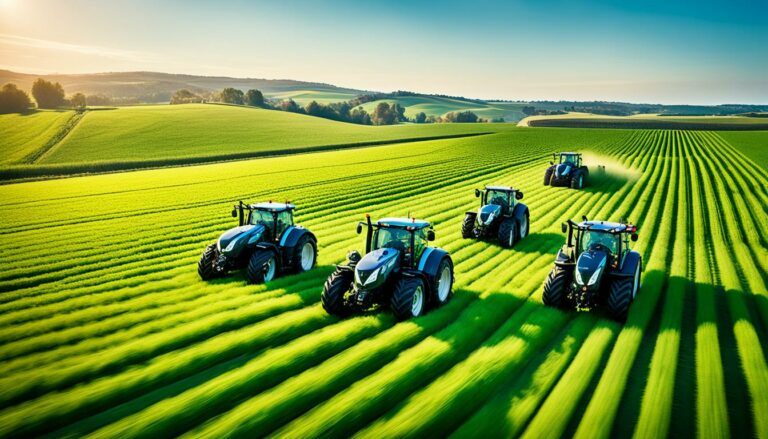
Automated farming is gaining ground, with robots of all kinds now found on farms. They range from flexible six-axis arms to self-driving tractors. Each type plays a specific part, joining forces to make farming smoother and more productive.
| Key Tasks | Technologies Used | Economic Impact |
|---|---|---|
| Harvesting | Sensors, Cameras, Robotic Arms | Reduced Labour Costs, Increased Efficiency |
| Weeding | Image Recognition | Healthier Crops, Reduced Manual Labour |
| Seeding & Planting | Precision Tech, Automation | Optimal Growth, Efficient Resource Use |
| Fertilising | Targeted Application, Precision | Waste Reduction, Sustainable Practices |
Robotic farming is more than just new tech; it’s a chance to solve big problems. Every year, a lot of money is lost because fruits can’t be picked in time. Robotic systems open a path to a future where farms run mostly by themselves. This shift is reshaping how we view and do farming today.
Automation in farming has changed the game, bringing huge opportunities and hurdles. More machines are being used to boost farm efficiency and production. This increase is needed because we have to produce 70% more food by 2050. Also, more than half of a farm’s costs go to paying workers. So, finding new ways to farm is crucial.
One important development is the rise of farming robots. These robots can move around farms by themselves, using high-tech sensors and systems. They can do things like weed, check soil, and plant seeds very accurately. For example, using robots to weed can cut down on pesticides by 90%. And, a single robot picking strawberries can clear a 25-acre field in three days. This work would take 30 people otherwise.

Farm automation is making a big difference in how we grow food. It’s helping to cut labour costs and make farming smarter. With more people to feed by 2050, farming must step up. Automation meets this challenge and satisfies people’s desire for healthy and eco-friendly food.
Robots, for example, can pick fruits without hurting them. This keeps the food good and reduces waste.
| Development | Impact |
|---|---|
| Strawberry Robot Harvester | Replaces 30 workers, covers 25 acres |
| Weeding Robotics | Reduces pesticide usage by 90% |
| Automated Tractors | Enhances planting, fertilising, spraying tasks |
| Data-Driven Systems | Improves crop management with real-time data |
| Consumer Preference Alignment | Supports demand for organic and sustainable products |
Technology has changed many fields, including agriculture. As the world’s population grows, we need sustainable and efficient farming methods more than ever. Various agricultural robots have been introduced. They bring different tools and skills to help make farming better.
Autonomous Mobile Robots (AMRs) are changing how we do farm work. These robots move by themselves in fields. They have sensors like cameras and GPS to do tasks accurately. Tortuga AgTech’s robots, for example, pick fruits with 98% accuracy. They need little help from people.
Mobile robots watch over plant health and soil moisture closely. This helps farmers use resources better and grow more. By using such robots, farming tasks become more efficient.
Six-axis robots are also a big deal in farming technology. These robots have arms that move in many directions. They are great at precise work, like harvesting. They work with other robots or machines to pick fruits without harm.
FFRobotics made a robot that harvests fruits ten times quicker than humans. These robots help with planting, weeding, and feeding crops too. Their usefulness in farming is vast.
Autonomous mobile and six-axis robots make farming better and more sustainable. They monitor crops constantly and complete tasks accurately. This means less work for humans and lower costs, meeting the world’s need for more food.
Agricultural robots have become key in smart farming solutions. Let’s compare Autonomous Mobile Robots (AMRs) and Six-Axis Robots in the table below:
| Robot Type | Primary Functions | Benefits |
|---|---|---|
| Autonomous Mobile Robots (AMRs) | Navigation, monitoring plant health, soil moisture assessment | Continuous operation, precise monitoring, reduced labour costs |
| Six-Axis Robots | Harvesting, seeding, weeding, fertilising | High precision, faster operation, versatility in tasks |
Precision agriculture technology has changed farming with advanced sensors and the Internet of Things. Agricultural sensors play a key part in detailed monitoring and collecting data. This helps farmers make smart decisions, improving how they work and making them more productive.

Agricultural sensors note soil moisture, temperature, and crop health. Paired with IoT, they offer real-time data and tips. This lets farmers manage water, fertiliser, and key farm tasks better, reducing waste.
Now, making decisions based on data is key in farming. Sensors gather lots of data, which is then turned into useful insights. These insights help with everything from planting at the best time to handling pests and harvesting automatically.
This data approach improves the farm’s output and cuts costs. It makes farming friendlier to the planet too.
Robots with sensors and IoT also join in. Fertilising robots, for example, spread nutrients accurately thanks to sensors and maps. Seeding robots place seeds exactly right, using GPS. This really helps on big farms.
Overall, precision agriculture and its tech have made farming smarter. They lead to better choices, more productivity, and greener farming. These benefits are seen throughout the farming world.
In recent times, autonomous harvesting machines have made big steps forward. Thanks to AI and machine learning, the farming landscape is changing. These advancements are making crop harvesting more efficient and effective.
The agriculture sector has found itself short of skilled workers. Also, the cost of labour is going up. Robotic harvesters are now helping out in fields, orchards, and greenhouses.
They’re getting better at spotting and picking soft fruits like tomatoes and peppers. This is thanks to vision systems and cameras. One cool example is Univerco’s system for harvesting broccoli. It uses a special vision module called AxomAcu.
By adding AI and machine learning, these machines can do very complex tasks. They can find ripe produce even in dense plants. For instance, there’s a machine for picking cucumbers made with help from INO and Vineland Research.
These advancements are great because they lower labour costs and get more crops. It’s said that by 2027, these machines will be a $95 billion market. They expect to sell over 210,000 units a year.
Robotic crop harvesters are changing the game in farming. They meet the need for more food caused by our growing population. Thanks to these machines, farming is becoming more precise and productive. This shift marks a new era in agriculture.

Rooted Robotics has done incredible work in robotic harvesting. They focus on microgreens, automating planting and harvesting with efficient machines. Their efforts show how automation boosts both productivity and accuracy.
In fruit and vegetable fields, robots with six axes and mobile abilities are making a big impact too. They pick with great care and handle a variety of produce. With the help of image recognition, weeding is also automated. This saves time and makes fields more productive.
Yet, there are challenges in the wide use of robotic crop harvesters needing attention. One big challenge is cost, as automation must balance against human work expenses. Machines must also be very gentle when picking fragile fruits. This requires constant improvement in robotic design.
Autonomous tractors are proving very helpful. They work non-stop and cut labour costs. This also helps with the shortage of farm workers in many places. These tractors keep up a steady pace, which is crucial for efficient farming.
Today, there’s a strong push for farming to be sustainable. Big part of this push is using advanced automation and big data to make better farming decisions. This way, machines help farmers grow better crops and manage their land more effectively.
There’s also a move towards making robots that can do many farm tasks in one go. This cuts down on the need for multiple machines. Work is on to make these robots work well in all kinds of farming environments. The goal is to aid farmers all around the world.
| Robotic Technology | Application | Advantage |
|---|---|---|
| Weeding Robots | Field Weeding | Utilise image recognition technology |
| Six-Axis Robots | Fruit and Vegetable Harvesting | Increased flexibility and accuracy |
| Mobile Robots | Crop Monitoring | Equipped with cameras and sensors |
| Autonomous Tractors | Field Operations | Work around the clock, reduce labour costs |
Machine learning in agriculture changes how we manage crops. It uses smart, data-based solutions. These tools check on crop health, soil, and predict where weeds might grow. This helps farmers make the best choices, making their work more efficient.
AI and machine learning have made managing crops better. They use sensors and vision to gather lots of information. This helps make choices that meet what consumers want precisely. For example, Hortau has used these tools for irrigation, saving a lot of water.
Using predictive analytics in farming has changed everything. It can predict how much a crop will yield, see diseases, and identify plants very accurately. Companies like Descartes Labs lead the way. They use AI to look after crop health and stop illegal cutting of forests. This makes farming more sustainable.
Predictive analytics can also help the environment. Robotic systems that learn can reduce chemical use by a lot. This makes farming more sustainable and safe for the planet. By 2050, farms could be collecting a massive amount of data daily. Using predictive analytics can turn this data into better decisions that save resources.
In conclusion, machine learning is changing agriculture for the better. It helps make smarter, data-driven choices. This is key for feeding more people and meeting the industry’s goals for the environment.
| Company | Specialisation | Years in Innovation |
|---|---|---|
| Hortau | Irrigation Management | 20+ years |
| Descartes Labs | Crop Recognition & Monitoring | N/A |
Robotic solutions are changing the way we manage crops, especially in the planting stage. These high-tech systems use the latest tech and automation to work precisely and efficiently. They focus on increasing yield while reducing waste. Seeding robots, for instance, use GPS and data to plant seeds with accuracy.
Mobile robots and self-driving tractors are key parts of this shift. They have advanced navigation to handle various farm sizes. These machines make planting more accurate, which boosts harvests and eases farm work.

When it comes to planting robots, using GPS and sensor mapping is a big step. It helps plant seeds at the perfect depth and distance. This makes sure crops grow well and resources are used wisely. By moving on their own, these mobile robots plant seeds in a very precise way.
Autonomous tractors are vital in this high-tech farm setup. They do a lot of jobs, from planting to seeding, all by themselves. This not only boosts the farm’s output but also cuts costs. Thanks to AI and machine learning, these tractors keep getting better. They ensure every task is done with top precision and efficiency.
Together, planting robots are key in today’s farming. They tackle issues like not enough workers and help farms become more productive and eco-friendly.
The global market for agricultural robots is expected to jump from $13.4 billion in 2023 to about $86.5 billion by 2033. Vertical farming is set to gain a lot from these smart farming solutions. These technologies use artificial intelligence, machine learning, and data analytics. They make farming in cities better by improving accuracy, increasing what we produce, and supporting the environment.
Specialised vertical farming equipment is making a big difference. Robots are helping cut down the need for lots of workers in vertical farms. For example, Rooted Robotics sells AI-powered machines that work well in carefully controlled places where plants grow. These improvements make the work smoother, reduce how much we throw away, and boost food safety.
Farmers now have machines just for growing food in cities. These special tools include robots that plant, remove weeds, and gather crops in the tower-like farms. Take Terra Robotics’ OMEGA. It’s a robot guided by lasers that shows how machines can do certain human jobs better. This helps with the high costs of labour and makes farms more efficient.
Using smart farming solutions in vertical farming is key to getting more from the land. By choosing what to do with the help of data, these systems use resources such as water and nutrients more wisely. They also make the air inside smart greenhouses just right for growing crops. Tuning things like temperature and humidity helps grow more food. This method doesn’t only boost how much we produce but also keeps things good for the planet and helps farms grow bigger.
Robots are changing the way we do vertical farming by using information right away. As these systems get better, robots won’t just make more food. They will also help farms make money and protect the Earth for the future.
Robotic harvesting systems are changing the game in agriculture. They reduce resource use and cut down on waste. These machines are making farming more efficient and eco-friendly.

Robotic systems help save resources. They use high-tech methods to apply water and fertilisers perfectly. This reduces waste and keeps the environment cleaner. Robots also mean less need for big, heavy machinery. This helps the soil stay healthy for longer.
Less waste is good for the planet and the wallet. Robotics are great at cutting down on food that goes to waste. By handling crops gently, they make sure more food makes it to the store.
| Benefit | Percentage Reduction | Impact Area |
|---|---|---|
| Reduction in Water Usage | Up to 30% | Conservation Resource |
| Decrease in Agrochemical Runoff | 40% | Environmental Health |
| Reduction in Food Wastage | 34% | Greenhouse Gas Emissions |
Robotics in farming are still getting better. The more they’re used, the more they help the planet. They promise a future where using fewer resources and making less waste are common.
Robotics has changed farming a lot. Case studies on robotics show us how companies like Terra Robotics and Rooted Robotics are leading the way. They prove that advanced robots can change how we do things on the farm.
Terra Robotics focuses on organic farming with its OMEGA project. It features an autonomous robot that uses lasers to get rid of weeds. The robot is very good at spotting weeds, with a success rate of over 95%. It hardly makes any mistakes. This helps farmers work better without using harmful chemicals.
Rooted Robotics is known for making AI tools that don’t cost the earth. It’s especially helping with vertical farming. They have tech for picking wild blueberries, spotting tomatoes, and figuring out how many tomatoes a plant will make.
This is all part of making farming smarter and more profitable. By being smart about what they make, Rooted Robotics makes high-tech tools that more farmers can afford.
The work of Terra Robotics and Rooted Robotics is changing farming. Their smart robots help farmers grow crops better, with less work and more profits. These case studies on robotics clearly show the big steps we are making in better, greener, and more profitable farming.
Bringing robotic technologies into farming faces big hurdles. First, the cost to start is high. Also, making complex robots for farming is not easy. These things stop many farmers from using them.
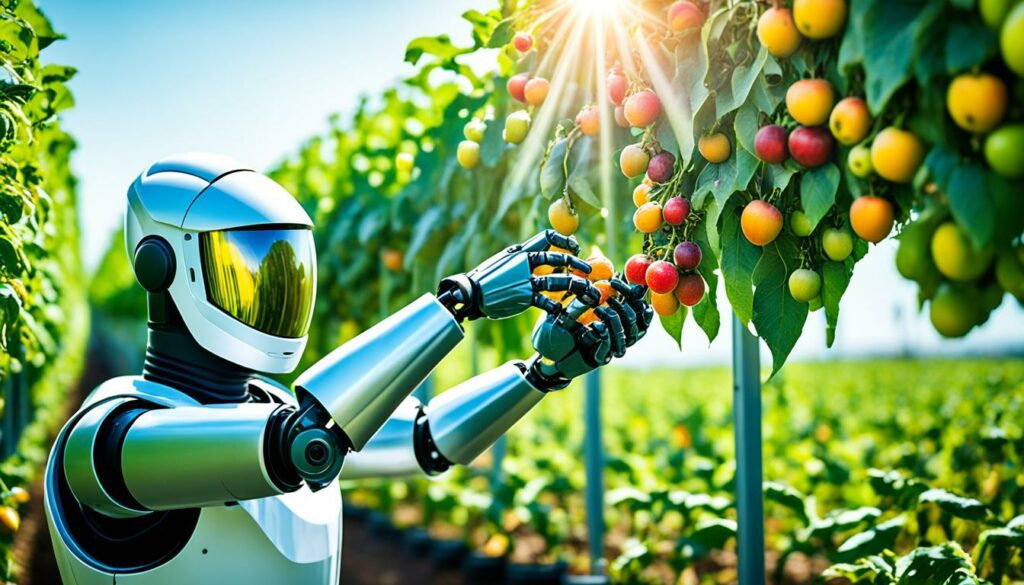
Harvesting some crops, like lettuce and broccoli, needs a gentle touch. Doing this by hand is usual to prevent damage. To work, robots need special cameras and sensors. They also need to move carefully among plants to pick well.
Some tasks, like picking broccoli, are hard for robots. The size and look of each head vary. This makes finding them tough. Even picking out cucumbers from their vines is a big challenge for robots.
Researchers are working on better robots, like one for cucumbers. It needs to work high off the ground. But, building robots that work everywhere is hard. Places without good internet can’t use some robot features.
Agricultural robotics is set to be worth a lot by 2032. But there are big issues to solve first. Trust, costs, and making robots that always work are key. New renting options may help farmers use robots without the big expense.
In some jobs, like milking cows, robots are doing well. But there is still much to do. Overcoming the big challenges is crucial to see better use of farming robots in the future.
The future holds exciting advances in agricultural robotics. There’s a strong push for smarter maintenance and more automated processes. With the market predicted to grow from USD 13.5 billion to USD 40.1 billion by 2028, big changes are coming for farmers.
A key area is predictive maintenance. It uses high-tech sensors and analysis to predict machine problems. This keeps farm equipment running smoothly and avoids lost time. Syngenta, for example, uses drones with sensors to collect data and boost efficiency.
Automation is becoming more integrated into farming. IoT devices and satellite connections are creating new and better network options. This means more affordable and effective farm software and robots. These new tools are helping with smarter decision-making and making farm tasks more efficient.
| Year | Market Size (USD Billion) | Growth Rate (CAGR) |
|---|---|---|
| 2023 | 13.5 | 24.3% |
| 2028 | 40.1 | 24.3% |
These changes are making agricultural robotics crucial in farming’s future. They improve how farms work, deal with staff shortages, and support eco-friendly farming. This shift is about more than just technology; it’s changing the farming game for the better.
Robotic harvesting is now vital in farming. It’s not just an experiment. It has become the backbone of agriculture, dealing with problems like higher costs and less labour. Robotic systems shake how we get crops like lettuce, tomatoes, and cucumbers.
Looking ahead, the role of robots in farming is only going to grow. They can pick out hidden fruits and veggies now. This means better timing for harvest, better quality, and more food. Thanks to teams at INO and the Vineland Research, robots can even work in special Canadian greenhouses. This shows how much robots can improve farming.
There’s a clear path to all farms being run by machines. New tech and farm skills are coming together for a future of better and greener farming. Robots make farming more automated, efficient, and ready for the future. So, our food is getting safer to make, thanks to today’s tech.
There have been big steps in making robots better at picking fruits. They now see fruit better, grab it more effectively, and tell when it’s ready to be picked. These changes help make farming smarter and more accurate.
Automated farming gear boosts how much food we make and cuts costs. It means jobs can be done without people, which is good when there aren’t enough workers. This tech also helps look after the crops in a smarter way.
There are two main types of farm robots: AMRs and Six-Axis Robots. AMRs can move and do things by themselves, thanks to special sensors. Six-Axis Robots stand still and are very precise, especially for picking fruits carefully.
Sensors and IoT are key to making farming more precise. They keep track of the weather and how plants are doing. This helps farmers make better choices about when to water, fertilise, and pick the crops.
AI and machine learning are making harvesting robots smarter. They are now better at finding and picking fruits gently. This means they work well with different crops to get more done.
Rooted Robotics is leading in using robots to pick crops. They have developed affordable robots for planting and harvesting tiny greens. This shows how robots can really help in farming.
Machines learning helps with managing crops and predicting what will happen. Systems can watch over the plants and the soil. They can even tell when there might be too many weeds. This helps farmers do a better job while taking care of the land.
For managing crops, there are robots ready to sow seeds and plant. They use GPS and other tech to plant seeds very well. This makes farming more efficient and the harvests bigger.
Smart devices make farming in buildings better and greener. They use robots to do a lot of the work, which means less need for people. This tech makes it easier to grow crops without a big outdoor space.
Using robots for harvesting helps save resources and reduce waste. They are very careful with things like water and fertiliser. Also, they pick the produce so nothing goes to waste, making farming more eco-friendly.
Terra Robotics has made a weed-killing robot that runs on its own. And, Rooted Robotics has affordable automation for farming indoors. These cases show how robots can change farming for the better.
Making farm robots work faces a lot of hurdles like cost and tech issues. Also, they have to be very careful around the crops. Overcoming these problems is key to using robots more in farming.
The future of farming tech is looking towards avoiding breakdowns and using more automation. We’ll see robots that can do many jobs and more drones flying around. Plus, we’ll get better at using data to farm smarter.