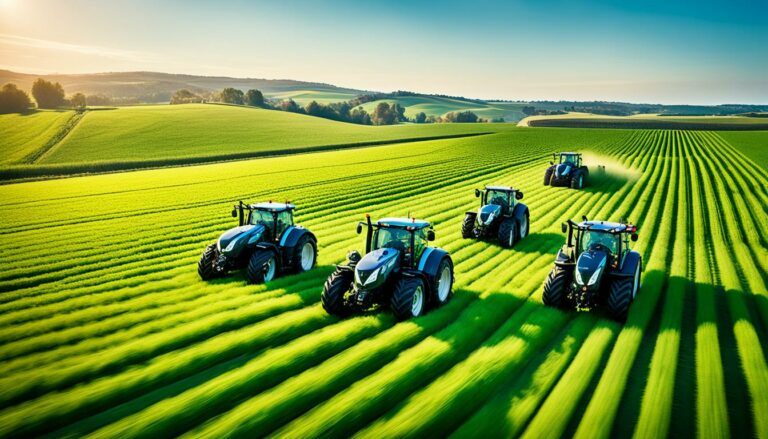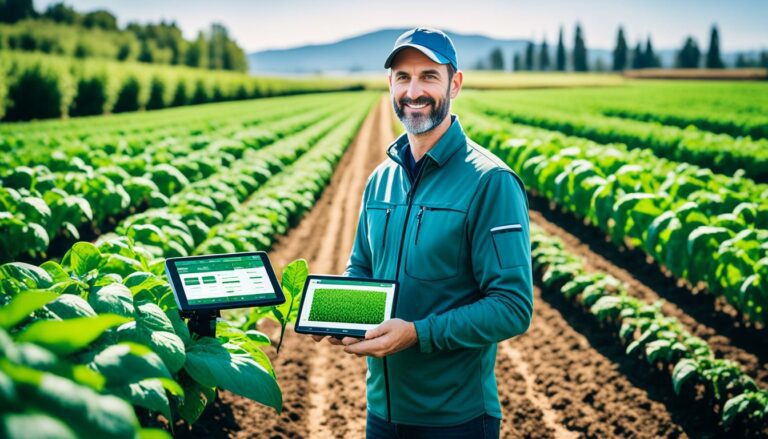

Did you know robotic weeding tech can cut herbicide use by up to 90%? It’s a big change for farms. Carbon Robotics’ LaserWeeder, led by Paul Mikesell, is at the forefront. It uses AI and 24 NVIDIA GPUs to spot and kill weeds accurately. This tech handles millions of pictures and zaps thousands of weeds every minute. It makes farming much more efficient.
This robotic weeding system gives farmers instant data and advice from the cloud. It leads to 80% less money spent on fighting weeds. As a result, farmers get better crops. This cuts the harm to the environment. It’s a big leap in farming methods. This highlights how exact weed killing can change farming’s future.
The world of agriculture is seeing big changes, and one major area is robotic weeders. Carbon Robotics has led the way with their LaserWeeder. This machine can handle big jobs, covering 20 feet and getting rid of about 200,000 weeds every hour. It’s a win for the environment too, cutting down on the need for harmful chemicals.
Devices like the LaserWeeder mark a new chapter in farming. They use smart technology to recognise plants and target weeds precisely. Other machines, such as FarmWise’s Titan FT-35, work without chemicals day and night. And the See & Spray robot by Blue River Technology cuts down on herbicides by 90%.
The big issue is their cost, which can be between £100,000 and £200,000. But, these machines work non-stop, lower the need for workers, and increase the crop yield. For example, they reduce the need for people to weed by up to 10 times, thanks to their fast speed of 2-4 mph.
Overall, as we move from old farming ways to new technology, the effects are clear. The LaserWeeder supports farming that keeps the soil and nature healthy. The Ecorobotix, for instance, uses the power of the sun and more sensors. These advances are changing farming for the better. They’re greener, cheaper, and they make farming more productive.
Exploring the impact of automated weed control reveals how it improves farming. We must think about the hard work of manual weeding methods. They come with big problems too.
Old ways of weeding need to use a lot of chemicals. These chemicals can be bad for the environment and cost a lot. Doing the weeding by hand is also expensive for farmers. It can cost as much as $700,000 every year.
This big cost makes farming less profitable.
Agricultural devices like Carbon Robotics’ LaserWeeder are making a big difference. This machine is very precise and doesn’t need breaks. It can work on many types of soil and handle over 100 crops.
The laser technology of the LaserWeeder has removed billions of weeds. This shows just how well it works.
LaserWeeder also helps farmers save a lot of money. They have seen their labour costs go down from $700,000 to around $300,000. This is a huge benefit and it makes their work smoother.
This machine doesn’t take long to pay for itself, usually within three years. It’s very accurate, using lasers to remove weeds without chemicals. This improves how well crops grow and their quality.
Carbon Robotics supports farmers well with their technology. They offer help when needed, every day of the week. This makes switching to the new technology easy.
LaserWeeder is changing the game in farming. It fixes the problems with old weeding ways and introduces benefits of agriculture automation.
| Traditional Weeding Challenges | Benefits of Automated Weed Control |
|---|---|
| High Cost of Manual Labour | Labour Bill Reduction from $700K to $300K |
| Environmental Hazards of Herbicides | Precision Weed Eradication with Lasers |
| Inefficiency and Time-Consuming | 24/7 Operation, High-Efficiency Rate |
| Dependence on Chemical Treatments | Non-Chemical Weed Control |
| Variable Effectiveness | Sub-Millimeter Accuracy |
The move to automated weed control is vital for sustainable farming. With benefits of agriculture automation, we hope for a future full of efficient and eco-friendly farming.
Precision farming technology is leading the way in farm innovation. It combines AI systems and advanced machines for effective farm management. Weeding robots are a big part of this, with the market valued at $20 million in 2021. They are expected to grow quickly, becoming ten times bigger in five years. This growth highlights how automated systems boost farm productivity and eco-friendliness.

With high-tech farming tools like the LaserWeeder, farmers can find and remove weeds with extreme accuracy. This reduces the chance of harming crops. Weeding robots can cost between $50,000 and $250,000, a big investment for smaller farms. However, the savings in labour costs and resources in the long run can make them worthwhile.
These tools use data from satellites, drones, and sensors to fight weeds precisely. By doing so, they cut down on the use of harmful herbicides. Precision spraying robots, for example, use less herbicide by targeting only the weeds. This promotes eco-friendly farming.
The use of robots is also tackling the issue of not enough workers in the agricultural sector. With autonomous tractors and robotic harvesters, farms can be more efficient and produce more. These machines have advanced sensors and GPS for better farming. Robotic harvesters, for instance, can see which crops are ready to pick, improving harvests while reducing damage.
Precision farming gives farmers valuable data for making smart choices. Automated tools help make farming both more efficient and better for the planet. They are key to the future of agriculture.
In recent years, agricultural robots have not only dealt with weeds but have also taken on more tasks. They include monitoring plant health, spotting diseases in crops, and managing all crop needs. By using artificial intelligence (AI) and robots, farming is becoming more efficient and productive.
Agricultural robots go way beyond just weeding. They are essential in keeping an eye on plants. For example, Cornell AgriTech is using robot microscopes to check plants with AI. These bots can find genes that fight diseases, speeding up the research to create crops that can battle diseases locally.
Awentia, a startup in Italy, is also making a big difference. They change pictures into usable, structured data. This helps farmers keep a close watch on their vineyards. With this data, they can spot plant problems early. It’s all about making better choices to keep crops safe and stop disease outbreaks.
Automated crop management is a full-package deal. It’s not just about removing weeds. It includes careful pruning, smart spraying, and smooth harvesting. Rooted Robotics, for example, has developed tools for seeding microgreens very precisely, especially in vertical farms.
Their new harvester is also aimed at preventing losses after harvest. And don’t forget robots like Terra Robotics’s OMEGA. that zap weeds with lasers, no chemicals needed. These inventions show how big a role agricultural robots can play. They lead to more effective and eco-friendly farming.
Implementing robotic weeding has made farming more eco-friendly and efficient. Carbon Robotics leads this change with its amazing LaserWeeder. This high-tech tool uses AI and machine learning to make farming both more precise and productive.

The innovative LaserWeeder by Carbon Robotics is a game-changer in weed control. It’s named for its accurate laser technology. This ensures it can spot and remove weeds precisely, protecting crops while boosting harvests.
Although it costs between $50,000 and $250,000 USD, it quickly pays for itself. This is because it cuts operational costs and lowers the use of harmful herbicides.
AI and machine learning are crucial for robotic weeding. They let devices like the LaserWeeder tell the difference between crops and weeds in an instant. This means they can act with great precision and speed, keeping farms efficient and good for the environment.
Precision in applying sprays means less chemical is used. This is better for the earth and the soil. These robots keep getting better at their job by learning from every field they work on, handling a larger variety of weeds over time.
| Feature | Benefits |
|---|---|
| Precision Weed Detection | Reduces crop damage risk |
| Cost Reduction | Diminishes weed control expenses |
| Environmental Sustainability | Lowers chemical usage |
| Data Collection Capabilities | Monitors crop health and soil conditions |
| Labour Shortage Solution | Reliable alternative during peak seasons |
In conclusion, the use of robotic weeding, especially with the LaserWeeder, is changing farming for the better. By bringing AI and machine learning into agriculture, these robots are making farms more productive and efficient. They also show a strong commitment to look after the environment and practice sustainable farming.
Modern agriculture is changing fast, thanks to weed detection systems. These tools are key for new robotic weeding tech. They help improve how we tend to our crops.
Take Earth Rover’s CLAWS, for example. It finely tunes images and uses AI to look for weeds. It can tell the difference between plants and the unwanted ones. This tech is the prime example of advanced plant recognition.
With these smart tools, farms can be more eco-friendly and productive. Robots with special cameras can spot weeds better, even in thick crops.
This means we can control weeds more exactly, which cuts down on using harmful chemicals. It helps keep the soil healthier. The goal of agricultural technology innovation is not just higher crop yields. It’s also about keeping farming sustainable.
| Feature | Description | t
|---|---|
| Market Value (2021) | $20 million USD | t
| Projected Growth | 10x increase over next 5 years | t
| Cost Range | $50,000 – $250,000+ USD | t
| Herbicide Reduction | Significant decrease in chemical usage | t
| Technological Barriers | tInitial costs and technical complexity | t
| Research Interest | tHigh, with numerous publications in leading journals | t
| Yield Impact | tSevere yield reduction in major crops due to weeds | t
| Economic Loss Due to Weeds | tOver $100 billion USD globally | t
Sure, the start-up costs and complexity are tough for some to swallow. Yet, the good they do for farming’s future wins out. They boost efficiency and care for the planet.
In the farming world, machine learning in farming is making a big change in spotting weeds. It uses NVIDIA GPUs to look at plants in real-time. This helps pick out weeds very clearly.

Using AI plant detection and NVIDIA GPUs is a big step in weed management. It looks at lots of images quickly to tell crops from weeds. This tech lowers the need for chemicals and makes farming more sustainable.
This tech also connects to the cloud in agriculture. It lets farmers see crop health and weed info right away. This quick info helps make better choices, boosting farm work. It also shares soil and weather tips, making farming more efficient.
The weeding robots market is growing, reaching $20 million USD and expects to go up a lot more. They help deal with not enough workers and wanting eco-friendly farming. Some use eyes to spot weeds, others spray weed-killer only on bad plants, saving plants and the earth.
| Type of Weeding Robot | Key Features | Environmental Impact |
|---|---|---|
| Mechanical Weeding Robots | Vision-based identification, no chemical use | Promotes soil health and biodiversity |
| Spraying Weeding Robots | Precision herbicide application | Minimises chemical exposure |
| Multispectral Imaging Robots | Enhanced weed detection accuracy | Supports organic farming practices |
Joining HowToRobot helps buyers meet automation suppliers easily. It brings together farming tech like machine learning, plant spotting, and cloud info. This mix changes farming for the better, making it exact, green, and productive.
Modern agriculture is changing significantly with autonomous farming machinery. It offers farmers a way to work more efficiently and economically. Now, it’s more common to see farmers using these self-reliant machines for activities like planting and harvesting. This shift is leading to more productivity and lower costs for farming, whether the farm is big or small.
These machines are improving when crops are harvested and giving access to labour. This improvement is good news for the quality of crops. Farmers can now use many machines at the same time because they work without needing a person to control them. This speeds up the harvesting process. The benefits also go beyond the farm, helping the environment by saving resources and keeping harmful chemicals away from the soil.
One standout invention is the CLAWS system by Earth Rover. It uses eight cameras to see individual plants and track their growth. Operating itself using solar power, CLAWS works well in different places and weather. It’s good for crops and the environment by saving water and keeping soil as healthy as possible.
Another great thing about the CLAWS robot is its positive effect on the air we breathe. It doesn’t produce any greenhouse gases thanks to its use of clean energy. It also makes farming safer and easier for people. This is because it can help with many tasks like checking on plant health, planting, and keeping weeds under control.
In conclusion, autonomous machines are not just changing farming; they’re making it better. They save money, grow better crops, and look after the planet. With these benefits, they are becoming key in the future of farming.
Robotic weeding is changing farming through big savings. Companies like Carbon Robotics lead this change. They show how using robots for weeding can cut costs. This is by making weed control cheaper and more effective. Many farmers are now saving money and boosting their work thanks to these high-tech robots.

Robotic weeding saves money and makes farming better. Old ways of keeping weeds down used lots of money on workers and herbicides. But with robots, there’s a big cut in these costs. For example, Carbon Robotics found an 80% drop in the costs of weeding. This is a huge saving for farmers.
Not just that, but farming gets more efficient too. Robotic weeders can be very precise with herbicides. This means farmers use fewer chemicals. Besides saving money, this helps to keep the earth healthy. And since robots are good at spotting and getting rid of weeds early, crops grow stronger and more abundant.
| Economic Indicator | Traditional Weeding | Robotic Weeding |
|---|---|---|
| Initial Investment | Low to Moderate | High ($50,000 – $250,000+ USD) |
| Annual Weed Control Costs | High | Reduced by up to 80% |
| Chemical Usage | High | Significantly Reduced |
| Labour Dependence | High | Low |
| Crop Yield | Variable | Consistently Higher |
The market for weeding robots was worth around $20 million USD in 2021. It’s expected to grow ten times bigger in the next five years. This tells us farmers are realising the benefits of these robots. These machines don’t just solve the problem of not enough workers in farming. They also make farming more profitable and good for the planet. Robots are becoming key for farmers today.
I love seeing how robotic weeding is changing farming for the better. It had a market worth of $20 million USD in 2021. Experts say it will grow ten times bigger in the next five years. This shows that these techs are becoming more popular. They help because fewer people want to work in farming, and we all look for earth-friendly ways.
Robotic weeding systems cut down on herbicides. Take Blue River Technology’s “See & Spray.” It tells crops from weeds and only sprays the weeds. This can lower chemical use by up to 90%. Farms that use a lot of chemicals or want to go organic really benefit. Also, machines like the Robovator don’t use chemicals at all. They pull weeds out mechanically.
These robots make the soil healthier. They use fewer herbicides, saving the soil’s good bugs and keeping it from getting worse. They also stop water pollution. These smart machines can spot and get rid of weeds when they’re small. This keeps the crops safe. It helps farms be more sustainable and stay healthy over time.
Buying weeding robots can be expensive, starting at $50,000. This is hard for small farms. But the benefits they bring in the long run are worth it. Think better crops, less chemical use, and healthier soil. As tech gets better in farming, we will see more choices for all farmers.
The *case study of Carbon Robotics* shows amazing progress in *agricultural robotics*. Their *LaserWeeder* tech has changed how we control weed, making farming more effective while being kind to the planet. Let’s look into the details of this *success story* and what the *LaserWeeder* means for farming.
From 2012 to 2016, the US used 281 million pounds of glyphosate each year over 298 million acres. This huge use calls for ways to farm more sustainably. That’s where the *Autonomous LaserWeeder* comes in. It can kill up to 100,000 weeds in an hour. This cuts down the need for harmful herbicides.

Farmers using the *LaserWeeder* save 80% on weed control. They expect to make back their money in three years or less. The success of these machines has been massive. They sold out in 2021 and only a few were left to buy in late 2022. This shows farmers really want to own these new farming devices.
*Carbon Robotics* is not stopping here. In 2022, they aim to use the *LaserWeeder* on key crops such as corn, soybeans, and wheat. They also plan to make a platform that gathers farm data from the machines. This will help farmers use the *Autonomous LaserWeeder* even better.
Last year, *Carbon Robotics* sold three times more machines than the year before. This is a big step. Customers used the machines for over 50,000 hours on more than 100 crops. These machines can handle up to 300,000 weeds every hour. This shows how well they work.
| Year | Technology | Achievement |
|---|---|---|
| 2021 | LaserWeeder | Sold out of units |
| 2022 | Expansion Plans | Triple sales, Over 50,000 hours of use |
| 2023 | Track LaserWeeder | $43 million funding raised |
The progress at *Carbon Robotics* is also about making the machines more adaptable. The new Track LaserWeeder can work on different soil types, including muck soil. This makes it more useful. The company also got $43 million in new funding in 2023, for a total of $80 million. This is great news for its future work.
In short, the *case study of Carbon Robotics* is a great *success story in agricultural robotics*. It shows big advancements and is a good model for future farming tech.
Robotic weeding has seen big advances but it still faces many issues. A major problem is the cost, ranging from $50,000 to over $250,000. This makes it hard for small farms to invest in. Plus, robots need to work well in all kinds of farms, dealing with different soils and plants.
One key difficulty is telling weeds from crops in crowded fields. Multispectral imaging helps, but it needs to get even better. Also, some farmers are slow to accept new tech, creating another challenge.
The world of farm robots is always changing, with new inventions trying to fix these problems. For example, there are robots that spray weeds carefully and others that pull them out with mechanical eyes. These efforts not only reduce chemical use but also help the environment. Yet, we still need to work on solving these big challenges for farm robots to truly succeed and be welcomed by all farms.
Addressing labour shortages in agriculture is key. With a smaller workforce, the sector needs help. Robotics are showing great promise in solving these challenges, with weeding robots leading the way.

In 2022, seventy percent of growers in the specialty crop sector invested in automation. This shows the urgent need for technology that saves on labour costs. On average, each grower spent around $450,000 to $500,000 a year on this technology.
The weeding robot market was worth about $20 million in 2021. It’s expected to grow ten times bigger in the next five years. Weeding robots are both a smart technological solution and a good financial move. Although they can be costly, their savings on weed control are big, with an ROI in one to three years.
Weeding robots are not just about saving money. They are also helping to keep soil and biodiversity healthy. By using less herbicide, they cut down on harmful chemicals in fields. They also give farmers important data on their crops and soil health, aiding in better decisions.
Take Jim Saunders in central Virginia, for example. His labour costs have gone up by 25% since 2019. Using robotics can cut this expense by doing hard, time-consuming work. This way, farms need less manual effort, especially during busy times when workers are hard to find.
Already, 2/3 of farms have turned to automation due to high labour costs and not enough workers. This trend shows the growing role of technology in farming. It’s helping the sector move towards more tech-focused operations, making innovation more important than ever.
| Year | Investment in Automation (Per Grower) | Expected Increase in Automation Spending |
|---|---|---|
| 2021 | $350,000 to $400,000 | – |
| 2022 | $450,000 to $500,000 | 10-50% |
| 2023-2026 | Projected Increase | Over 50% |
In conclusion, using robotics in agriculture is bringing big changes. These changes help with current workforce issues and make farming more efficient and sustainable. Technology is proving vital in meeting the challenges of agriculture today.
Exciting changes are happening in the world of agricultural robotics. Places like Cornell AgriTech are leading the charge. They are pushing for new, creative uses in farming. These changes aim to make farming better and more efficient.
Cornell AgriTech is on the cutting edge of new farming robot technology. They have made cameras that watch plants very closely. These cameras can spot issues early, which helps improve how much and how good the crops are. This work gives farmers very exact tools for managing their farms.
There is also growing interest in making custom farming tools. These include things like special seeds for different areas and systems that manage weeds well. Such custom tools meet the special needs of each farm. They make precise farming more doable and productive. Looking ahead, these custom solutions are set to change how crops are taken care of and boost farm results.
The rise of robotic weeding tech is a big step forward in farming. These new tools bring accuracy, speed, and eco-friendliness to the field. They’re changing how we think about farming, leaving old methods behind. For example, manual weeding is hard work done in tough conditions, and using chemicals worries about the environment. But now, robotic systems are making a big difference.
Robotic weeding cuts herbicide use by about 90%, showing its green benefit. With advanced AI, these machines can tell crops apart from weeds very accurately. This means less chemical harm, healthier soil, and more sustainable farming.
Financially, this is also great news for farmers. They save money on weed control and improve their overall farm work. More and more, autonomous weeding systems are becoming key in farming’s future. They tackle problems like lack of workers and answer to the need for greener farming. Their role in protecting plants, soil, and the environment is important. The future of farming looks bright with these new tools in place.
Robotic weeding technology uses advanced robotics and AI to find and kill weeds in fields. It’s better for the environment and more efficient than old ways.
The LaserWeeder uses AI and 24 NVIDIA GPUs to see and kill weeds accurately with lasers. It can handle many weeds in a short time and helps farms work better.
Automated systems for killing weeds save money, reduce herbicide use, and are more accurate. They also help the environment and increase crop production. This is better than the manual way of pulling weeds.
Precision farming uses high-tech tools to make farming smarter. It makes weeding better, saves money, and helps crops grow more. Farmers can make the right choices quickly with this tech.
Agriculture robots are used for many jobs like watching plants, finding diseases early, cutting carefully, picking crops, and applying pesticides. They improve how farms are run and plant health.
These high-tech systems can tell the difference between crops and weeds instantly. They get smarter over time and work better, saving farmers time and money.
These systems use advanced technology to spot and kill weeds. They move through fields and give instant feedback to help control weeds better.
Machine learning analyses plant photos using smart maths. For example, the LaserWeeder checks photos quickly, connects to the cloud, and gives farmers clear advice, making farming smarter.
Autonomous machines do farm jobs with little human help. Oz from Naïo, for example, handles weeding by itself, making farming more reliable, eco-friendly, and efficient.
Robot weeding tech can cut weed control costs by up to 80%. This makes crops better and helps farms make more money, supporting the farm economy.
It makes farming more eco-friendly by reducing harmful sprays and keeping the land healthier. Innovations like weeding robots that don’t hurt the earth are part of this.
The LaserWeeder by Carbon Robotics is used a lot in places like the U.S. and Australia. It’s very good at its job, and people have put a lot of money and praise into it, showing it’s changing farming for the better.
Challenges include the high cost at the start, fitting different farm types, and some farmers not wanting to change. Overcoming these challenges is key to fully benefit from these technologies.
By doing jobs like pulling weeds and picking crops, robots make up for fewer farm workers. This keeps farms working and lets people focus on using more tech in farming.
The future has robots that do what each farm needs, fight plant diseases better, and manage weeds well. Places like Cornell AgriTech are working on these big changes.