In 2012, organic farming made up only 3 percent of the United States food market. But globally, its growth potential and the impact on farming practices are huge. Some places, like Finland, Austria, and Germany, plan to use 20 percent of their land for organic farming. Sikkim in India went fully organic by 2016.
Organic farming avoids using synthetic chemicals in the U.S., thanks to the USDA’s National Organic Program. It checks that farmers meet standards set by the Organic Foods Production Act. These rules focus on protecting nature, caring for animals, and using specific organic materials. Farms get checked often to keep their certification up.
People started moving towards organic farming more in the 1970s. They were worried about the bad effects of using too many chemicals in farming since World War II. Getting certified as organic is not easy or cheap. But, it pays off in the end with healthier ecosystems and a chance to sell products at higher prices.
Organic farming is all about green ways to farm. It keeps nature in mind by avoiding man-made chemicals. Farmers use methods like changing crops each season and planting special crops to protect the soil. They also pick plants that naturally fight off diseases. This keeps the farm healthy without needing a lot of stuff from outside. It’s all for looking after the planet while growing food.
It starts with the soil. Good soil full of living things means healthy crops. It also means less water gets wasted, roots grow well, and many creatures can live under the ground. More and more farmers are choosing these methods. They believe it’s the right way to farm. But, it can cost more at the start and might not give lots of food right away. So, not everyone can start doing it quickly.
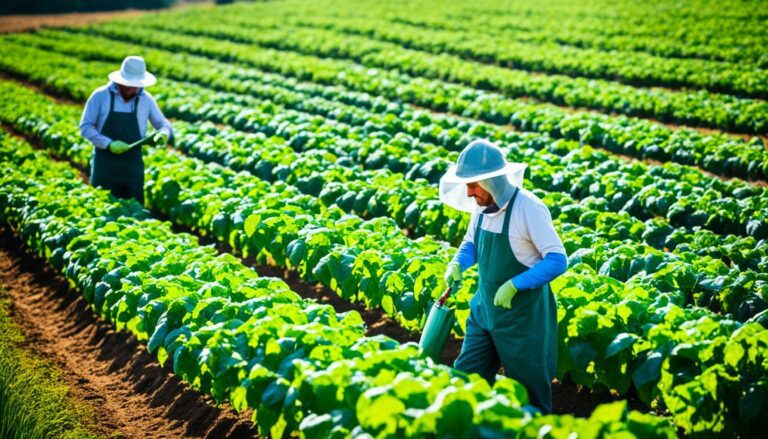
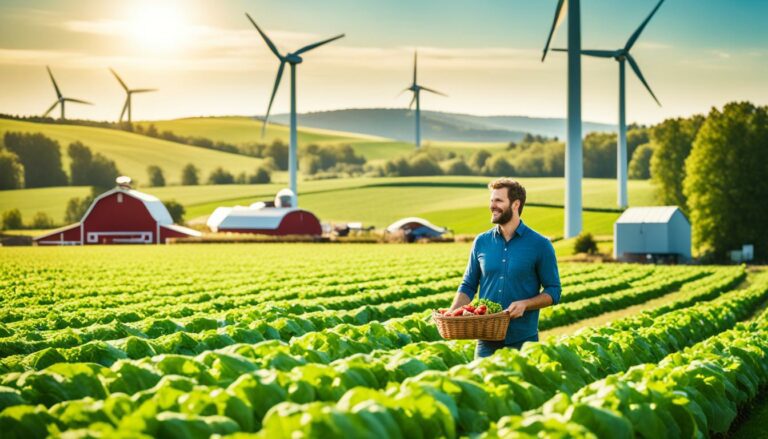
For small farmers, this way of farming can be a win. It helps them use less but grow more on their land. They have to be smart about what they use on their crops. They watch closely so the plants stay healthy. Organic farming means no artificial fertilisers, no lab-made seeds, and not using some other things. This way, farmers help the earth and grow food that’s good for people.
Sustainable agriculture can be made better by adding buffer zones. These areas around fields stop harmful chemicals from getting into the water. This keeps the whole farm system healthy for the long run.
Modern tools can help farmers be even better at what they do. Platforms like SmartFarm and RootTrace make farming smarter and friendlier to the earth. People in the U.S. are buying more organic food every year. This shows they care about how their food is grown. By using these tools and following organic rules, farmers make food without bad chemicals or GMOs. They also treat their animals with care, not using hormones.
Organic farming is good for the earth and people. Yet, it’s not always easy to make sure it lasts. Some things, like growing food in winter, can use a lot of energy. Plus, food for organic animals can be costly. But, by sticking to green and organic ways, we can have farming that keeps on going. It’s a step towards a future where our food doesn’t harm the planet.
Sustainable organic farming has always been part of agriculture’s story. It really grew after World War II when chemical farming took off. The Green Revolution saw big steps in fertiliser and pesticide use.
This drive was to feed a fast-growing world. But, it came with big environmental costs. People started seeing the need for sustainable food production. So, organic farming began, focusing on both nature and human health.
After World War II, farming changed a lot. More fertilisers and pesticides helped make more food. This became the first Green Revolution to fight hunger worldwide.
Yet, it brought harm to nature and water. The soil got worse, and plants and animals suffered. People then looked for ways to farm more gently.
In the 1970s, people worried about the Earth started a movement. They were against harmful chemicals in farming. This was the start of the organic farming movement.
At first, it was hard to know if food was really organic or not. But, in 1990, the US made clear rules about this. The Organic Foods Production Act said what organic really means. It also set up a board to make sure things are done right for the planet.
| Concept | Pre-1970s | Post-1970s |
|---|---|---|
| Average Age of Growers | Older | Younger |
| Operation Size | Larger | Smaller |
| Access to Capital | Higher | Lower |
| Yield Comparison | – | 25% lower than conventional |
| Federally Funded Research | Minimal | Increased |
| Retail Sales in the US (2019) | $20.39B (2008) | $47.9B |
| Retail Sales in Europe (2019) | – | $52B (€45B) |
Organic farming grew thanks to more and more people caring about the Earth. Governments also started to invest in ways to farm without harming the planet.
The 2018 Farm Bill is a good example of this. It puts a lot of money into better farming. With these efforts and laws, organic farming becomes more important every day.
Sustainable organic farming follows principles for long-term ecological health. Following these principles means farming ethically. It also helps build a more robust agricultural system.
Sustainable management protects natural resources and biodiversity. It involves crop rotation and avoiding synthetic chemicals. These steps protect the environment and make the farm more resilient.
Farm animal welfare is crucial in organic farming. Animals are cared for humanely, ensuring the farm’s health. They must have outdoor access and be raised without synthetic hormones or antibiotics, showing ethical farming practices.
Only certified organic materials are used on organic farms. This includes natural substances and techniques. Prohibited are synthetic chemicals like fertilisers. This rule ensures a healthier environment for plants and people, supporting sustainable organic farming.
Regular checks and strict certifications guarantee adherence to organic standards. Farms are checked to maintain trust in the organic label. This process ensures farming is eco-friendly and builds trust in ethical farming practices.
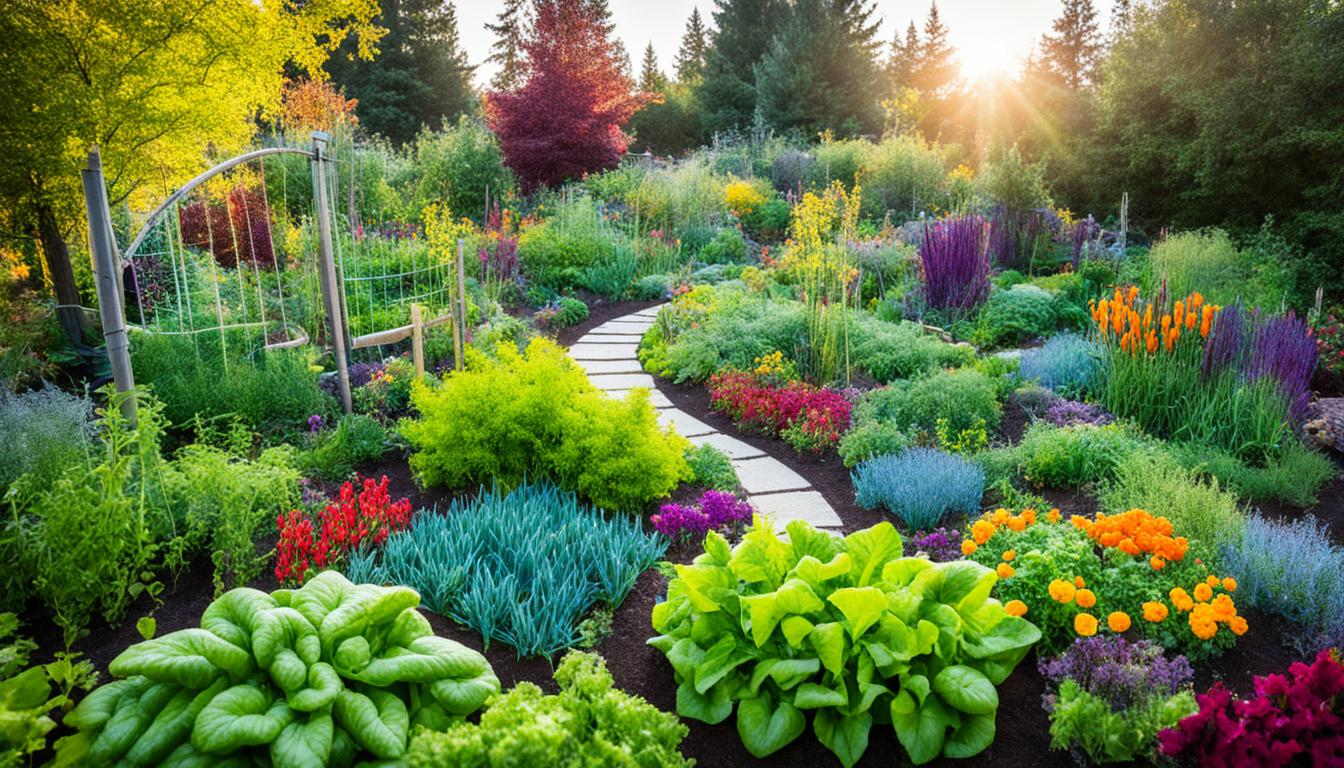
Adding crop rotation and biodiversity to farms plays a big part in sustainable organic farming. It helps keep the soil healthy and makes the ecosystem strong.

Rotating crops means soil doesn’t get tired and doesn’t need as much help from chemicals. It stops the land from washing away, lets lots of different plants and animals live there, and makes the soil better. For example, planting many different crops one after the other uses the best of each crop. This makes farming sturdy. Doing this without tilling the land much also helps lock away harmful carbon, which is good for the planet.
Having lots of different life on a farm is key in regenerative agriculture. Cover crops and choosing many types of plants help keep things varied. Studies show that mixing up different crop types boosts the soil and helps reduce climate harm.
| Benefits | Details |
|---|---|
| Soil Depletion Reduction | Crop rotation decreases the need for pesticides and fertilisers, enhancing soil quality. |
| Soil Erosion Control | Proper rotation practices lower erosion risks significantly. |
| Biodiversity Enhancement | Diverse crops and cover crops maintain ecosystem biodiversity. |
| Climate Change Mitigation | No-till practices with crop rotation aid in carbon sequestration. |
| Soil Health Improvement | Rotation enhances soil organic carbon and nitrogen levels. |
Organic farming starts with keeping the soil healthy. This step is key to a farming system that’s both productive and lasting. Healthy soil is rich in organic matter. It helps nutrients move around and brings many good things. Things like saving water, supporting different life in the soil, and feeding plants.
Studies prove organic soils are better than non-organic ones. They support more life and are more stable. Organic soil can hold more water and doesn’t break apart easily. This means it’s better in bad weather, which might help crops survive more easily.
Organic soils also keep more carbon, which is good for the planet. They help trap carbon from the air, making them important in fighting climate change.
In organic farming, managing soil well is key. Here are some important tactics:
The Soil Health Institute says these methods are vital for good soil. They look at the soil’s physical, chemical, and biological signs to check its health.
Taking good care of the soil means taking a big step towards farming that’s friendly to the environment. This helps create stronger farms that can deal with problems. It also helps build a future where farming can keep going without hurting the world.
Choosing eco-friendly ways to manage pests, weeds, and diseases is essential for organic farming that lasts. Integrated Pest Management (IPM) is a key method. It uses a mix of ways to stop pests without hurting the environment. EarthDance farm mixes permaculture with IPM, growing over 25 kinds of native flowers. This attracts good bugs that eat the bad ones. The result? More food grown without using a lot of sprays.
Cover crops help with natural weed control. In California, walnut farms that use cover crops found they could kill weeds without hurting their main crops. Places like NANIH Farm and Garden use local mulch to stop weeds and help their crops get more water.
In Virginia, Twin Oaks Seed Farm is fighting mildew by growing special squash that don’t get sick, like the South Anna butternut. This shows picking plants that can fight off diseases is part of a good IPM plan.
Sometimes, the best way to control pests is by letting nature do the work. Studies backed by SARE found that barn owls and hawks cut down on mice and rats without needing a lot of poison. This is a win for the farm and for the wildlife.
Washington state is taking a big step by not just using IPM but also by making space for nature to come back. This move means using less spray but still controlling pests well.
| Farm/Research Project | Practices/Findings | Benefits |
|---|---|---|
| EarthDance Farm | Permaculture and IPM | Improved yields, lower organic sprays |
| California Walnut Orchard | Cover crops for weed control | Unchanged weed biomass, increased crop biomass |
| Twin Oaks Seed Farm | Disease-resistant squash varieties | Addressed downy mildew issues, improved resilience |
| NANIH Farm and Garden | Locally sourced hardwood mulch | Controlled weeds, improved water retention, increased vegetable crop production |
| SARE supported research | Barn owls and hawks for rodent control | Effective rodent control, minimal rodenticide use |
| Washington Winegrape Growers | IPM and native habitat restoration | Reduced pesticide use, enhanced biological control |
It’s also vital to teach farmers about new challenges, like weeds that resist herbicides. Montana State’s programs are helping farmers find new ways to fight these weeds, without harming their farms.
Organic farming brings both good and tough times for farmers. Starting might cost a lot, especially with certification. But choosing eco-friendly ways in farming pays off in the future.
Switching to organic comes with high initial costs. The strict certification can be a hurdle, costing time and money. At first, organic farms might produce less than usual because they don’t use chemicals for growth. Plus, getting certified organic can be costly, which is tough for small farmers.
In the long term, organic farming brings more money. People are willing to pay more for organic products, which means higher profits. This demand helps local areas grow because it opens up more jobs and keeps money in the community.
Also, going organic helps the environment, making farms stronger against pests and diseases. Less money is spent on fighting these problems. Farmers work together too, sharing what they know. This teamwork helps them all succeed, making organic farming more financially stable over time.
Managing *organic soil amendments* well is key for sustainable farming. By 2030, the market for these fertilisers could hit US$27.48 billion, showing their importance. This growth is due to a yearly increase of 11.31%.
These fertilisers are made from plants, animals, or minerals. They follow strict standards set by the USDA. These rules are part of ensuring organic farming supports soil health and longevity.
Cover crops are one smart way to handle *organic soil amendments*. They help recycle nutrients, make soil better, and stop it from washing away. They’re also good at adding nitrogen to the soil. This can up to 150 to 200 lb of nitrogen per acre in a few months. Such crops lessen the need for other nitrogen sources, which is good for organic farming.
Adding composts and manures is also key for good farming. Poultry manure, for example, is rich in nitrogen, with about 1.5-3.0%. It feeds crops slowly over time, aiding their growth. This natural source might not have as much nitrogen as artificial urea, but it lasts longer, releasing nutrients to plants slowly.
“We must consider that the wide adoption of *natural fertiliser application* could revolutionise the agriculture sector by promoting improved soil health and reducing dependency on synthetic inputs.” — Dr. Jane Goodall
When using manure and compost, it’s important to time it right. As they get older, they might provide less nitrogen to crops. So, farmers need to plan well to make sure crops get the nutrients they need. This method is supported worldwide. For instance, Europe is working on better organic fertilisers to support sustainable farming.
| Source | Nitrogen Content | Application Period |
|---|---|---|
| Poultry Manure | 1.5-3.0% | 4-6 weeks |
| Fish Waste | 4.0-10.0% | Variable |
| Blood from Slaughterhouses | 10.0-12.0% | Immediate |
Choosing the right fertilisers also depends on the crop. Different crops need different amounts of nitrogen. For instance, corn and coffee do well with 3% nitrogen, while tomatoes need about 4%. Using various organic sources can meet these needs without harming the environment.
Applying organic fertilisers smartly improves both crop growth and soil health. This way, organic farming stays a powerful and sustainable farming method for years to come.
Looking at how organic farming affects greenhouse gases is key to solving climate issues. Organic methods can lower emissions. This is done through eco-friendly farming techniques, making a big impact.
From 2014 to 2019, California saw a big 44% rise in organic farming. Going organic could cut farming’s global emissions by 20%. It’s shown that ditching synthetic fertilisers can help a lot.
What’s more, a particular pesticide, chloropicrin, can sharply spike certain emissions. However, going the organic route can boost soil health and reduce harmful emissions.
Research by the Rodale Institute shows organic farms use 45% less energy and keep up with – or beat – traditional farms in output. This means less energy used, and fewer greenhouse gases released.
Organic farming stands out by improving water flow along with 15-20% more permeable soil and 40% better yields in droughts. This not just makes farms more robust but also keeps our carbon output in check.
Meanwhile, ancient practices like agroforestry and using pastures year-round are coming back. They help fight changing climates. Groups like the NSAC are also ensuring that farming stays balanced and fair in the face of climate change.
| Study/Organisation | Findings |
|---|---|
| California’s Department of Agriculture | 44% increase in organic acreage (2014-2019) |
| Multiple meta-analyses | Higher stable soil organic carbon, reduced nitrous oxide emissions |
| Rodale Institute | Organic farms use 45% less energy; maintain or exceed yields |
| Recent review of 400 studies | 70% link pesticide use to damage to soil invertebrates, affecting carbon sequestration |
The journey of organic produce from the farm to your table needs special care. Farmers handle each fruit and vegetable carefully after picking. They make sure these are kept away from non-organic foods and chemicals. This strict approach is key to meeting organic standards.
Agritourism farms, like Scottie Jones’ in Oregon, teach people about organic farming. They also earn money, which builds trust with consumers. Including organic food in school meals is increasing, showing a move towards healthier eating.
Keeping organic produce safe in storage is vital. Special facilities are used to avoid contact with harmful substances. The effort is visible in the high sales of organic foods, which hit $6.1 billion in 2012.
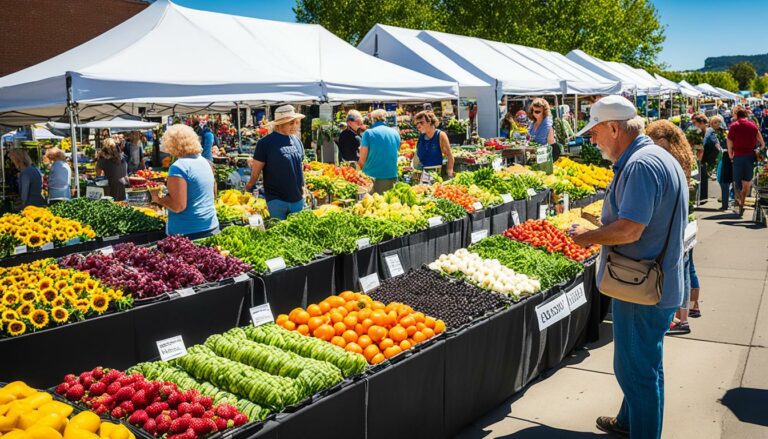
Transportation is the next step. Farmers use refrigerated trucks to move their produce. This helps keep the food fresh and nutritious. Supermarkets also contribute, making organic items easy to find for health-minded buyers.
Every part of the process – from handling after harvest to how it’s delivered – places a premium on meeting organic standards. This preserves the quality of organic food, keeping it healthy and safe for all who eat it.
| Aspect | Detail |
|---|---|
| Local and Regional Food Sales | $6.1 billion (2012) |
| Schools with Farm to School Programs | 44% |
| Agritourism Benefits | Diversified revenue and consumer trust |
| Preservation Method | Refrigerated Trucks |
| Store Accessibility | Dedicated organic sections |
Getting the local community involved is key to growing sustainable organic farming. By starting movements in their neighbourhoods and sharing knowledge, people help protect the environment.
Universities like UC Santa Cruz, UC Berkeley, and UC Davis are leading in teaching and researching sustainable farming. They offer courses, hands-on experiences, and helpful services for new farmers. For instance, the Organic Agriculture Research and Extension Initiative (OREI) looks into the unique challenges of organic farming. This helps keep farmers up-to-date with the best practices and information.
Community Supported Agriculture (CSA) programmes directly link people with local farms and educate them about farming. In Chicago, Star Farm’s CSA, boosted by the Disability Farmers scheme, helps build strong bonds between the farmers and the community. This makes everyone share the rewards and challenges of farm work. In Germany, SpeiseGut’s CSA asks urban customers to pay a monthly fee for fresh, organic produce.
| Farm | Location | Key Initiatives |
|---|---|---|
| Star Farm Chicago | Chicago, IL | Disability Farmers program, CSA |
| Cherokee Valley Bison Ranch | Thornville, OH | Holistic management, 46 bison grazing |
| Kilimo Minnesota | Minnesota | Farmer incubator for African immigrants, doubled participants by 2022 |
| SpeiseGut | Germany | CSA model, use of organic soil amendments, educational programs for children |
These stories show how connecting with communities helps farming. Initiatives like the Beginning Farmer and Rancher Development Program (BFRDP) give crucial knowledge to new farmers. They fill the world with sustainable farm projects. This spreads the values of unity, taking care of the environment, and living in harmony, key for the future of farming.
In organic farming, agricultural policy and organic regulation compliance are key. The USDA Organic Standards, made in 2002, set rules in the US. They ensure organic food is grown right and meets specific standards. This work follows the Organic Foods Production Act.
Organic farmers must obey the USDA’s National Organic Program rules. They can’t use synthetic pesticides and fertilizers, keeping food more natural. This helps organic farming grow, even in tough times. There are also helps like the NOCCSP and AMA that pay up to 75% of certification fees, up to $750 a year. The 2014 Farm Bill offers insurance like the WFRP to protect farmers from big losses caused by bad weather or disease.
Across the world, countries are working for organic regulation compliance. The European Union is a good example with strict regulations. They check farms every year and monitor everyone who’s part of the organic process. In 2022, they put in new rules to help small farmers, make checks better, and maintain standards for imported organic goods. These efforts are part of a larger EU plan that started in March 2021.
In the US, a blueberry farmer won a case about USDA rules in 2002. This case led to changes in the Organic Foods Production Act. It shows how agricultural policy keeps changing to meet the needs of organic farming.
By looking at top organic farms worldwide, we see how sustainable farming works. It shows the many ways organic farming can succeed. This includes key principles that lead to success.
Sikkim has become the first state in India to go entirely organic. This big change shows that large-scale organic farming is real. It was possible through teamwork between the state, farmers, and NGOs. They stopped using harmful chemicals, which is good for the land and people. Sikkim leads the way in showing how to farm without harm.
In Europe, many countries are focusing on organic farming. Denmark, Germany, and Italy are at the forefront. They have policies that help organic farming grow. For example, Denmark wants more of its farmland to be organic by 2030. This goal is backed by strong government support and people wanting more organic food.
| Farm | Location | Practices | Yield |
|---|---|---|---|
| Hinebauchs’ Organic Farm | Chinook, Montana | Spring and winter wheat, peas for green manure | 45-60 bushels/acre |
| Boehms’ Organic Ranch | Richardton, North Dakota | Wheat, rye, oats, buckwheat, milo, hay, pasture | Various per crop |
| Arbor Farmstead | Grand Isle, Vermont | Perennial fruit, woodland restoration | N/A |
| Ethos Health Farm | Long Valley, New Jersey | Organic fruit and vegetables | N/A |
| Good Stead Farm | Midland County, Michigan | Local organic food for families and restaurants | N/A |
| James Lake Farms | Oneida County, Wisconsin | Organic cranberries | N/A |
| Sneaky Crow Farm | Roanoke, Alabama | Organic fruits and vegetables | N/A |
| Fiddlehead Farm | Oregon | Conservation planning, small-scale | N/A |
| Front Field Organic Farm | Winterville, Georgia | Irrigation water conservation | N/A |
| High Ground Organics Farm | Watsonville, California | Wildlife and water quality focus | N/A |
| Deirdre Birmingham’s Orchard | N/A | Conservation and pollination impact | N/A |
These stories show that through hard work, good planning, and support, every farming community can go organic.
Choosing organic food means less exposure to harmful chemicals. In California, farmworkers faced serious dangers from pesticides. This shows why chemical-free produce is so important to our health.

Farmworkers have a higher risk of getting certain cancers because of pesticides. For kids, the danger is even more significant. Luckily, an organic diet can help lower this risk for children.
Organic food isn’t just safer; it’s also more nutritious. It contains more antioxidants, vitamins, and minerals. This can reduce stress and boost mental health, making us feel better overall.
Caring for the environment is another reason to choose organic. It helps keep soil healthy and supports biodiversity. Plus, many find it tastes better because it’s all natural.
Feeling good about where your food comes from is part of the benefit too. It means less worry and more happiness. This is why choosing chemical-free produce is a great idea.
This study underscores the significant advantages of organic diets in protecting human health and promoting ecological sustainability.
Sustainable organic farming is changing fast, thanks to new agricultural tech and more people wanting organic products. These changes are key in where organic farming is heading.
Organic farming in Kazakhstan is growing fast, with over 200,000 hectares now organic. This growth is largely due to agricultural technology advancements. With $35 million in organic product exports last year, Kazakhstan ranks high worldwide.
Globally, new farming tools and techniques are vital to keep up with demand in an organic way. Precision farming and data analytics are changing how organic farming works. These changes boost production and cut costs while sticking to organic rules.
More people are choosing organic foods for their health and the planet. In India, the organic food market is booming, with over 600,000 farmers involved. Some states lead in organic farming acreage.
In 2017-18, India produced 1.7 million metric tonnes of organic crops, exporting 4.6 lakh metric tonnes to key markets. Kazakhstan is also improving its organic sector, with support from entities like BesNET.
Although organic farming faces challenges, like higher costs, its future looks bright due to consumer demand. Laws and standards are being updated to keep the organic market growth going, ensuring long-term eco-friendly farming. The link between new tech and what consumers want is crucial for organic farming’s future worldwide.
After many years of learning and innovation, sustainable organic farming is now a key way to make food. It focuses on taking care of the environment and making sure food is good for us. Organic farming uses natural ways to grow food, such as changing crops each season, adding natural materials to the soil, and keeping weeds under control. These things help the land stay healthy.The Rodale Institute says organic farming can reduce a lot of CO2 each year. This means it fights climate change. Organic farming is better for our health too. It doesn’t use harmful chemicals in farming. Studies show that organic food has more nutrients in it. Plus, farmers spend less on chemicals, saving money.
The way forward for farming is sustainable agriculture. More and more people want food that is safe and doesn’t harm the earth. Buying certified organic food means you’re getting food that meets very high standards. Even though only a small part of U.S. farms are organic, its importance is growing. The government is starting to support organic farming more than before. People are understanding the costs of farming on the environment. So, organic farming is set to keep getting stronger.
Organic farming uses eco-friendly methods to grow crops. It includes crop rotation and using cover crops. It also uses natural ways to control pests. Organic fertilisers help keep the soil healthy. This reduces the use of chemicals.
Organic farming avoids synthetic chemicals and other harmful methods. Instead, it supports the use of natural ways to grow food. This includes eco-friendly farming, caring for the land, and protecting wildlife.
Organic farming started as a reaction to harmful farming practices. This was after the Second World War. In the 1970s, people started to focus on farming without chemicals. The Organic Foods Production Act in 1990 helped set rules for organic farming.
Sustainable organic farming protects nature and animals. It only uses approved things. Farms get checked often to ensure they follow the rules. This creates a healthy environment for growing food.
Crop rotation and having many kinds of plants make the land stronger. This means it’s harder for pests and diseases to harm the crops. It also cuts down on the need for chemicals.
Healthy soil supports plant growth and protects the environment. Techniques like adding compost help keep the soil rich. This means the land can keep producing healthy food without harmful chemicals.
Organic farms use smart ways to deal with pests and diseases. They rotate what crops they grow. They also encourage natural predators of pests. Only natural, non-toxic methods are used to control problems.
At first, it might cost more to go organic. Yields might be less, meaning the amount of food grown could be lower. But, in the long run, organic farmers can earn more. Their produce is healthier and better for the planet, so they can charge more for it.
Organic farming avoids synthetic fertilisers. Instead, it uses natural fertilisers like compost. This keeps the soil healthy without the need for harmful chemicals.
Organic farming can help the climate by not relying on synthetic fertilisers. It also improves the soil, which can store more carbon. But, more land might be needed for the same amount of food. The goal is to farm in ways that protect the climate and still feed everyone.
Organic food is handled carefully to keep it pure. Farmers and companies must follow strict rules. This includes making sure it’s not mixed with non-organic food. Storing it right preserves its quality all the way to the shop.
Organic farming thrives with help from the community and knowledge sharing. Universities and local farming groups teach people how to farm organically. This education and community support help the organic movement grow.
The USDA Organic Standards set the rules in the United States. Around the world, countries try to farm in ways that protect the environment. They face challenges but aim for sustainable and fair farming practices.
Places like Sikkim, India, and organic farms in Europe show how well organic farming can work. They demonstrate the benefits at a large scale. These examples encourage more people to farm organically.
Eating organic food means less exposure to harmful chemicals. It often has more nutrients, making it good for your health. People choose organic because they believe it’s safer and better for the planet.
The future of organic farming depends on new technology and meeting the needs of shoppers. Demand for organic food is growing. This push will encourage more sustainable farming and business practices.